
Date: 2026-01-29
When you look inside the latest smartphone, a modern car, or a wearable health monitor, you’ll often find a key component that isn't rigid and green, but thin and bendable. This is the Flexible Printed Circuit Board (Flex PCB or FPC).
Unlike traditional rigid circuit boards, flex circuits are made from materials like polyimide film that can bend, twist, and fold without breaking the electrical connections. This flexibility opens up a world of design possibilities, allowing engineers to create smaller, lighter, and more durable electronic devices. From the hinge of a folding screen to the moving arm of a medical robot, flex circuits are what make dynamic, three-dimensional electronics work.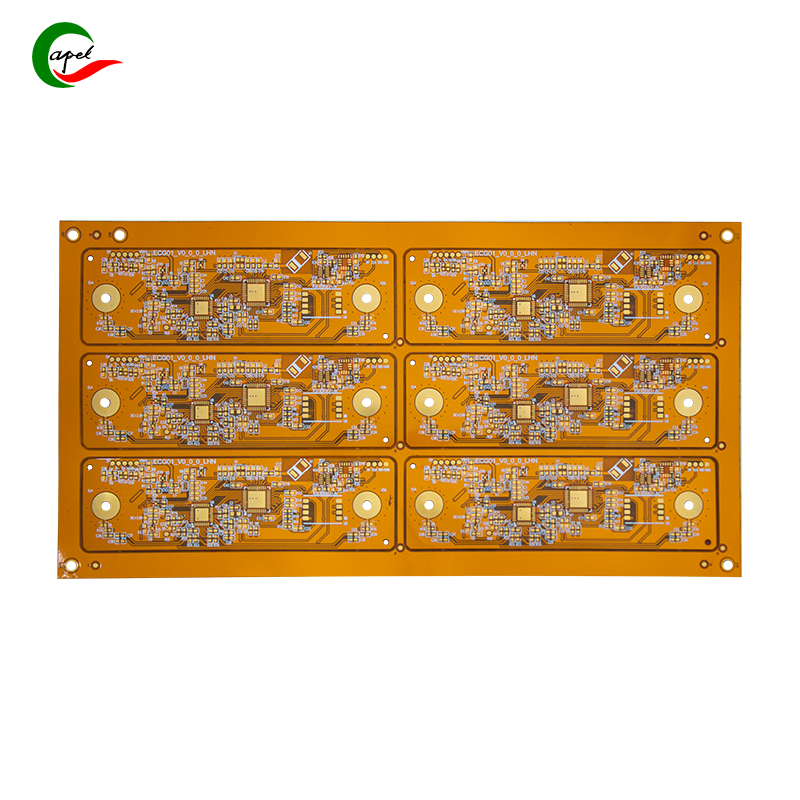
Why Consider a Flex Circuit for Your Next Project?
The decision to use a flex circuit often comes down to a few key advantages over rigid boards:
Space and Weight Savings: Flex circuits are thin and can be shaped to fit into tight, irregular spaces, reducing the overall size and weight of the final product.
Enhanced Durability: They can withstand constant motion, vibration, and repeated bending, which is why they are essential in applications like automotive sensors or flip phones.
Design Freedom: They allow for creative, three-dimensional packaging, enabling connections between moving parts without a bundle of wires and connectors.
Improved Reliability: By reducing the number of solder joints and connectors needed (which are common points of failure), a well-designed flex circuit can increase the overall system's reliability.
From Idea to Reality: The Flex PCB Manufacturing Journey
Creating a reliable flex circuit requires specialized materials and processes. The core material is typically a polyimide substrate, prized for its excellent thermal stability and flexibility. A thin layer of copper is then bonded to it to form the conductive pathways.
The manufacturing process involves several precise steps:
Photolithography and Etching: The desired circuit pattern is transferred onto the copper using light-sensitive film and then etched away.
Coverlay Application: A flexible protective layer (similar to solder mask but bendable) is laminated on to insulate the circuits.
Cutting and Testing: The individual circuits are laser-cut from the panel and undergo rigorous electrical and visual testing to ensure quality and reliability.
A Spectrum of Solutions: Types of Flex Circuits
Flex technology is versatile. Understanding the main types helps in selecting the right one for your application.
| Type | Key Features | Typical Applications |
|---|---|---|
| Single/Double-Sided Flex | One or two conductive layers, cost-effective and fundamental. | Simple interconnects, signal transmission, wire replacement. |
| Multilayer Flex | Multiple flexible layers laminated together for high density and complex routing. | Advanced smartphones, high-speed communication equipment. |
| Rigid-Flex | Combines rigid board sections with flexible connectors, offering both stability and flexibility in one unit. | Aerospace cameras, military gear, compact wearable devices. |
Making the Right Choice: Key Factors for Success
Designing with flex circuits requires some additional considerations:
Bend Radius: How tightly can the circuit bend without damage? This must be carefully calculated in the design phase.
Dynamic vs. Static Flex: Will the circuit bend continuously during use (dynamic), or only during installation (static)? This affects material and construction choices.
Expert Partnership: Given the complexity, working with a manufacturer early in the design process is crucial to avoid costly mistakes and optimize the design for manufacturability.
For electronics manufacturers looking to leverage flex technology, finding a capable and reliable partner is half the battle. This is where Kaboer brings significant value.
Based in Shenzhen, China, the heart of global electronics manufacturing, Kaboer operates its own advanced PCBA factory. This means we have direct control over the entire process, from sourcing high-quality polyimide materials to final assembly and testing.
Our expertise spans the full range of flex solutions, including multilayer FPCs and sophisticated Rigid-Flex boards. Our engineers are adept at Design for Manufacturability (DFM) reviews, helping you refine your design to enhance reliability, reduce costs, and accelerate time to market.
We understand the challenges of transitioning from prototype to mass production. With a factory floor equipped for scalability and a commitment to stringent quality control standards, we ensure consistency from your first prototype to high-volume production runs.
Ready to explore how flex circuits can revolutionize your next product?
Contact Kaboer today to discuss your project with our engineering team and receive a professional assessment.

Kaboer manufacturing PCBs since 2009. Professional technology and high-precision Printed Circuit Boards involved in Medical, IOT, UAV, Aviation, Automotive, Aerospace, Industrial Control, Artificial Intelligence, Consumer Electronics etc..


 English



 Wechat
 +86 13670210335
 +86 13670210335
 E-mail