
Date: 2026-04-10
Let’s be honest: designing a custom Flexible PCB is hard enough, but getting it through the flex pasting and assembly phase is where the real stress begins. If you’ve ever had a batch of boards come back with components popping off or the flex layers peeling away like an old sticker, you know exactly what I’m talking about.
In 2026, as we push for thinner wearables and more complex high-speed HDI designs, the "pasting" part—whether it’s SMT on flex or bonding the flex to a rigid stiffener—is no longer a basic task. It’s an art form. At our facility in China, we’ve spent years perfecting this so you don't have to deal with the headaches.
In the industry, flex pasting generally refers to two critical moments. First, the application of solder paste onto a flexible substrate for SMT. Second, the lamination or "pasting" of the FPC onto a FR4 stiffener or within a Rigid-Flex stack-up.
Unlike a standard green board, a flex circuit is "alive." It moves, it breathes, and it reacts to heat in ways that can ruin your day if you aren't prepared. Using the wrong adhesive or a subpar solder paste can lead to a disastrous circuit shorting or mechanical failure.
Why do so many flex pasting projects fail? It usually comes down to three things:
The Bubble Trouble: If the environment isn't strictly controlled, air gets trapped during the bonding process. Under the heat of a reflow oven, that tiny bubble expands and causes delamination.
The Open Circuit Trap: Flex circuits expand when heated. If your pasting process doesn't account for this "thermal shift," your traces can stretch and snap, leading to a mysterious open circuit that’s impossible to find without an X-ray.
Adhesive Bleed: Too much pressure and the "glue" oozes out onto the gold fingers. Too little, and it falls apart.
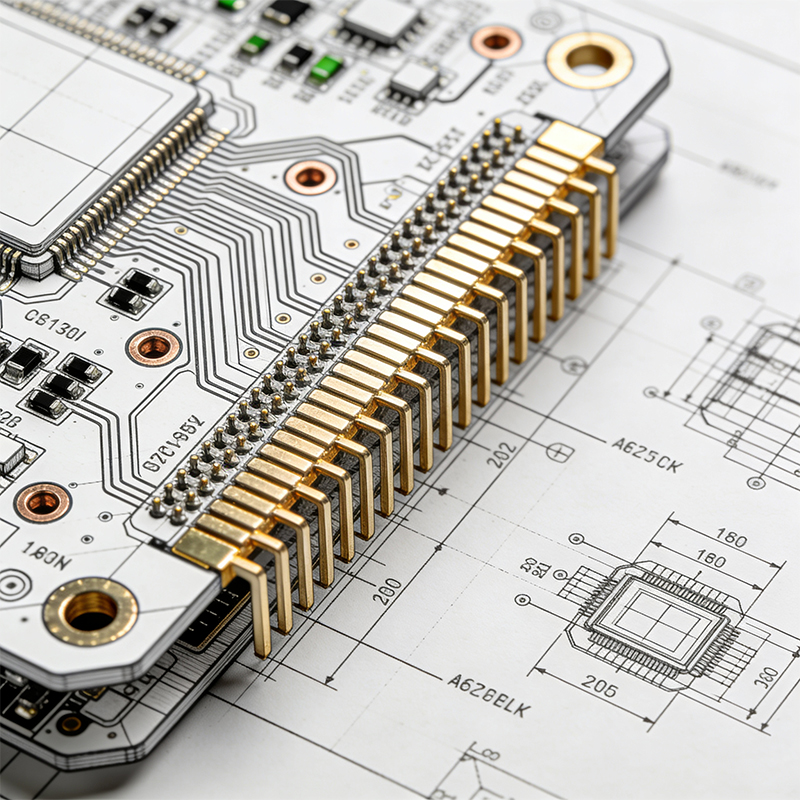
We don't just "stick things together." We use a high-tech approach to ensure your PCBA is rock solid:
Vacuum Lamination: We use vacuum bonding to ensure zero air is trapped. This is critical for industrial PCB production where reliability is non-negotiable.
Custom Pallets: You can't just run a flex board through an SMT line. We design custom aluminum "nesting" fixtures to keep the board perfectly flat during the flex pasting and soldering phases.
RoHS Compliant Adhesives: Everything we use is compliant with RoHS directive. We care about the planet as much as we care about your signal integrity.
We see a lot of sample BOMs that look great on paper, but the physical reality of assembling them is a nightmare. This is why you need a partner who understands the chemistry of the materials.
Whether you’re working on a foldable medical device or a high-vibration automotive sensor, the way the flex is "pasted" and assembled determines the lifespan of your product. We provide a full DFM review to catch these issues before we ever hit the "start" button.
Stop crossing your fingers and hoping your flex circuits won't delaminate. Flex pasting is a science, and we’ve got the lab to prove it.
Ready to see the difference? Send us your Gerber files and BOM today. Let’s talk about how our specialized Rigid-Flex and FPC assembly services can take your hardware to the next level. Let's build something that actually stays together!

Kaboer manufacturing PCBs since 2009. Professional technology and high-precision Printed Circuit Boards involved in Medical, IOT, UAV, Aviation, Automotive, Aerospace, Industrial Control, Artificial Intelligence, Consumer Electronics etc..


 English



 Wechat
 +86 13670210335
 +86 13670210335
 E-mail