
Date: 2026-04-16
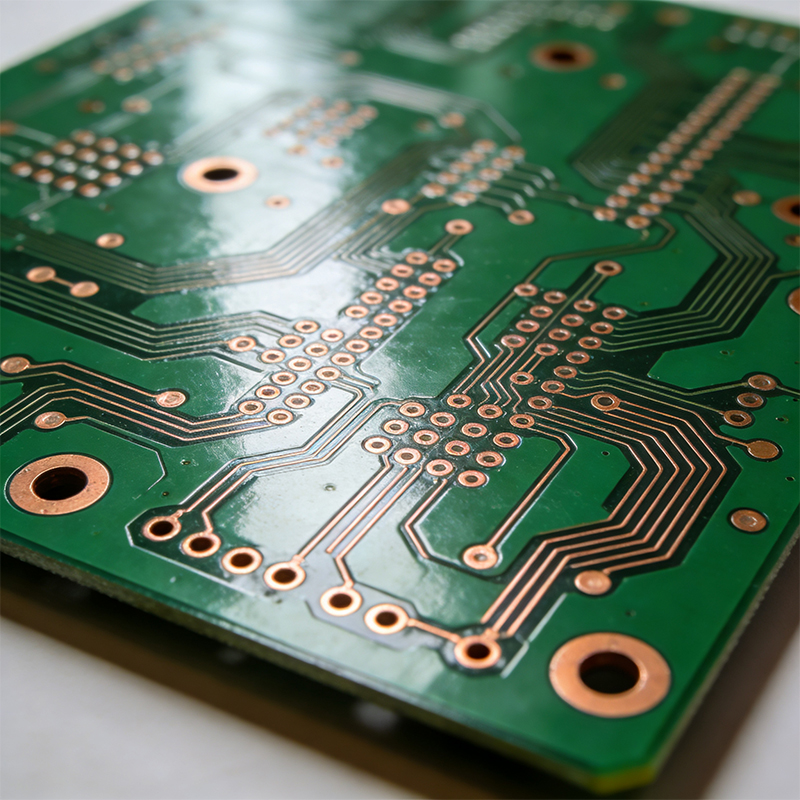
Let’s be honest: when you think of an electronics project, that classic green board is probably the first thing that pops into your head. That is the FR4 circuit board. It is the "workhorse" of the industry—reliable, cost-effective, and surprisingly versatile.
But as an electronics manufacturer, you know that "standard" doesn't always mean "simple." In 2026, as devices get smaller and faster, the way we use FR4 is changing. If you're looking to source boards that won't fail in the field, you need to look a little deeper than just a low price tag.
At its core, FR4 is a composite of fiberglass and epoxy resin. The "FR" stands for Flame Retardant, which is pretty important when you've got electricity running through your product!
However, a great FR4 circuit board depends on the quality of the lamination. We’ve seen too many "budget" boards delaminate under thermal stress because the factory cut corners on the resin quality. When we manufacture your boards, we focus on the bond. A board that can’t handle a standard soldering cycle is just expensive scrap metal.
One of the most common questions we get from engineers is: "Which Tg should I use?" Tg, or Glass Transition Temperature, is the point where the board starts to get soft.
Standard Tg (130-140°C): Great for basic toys or simple controllers.
High Tg (170°C+): This is where we live. If you are building high-density boards or anything that runs hot (like LED drivers or industrial power supplies), High Tg FR4 is a non-negotiable. It keeps your traces stable and your vias intact.
We love FR4, but it has its limits. If you’re working on high-frequency or high-speed HDI (High-Density Interconnect) designs, standard FR4 can sometimes act like a "speed bump" for your signals.
This is where our engineering team steps in. Sometimes, the answer isn't a different material, but a smarter design—like using hybrid stack-ups. We can combine standard FR4 with high-frequency laminates (like Rogers) to give you the performance you need without breaking the bank.
The biggest trend we're seeing in 2026? Manufacturers moving away from pure FR4 and embracing Rigid-Flex PCBs. Imagine taking the rugged reliability of an FR4 circuit board and connecting it seamlessly to a Flexible PCB. No connectors to fail, no bulky wires, just one clean, integrated unit. This is our specialty. We help you take that clunky multi-board prototype and turn it into a sleek, foldable, durable product.
Buying a bare board is only half the battle. If your FR4 circuit board isn't designed with PCBA (Assembly) in mind, your assembly house is going to have a nightmare with component placement and soldering.
By choosing a partner that handles both the fabrication and the assembly, you get a "closed-loop" quality check. We catch DFM (Design for Manufacturing) issues before we even press the first layer.
Whether you need a thousand standard FR4 circuit boards or a complex 12-layer HDI rigid-flex masterpiece, we are ready to help. We don't just want to be your vendor; we want to be your engineering arm in China.
Stop settling for "okay" boards. [Send us your Gerber files today] for a free technical review and quote. Let’s make your next hardware launch your best one yet.

Kaboer manufacturing PCBs since 2009. Professional technology and high-precision Printed Circuit Boards involved in Medical, IOT, UAV, Aviation, Automotive, Aerospace, Industrial Control, Artificial Intelligence, Consumer Electronics etc..


 English



 Wechat
 +86 13670210335
 +86 13670210335
 E-mail