
Date: 2026-05-22
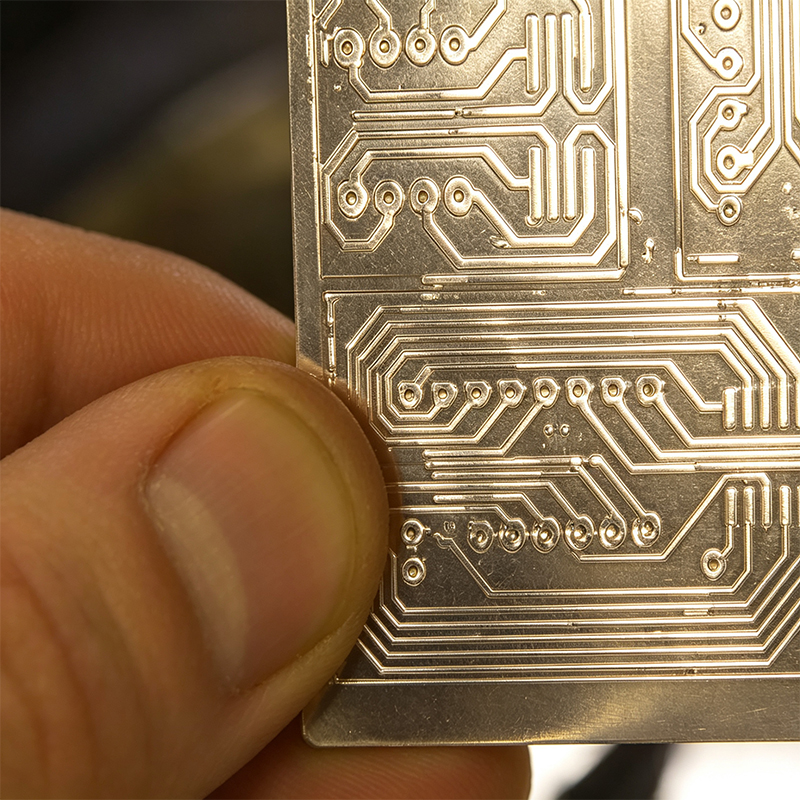
If you’ve ever looked closely at a circuit board, you’ve probably noticed that the exposed copper pads and the holes where components go are not bare copper. They’re usually covered with a shiny, silvery layer. That layer is often tin plating.
Tin plating is one of several surface finishes used on printed circuit boards. It’s not as famous as gold (ENIG) or as cheap as HASL, but it has its own strengths and weaknesses. Let’s explore what tin plating is, why manufacturers use it, and when it’s the right choice for your project.
What Is Tin Plating?
Tin plating is a thin layer of pure tin that’s electroplated onto the copper pads, traces, and through‑holes of a circuit board. Its main job is to protect the copper from oxidation and to provide a solderable surface.
Copper oxidizes when exposed to air. That oxide layer is hard to solder – the solder won’t wet it properly, and you get bad joints. Tin doesn’t oxidize nearly as fast, and even if it does form a thin oxide, it’s easily removed by flux during soldering. So tin acts as a protective, solder‑friendly coating.
How Is Tin Plating Applied to PCBs?
The most common method is electroplating. The bare board is immersed in a chemical bath containing tin ions. An electric current is passed through the bath, causing tin to deposit onto the conductive copper surfaces. The thickness can be controlled by the current and time – typically between 0.5 and 2 microns for most PCBs.
Another method is immersion tin, where a chemical displacement reaction deposits tin directly onto copper without electricity. Immersion tin is thinner (0.8–1.2 microns) and more uniform, but it has a shorter shelf life.
Why Use Tin Plating on PCBs?
Engineers choose tin plating for several reasons:
Excellent solderability – Tin wets easily with common lead‑free and leaded solders. It’s one of the best surfaces for hand soldering and automated reflow.
Flat surface – Unlike HASL (hot air solder leveling), which can leave uneven bumps, electroplated tin is very flat. That’s important for fine‑pitch components like QFPs or BGAs.
Lead‑free compatible – Tin is naturally lead‑free and works well with RoHS‑compliant assembly processes.
Cost‑effective – Tin plating is cheaper than gold (ENIG) and often cheaper than silver. It’s a mid‑range finish.
Good for press‑fit connectors – The soft tin layer allows press‑fit pins to deform the surface slightly, creating a gas‑tight connection.
Where Is Tin Plating Commonly Used?
General purpose PCBs – For many industrial, consumer, and automotive boards that don’t need the extreme flatness of ENIG but want better solderability than HASL.
Press‑fit applications – Backplanes and power supplies often use tin plating for connectors.
Through‑hole components – Tin plating inside plated through‑holes ensures good solder fill.
Edge connectors – Sometimes (though gold is better for high‑wear contacts).
Tin Plating vs. Other Surface Finishes
Let’s compare tin plating to the most common alternatives.
| Finish | Solderability | Flatness | Shelf Life | Cost | Best For |
|---|---|---|---|---|---|
| Tin plating | Excellent | Very good | 6-12 months | Low‑medium | General purpose, press‑fit |
| HASL (lead‑free) | Good | Poor (uneven) | ~12 months | Low | Low‑cost, through‑hole heavy |
| ENIG (gold) | Excellent | Excellent | 12+ months | High | Fine‑pitch, wire bonding, long storage |
| Immersion silver | Excellent | Very good | 6-12 months | Medium | High‑frequency, tight tolerances |
| OSP | Good (after cleaning) | Excellent | 3-6 months | Very low | High‑volume, short assembly window |
Advantages of Tin Plating
Very solderable – Even after some aging, tin still solders well.
Flat surface – Good for SMT components with fine leads.
Lead‑free – Meets RoHS requirements.
Reasonable cost – Cheaper than gold or silver.
Disadvantages of Tin Plating
Tin whiskers – This is the biggest concern. Pure tin can spontaneously grow thin, hair‑like crystals called whiskers. They can cause electrical shorts, especially in fine‑pitch or high‑reliability applications. Adding a small amount of lead (no longer allowed in RoHS) or using a nickel underlayer reduces whiskers, but pure tin still has risk.
Short shelf life – Compared to ENIG (which lasts years), tin plating can oxidize and lose solderability after 6‑12 months, especially in humid or hot environments.
Not for long‑term storage – If you plan to store bare boards for more than a year, tin may not be the best choice.
Cannot be used for wire bonding – Gold or silver are needed for bonding wires.
What About Tin Whiskers? Let’s Talk Honestly
Tin whiskers sound like science fiction, but they’re real. Under certain conditions (compressive stress, humidity, temperature cycles), pure tin can grow microscopic metal hairs that can bridge adjacent pads or vias. This can cause intermittent or permanent shorts.
In most consumer electronics, the risk is considered low. But for aerospace, medical, and automotive safety systems, manufacturers often avoid pure tin and use ENIG or immersion silver instead. If you must use tin for a high‑reliability product, ask about “matte tin” plating with a nickel barrier – it reduces whisker growth.
Can You Solder on Tin‑Plated Boards After Long Storage?
Yes, but it may require stronger flux or a quick wipe with isopropyl alcohol. If the tin has turned dull gray, it’s still solderable – just use active flux. If it’s black or powdery, the tin has heavily oxidized and you should consider replating or using a different board.
Tin Plating for Flexible PCBs
Yes, flexible circuits can also use tin plating. However, flex boards are more sensitive to stress, and the ductility of tin is decent but not as good as gold. For dynamic flex applications (boards that bend repeatedly), ENIG is often preferred because gold is more flexible and less prone to cracking.
How to Specify Tin Plating on Your PCB Order
When ordering PCBs, you might see:
Electrolytic tin – Thicker, more controlled, better for press‑fit.
Immersion tin – Thinner, more uniform, but shorter shelf life.
Matte tin – A duller finish that resists whiskers better than bright tin.
Always state: “Tin plating, minimum thickness X microns, matte finish.” For most purposes, 0.8–1.5 microns is standard.
A Real‑World Example: Why a Customer Switched from HASL to Tin
A manufacturer of industrial control boards was using lead‑free HASL because it was cheap. But their boards had large BGAs, and the uneven HASL surface caused poor solder joints on fine‑pitch balls. They switched to electrolytic tin plating. The flat surface solved the soldering problem, and the cost increase was minimal. The boards worked reliably for years – and no tin whisker issues in their non‑aerospace application.
When Should You NOT Use Tin Plating?
High‑reliability / mission‑critical systems – Aerospace, space, medical implants, automotive safety (unless specially qualified).
Boards that will be stored for more than a year – ENIG or immersion silver have longer shelf life.
Very high‑temperature operation – Tin can melt at 232°C (though reflow is hotter, operation is usually lower).
Wire bonding – Not possible on tin.
Final Answer – What Is Tin Plating for PCBs?
Tin plating is a surface finish applied to copper pads and holes on a circuit board. It protects copper from oxidation, provides excellent solderability, and offers a flat surface for fine‑pitch components. It’s cheaper than gold and flatter than HASL. However, it has a limited shelf life (6‑12 months) and can grow tin whiskers, which are a concern for high‑reliability applications.
For most general‑purpose electronics – industrial controls, consumer devices, power supplies – tin plating is a solid, cost‑effective choice.

Kaboer manufacturing PCBs since 2009. Professional technology and high-precision Printed Circuit Boards involved in Medical, IOT, UAV, Aviation, Automotive, Aerospace, Industrial Control, Artificial Intelligence, Consumer Electronics etc..


 English



 Wechat
 +86 13670210335
 +86 13670210335
 E-mail