
Date: 2026-05-25
You’ve probably seen it without knowing its name. That thin, amber‑colored, slightly see‑through film inside your phone, your laptop, or a flexible circuit board. It’s tough, heat‑resistant, and can bend without breaking. That material is polyimide.
Polyimide is one of the most important high‑performance polymers in modern electronics. If you’ve ever wondered what makes flexible PCBs possible, or how a circuit can survive being folded thousands of times, the answer is often polyimide. Let’s break down what polyimide is, why it’s so special, and where you encounter it every day.
What Is Polyimide, in Simple Words?
Polyimide is a type of plastic – but not the kind you find in a water bottle or a toy. It’s a “high‑performance” polymer that can handle extreme heat, resist chemicals, and remain flexible even after years of use.
Think of it as the super‑plastic of the electronics world. While regular plastics melt or degrade when you heat them to 200°C, polyimide just sits there, smiling. That’s why it’s used in places where other materials would fail – from flexible circuit boards to spacecraft insulation.
A Quick Chemistry Shortcut (No Degree Required)
The name “polyimide” tells you something about its structure: it contains “imide” groups (–CO‑N‑CO‑) in its backbone. These strong chemical bonds make the material very stable. You don’t need to remember that. Just know that polyimide is built to last.
The Most Famous Brand: Kapton®
You may have heard the name Kapton. It’s a brand of polyimide film made by DuPont. For many people, Kapton is practically synonymous with polyimide – like “Kleenex” for tissues. Kapton tape (that amber tape used to mask circuit boards during soldering) is polyimide. Kapton film (the orange‑yellow flexible substrate) is polyimide. Other brands exist (Upilex, Apical, etc.), but they all work similarly.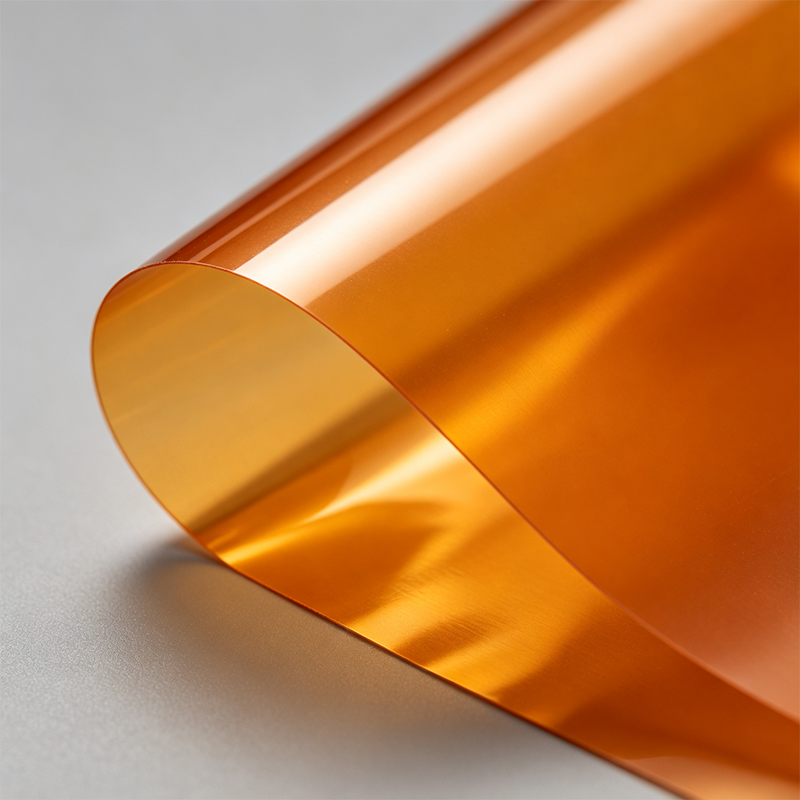
What Makes Polyimide So Special?
Let’s list its superpowers:
Extreme heat resistance – Polyimide can withstand continuous temperatures of 250–300°C (480–570°F) and short spikes over 400°C (750°F). It doesn’t melt. It slowly chars if you really abuse it, but it won’t flow like regular plastic.
Excellent flexibility – It bends, folds, and rolls without cracking. You can fold a polyimide film thousands of times, and it still works.
Chemical resistance – It shrugs off most solvents, acids, and oils. That’s why it’s used in harsh industrial and aerospace environments.
Low moisture absorption – Unlike nylon, polyimide barely absorbs water (<0.5%). Its dimensions stay stable even in humid conditions.
Good electrical insulation – It’s an excellent insulator, with high dielectric strength. That’s why it’s perfect for flexible circuits and wire insulation.
Radiation resistance – Polyimide survives high‑energy radiation, making it useful in space and nuclear applications.
Where Do You Find Polyimide in Everyday Life?
You might not realize it, but polyimide is all around you:
Flexible printed circuit boards (FPCs) – The orange‑yellow base of every flex circuit is polyimide. Your phone, smartwatch, and laptop all have polyimide inside.
Kapton tape – That amber tape you use to protect parts during soldering? Polyimide. It’s heat‑resistant, leaves no residue, and doesn’t melt.
Insulation for wires and cables – In high‑temperature or tight‑space applications, wires are wrapped with polyimide film or coated with polyimide varnish.
Heaters and sensors – Thin‑film heaters and temperature sensors often use polyimide as the substrate.
3D printer build surfaces – Many 3D printers have a sheet of polyimide film on the bed to help prints stick and release easily.
Aerospace and space applications – Satellites use polyimide insulation and flexible circuits because it survives the vacuum, temperature swings, and radiation.
Medical devices – Implantable sensors and catheters sometimes use polyimide for its biocompatibility and thinness.
Polyimide vs. Other Plastics – A Quick Comparison
| Material | Heat Resistance | Flexibility | Moisture Absorption | Cost | Best For |
|---|---|---|---|---|---|
| Polyimide | Excellent (250‑300°C) | Very good | Very low | High | Flex circuits, aerospace, high heat |
| FR4 (fiberglass) | Good (130‑150°C) | None (rigid) | Low | Low | Rigid PCBs |
| PET (polyester) | Poor (150°C melts) | Good | Medium | Low | Low‑cost flex, membrane switches |
| Nylon (polyamide) | Moderate (80‑150°C) | Good | High | Low‑medium | Mechanical parts, clothing |
| PTFE (Teflon) | Excellent (260°C) | Moderate | Very low | High | High‑frequency PCBs, non‑stick |
How Is Polyimide Made? (The Short Version)
Making polyimide is a multi‑step chemical process. In simple terms, a manufacturer starts with two main ingredients – a dianhydride and a diamine – dissolved in a solvent to form a sticky liquid called polyamic acid. That liquid is then spread onto a surface (like a stainless steel belt) and heated. The heat triggers a chemical reaction (imidization) that turns the liquid into a solid, tough polyimide film. The film can be made in various thicknesses, from 12.5µm (about 1/3 the thickness of a human hair) up to 125µm or more.
What About Polyimide for Flexible Circuit Boards?
This is where polyimide really shines. A flexible PCB (flex circuit) is made by laminating copper onto a polyimide base, then etching the copper to form traces, and finally covering it with a polyimide coverlay (instead of rigid solder mask). The result is a circuit that can bend, fold, and twist while still carrying electricity reliably.
Polyimide flex circuits are used in:
Smartphones (connecting the display, camera, and buttons)
Wearables (fitness trackers, smartwatches)
Medical devices (endoscope cameras, hearing aids)
Automotive (dashboard displays, steering wheel controls)
Aerospace (satellite solar panel hinges)
Can Polyimide Be Transparent?
Standard polyimide is amber or yellow – not transparent. But specialty transparent polyimide exists. It’s clear like glass, but flexible. It’s used in applications like transparent displays, foldable phone screens, and optical sensors. It’s more expensive than regular polyimide.
Is Polyimide the Same as Polyamide?
No – this is a very common confusion. Polyamide is nylon – the stuff in your jacket, toothbrush bristles, and fishing line. Polyamide absorbs water and melts at moderate temperatures. Polyimide is a different beast. It doesn’t melt and barely absorbs water. They sound similar, but their properties are worlds apart.
What Are the Disadvantages of Polyimide?
No material is perfect. Polyimide has a few downsides:
High cost – Polyimide is 5–10 times more expensive than FR4 or PET.
More difficult to process – Drilling, cutting, and laminating polyimide requires special tools and techniques.
Hygroscopic when raw – Before curing, the polyamic acid absorbs moisture, which can cause bubbles if not handled properly.
Not as stiff as FR4 – If you need a rigid board, polyimide alone won’t work (though you can attach stiffeners).
Can be scratched – The surface is softer than glass or hard plastic.
How to Identify Polyimide
If you have a mystery film or tape, here’s how to tell if it’s polyimide:
Color – It’s typically amber, orange‑yellow, or dark brown. Clear polyimide exists but is rare.
Heat test – Hold a soldering iron at 300°C near it. Polyimide won’t melt or shrink instantly. PET or PVC will.
Feel – It’s smooth, somewhat slippery, and tough. You can’t tear it easily by hand.
A Real‑World Example: The Laptop Hinge Cable
Open a laptop and look at the cable that connects the screen to the main board. It has to bend every time you open and close the lid – thousands of times over the laptop’s life. That cable is almost always a polyimide flexible printed circuit. The polyimide base allows it to flex repeatedly without breaking, while the copper traces carry high‑speed video signals.
Is Polyimide Environmentally Friendly?
It’s a durable, long‑lasting material, which means it doesn’t break down quickly in landfills. However, it’s not easily recyclable. Some manufacturers are developing bio‑based or recyclable polyimides, but they’re not yet common. For now, polyimide products are designed to last a long time, which reduces waste from frequent replacements.
What We Do with Polyimide (Brief Mention)
As a custom circuit board manufacturer specializing in flexible PCBs, rigid‑flex boards, and high‑frequency HDI boards, polyimide is one of our key materials. We use it to build flex circuits that bend, fold, and survive harsh environments. Whether you need a simple single‑layer flex or a complex multi‑layer rigid‑flex with polyimide tails, we can help.
Final Answer – What Is Polyimide?
Polyimide is a high‑performance polymer that remains flexible, resists extreme heat (250‑300°C), and stands up to chemicals and radiation. It’s the material that makes flexible printed circuits possible, and you’ll also find it in Kapton tape, wire insulation, aerospace components, and medical devices. It’s more expensive than common plastics, but for applications where reliability under heat and bending is critical, polyimide is often the only choice.

Kaboer manufacturing PCBs since 2009. Professional technology and high-precision Printed Circuit Boards involved in Medical, IOT, UAV, Aviation, Automotive, Aerospace, Industrial Control, Artificial Intelligence, Consumer Electronics etc..


 English



 Wechat
 +86 13670210335
 +86 13670210335
 E-mail