
Date: 2026-05-19
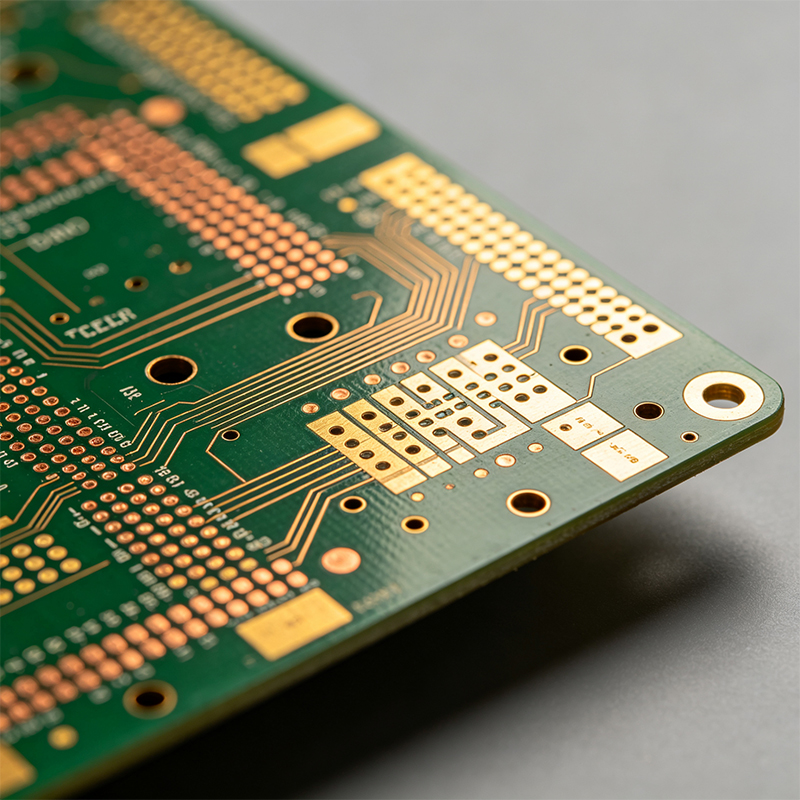
You’ve probably heard of a “circuit board” or a “PCB”. But have you ever heard the term bare board? It sounds simple – and it is. A bare board is just a printed circuit board before any components are soldered onto it. No resistors, no chips, no connectors. Just the board itself with its copper traces, pads, and holes.
Let’s walk through what a bare board really is, how it’s made, and when you might want to buy one instead of a fully assembled board.
What Is a Bare Board?
A bare board is a PCB that has been fabricated – the copper traces are etched, the holes are drilled, the solder mask and silkscreen are applied – but no electronic components have been attached yet. It’s the “blank canvas” of electronics.
You can think of it like an unpopulated motherboard. All the roads (copper traces) are there, but none of the buildings (chips, resistors, capacitors) have been built yet.
Bare Board vs. PCBA – What’s the Difference?
| Bare Board | PCBA (Assembled Board) | |
|---|---|---|
| Components | None | All components soldered |
| Solder | No | Yes (solder paste reflowed) |
| Testing | Usually just electrical continuity (opens/shorts) | Functional test, ICT, etc. |
| Use | For prototyping, DIY assembly, or as a part of a larger assembly | Ready to install into a product |
| Cost | Much lower | Higher (components + assembly) |
Why Would Someone Buy a Bare Board Instead of an Assembled One?
Good question. Here are the common reasons:
Prototyping – You want to test your board design before committing to full assembly. A small batch of bare boards lets you hand‑solder a few components to verify that everything works.
DIY assembly – You have your own assembly line or you enjoy soldering. Buying bare boards and assembling them yourself saves money if you have the equipment and time.
Low‑volume production – For very small quantities (say, 5–20 boards), the cost of setting up automated assembly might be higher than just hand‑soldering components onto bare boards.
Component shortages – You can’t get all the parts you need right now. But you can still order the bare boards, store them, and add components later when parts become available.
Customization – You want to use your own components (maybe surplus or specialty parts) that the assembly house doesn’t stock.
Repair spares – You need a few bare boards as backups in case you damage one during repair or modification.
How Is a Bare Board Made? (The Short Version)
The process is similar to making any PCB, just without the assembly steps. Here’s what happens:
Design – You create your circuit in EDA software and generate Gerber files.
Printing the inner layers – For multi‑layer boards, the inner copper layers are printed onto thin copper‑clad cores.
Lamination – All the layers (cores and prepreg) are stacked and pressed together under heat.
Drilling – Holes for vias and through‑hole components are drilled.
Plating – The holes are plated with copper to connect layers.
Outer layer imaging and etching – The outer copper layers are patterned and etched to form traces.
Solder mask application – The green (or other color) coating is applied over the traces, exposing only the pads.
Silkscreen – White text and component outlines are printed.
Surface finish – The exposed pads are plated or coated with HASL, ENIG, OSP, etc. to protect them and make them solderable.
Electrical test – A flying probe or fixture checks for shorts and opens.
Routing / V‑scoring – Individual boards are cut out from the production panel.
Inspection and packaging – Boards are visually inspected, then vacuum‑sealed (especially for boards with OSP finish) or packed in anti‑static bags.
What Does a Bare Board Look Like?
Take a typical green circuit board. Now imagine all the chips, resistors, capacitors, and connectors are gone. What’s left is the bare board – green solder mask with shiny silver or gold pads where components will go, white silkscreen labels, and maybe some copper traces visible at the edges of the pads.
If you hold it up to light, you might see the translucent fiberglass of FR4 between the copper features.
Types of Bare Boards
Just like assembled boards, bare boards come in many flavors:
Rigid bare boards – The most common. Made of FR4 fiberglass. Stiff and strong.
Flexible bare boards – Made of polyimide film. They can bend and fold. Often used in wearables and foldable devices.
Rigid‑flex bare boards – Combination of rigid sections and flexible tails. The bare board itself has both materials laminated together.
HDI bare boards – High‑density interconnect boards with microvias and fine traces. These are more complex and expensive than standard bare boards.
High‑frequency bare boards – Made with low‑loss materials (Rogers, etc.) for RF and microwave applications.
What Materials Are Used?
Substrate – FR4 (standard), polyimide (for flex), high‑Tg FR4 (for heat resistance), or ceramic (for extreme heat).
Copper – Usually 1oz (35µm) or 2oz (70µm) per square foot.
Solder mask – Epoxy ink, typically green but available in blue, red, black, white, etc.
Silkscreen – White epoxy ink for labels.
Surface finish – HASL (tin‑lead or lead‑free), ENIG (gold), OSP (organic), Immersion Silver, etc.
How to Inspect a Bare Board for Quality
When you receive a batch of bare boards, you should check a few things before soldering:
Visual check – No scratches, no lifted pads, no discoloration. The solder mask should be smooth and even.
Hole alignment – Do the holes line up with the pads? Misaligned holes can make soldering impossible.
Pad size – Are the pads the right size and shape? Too small, and components won’t sit well. Too large, and you risk solder bridges.
Continuity test – Use a multimeter to check a few random traces for opens and shorts. Better yet, if you ordered electrical testing, the manufacturer already did that.
Surface finish – Gold should be shiny, not dull. HASL should be smooth, not lumpy. OSP should be clear and even.
How to Store Bare Boards
Bare boards, especially those with OSP (organic solderability preservative) finish, have a shelf life. OSP degrades over time, and the pads become hard to solder.
Store in a cool, dry place.
Keep in the original vacuum‑sealed bag until you’re ready to use them.
For long‑term storage, re‑vacuum seal or store in a dry cabinet (humidity < 20%).
Boards with ENIG (gold) finish last much longer – years, even in normal conditions.
Why Do Manufacturers Sell Bare Boards?
Even though many customers want fully assembled boards (PCBA), there’s still a large market for bare boards. Here’s why manufacturers keep making them:
Some customers have their own assembly lines – They prefer to control component sourcing and assembly in‑house.
Prototyping – Engineers want a few bare boards to test the design before committing to assembly.
Educational use – Schools and hobbyists buy bare boards to practice soldering.
Low‑cost repair – A bare board is much cheaper than a fully assembled replacement board.
Can You Solder Components Yourself on a Bare Board?
Absolutely. That’s the whole point. You can hand‑solder through‑hole components easily. Surface‑mount components require more skill, but with a good soldering iron, tweezers, and flux, it’s doable. For fine‑pitch parts (like 0.5mm ICs), a reflow oven or hot air station makes the job much easier.
If you plan to hand‑assemble many boards, consider buying a stencil and using solder paste – it saves time and improves quality.
Common Misconceptions About Bare Boards
“Bare boards are just useless pieces of plastic.” – No, they are fully functional circuit boards, just missing components. With the right parts, they work perfectly.
“You can test a bare board with a battery.” – Not really. A bare board has no components, so applying power does nothing. You can only test continuity (traces and holes).
“All bare boards are green.” – Far from it. You can get them in blue, red, black, white, yellow, and matte finishes.
A Real‑World Example: A DIY Synthesizer Project
A musician wanted to build his own analog synthesizer. He designed the circuit, ordered bare boards from a manufacturer, and then spent a weekend soldering resistors, capacitors, chips, and potentiometers onto them. The bare boards cost him 150+. He saved money, learned a lot, and ended up with a unique instrument.
When Should You Order Bare Boards Instead of PCBA?
You have your own assembly capability (even just a soldering iron and some free time).
You’re making a prototype and want to test the board layout before spending on components.
You only need a few boards (1–10) – assembly setup fees often make PCBA uneconomical for very small runs.
You’re repairing an old device and only need the bare PCB (you can salvage components from the old board).
What We Offer (A Quick Mention)
While we specialize in custom flexible PCBs, rigid‑flex boards, HDI high‑frequency boards, and full PCBA, we also understand that many customers start with bare boards for prototyping or in‑house assembly. If you need bare boards – whether rigid, flex, or rigid‑flex – we can help. We fabricate them to your exact specifications, with or without electrical testing.
Final Answer – What Is a Bare Board?
A bare board is a printed circuit board that has been fabricated but has no electronic components attached. It’s just the fiberglass or polyimide substrate with copper traces, pads, solder mask, and silkscreen. People buy bare boards for prototyping, DIY assembly, low‑volume production, or when component shortages prevent full assembly. Bare boards are cheaper than PCBA but require you to solder the components yourself.

Kaboer manufacturing PCBs since 2009. Professional technology and high-precision Printed Circuit Boards involved in Medical, IOT, UAV, Aviation, Automotive, Aerospace, Industrial Control, Artificial Intelligence, Consumer Electronics etc..


 English



 Wechat
 +86 13670210335
 +86 13670210335
 E-mail