
Date: 2026-01-12
Searching for a custom PCB usually means you’ve moved past the generic development board. Your design has specific needs—unusual size, special materials, or unique performance requirements that off-the-shelf solutions can’t meet. It’s about making the board fit your vision perfectly, not the other way around.
But “custom” can mean a lot of different things. It can be the key to a superior product, or a source of unexpected cost and delay if not managed well. Let’s talk about what goes into a successful custom board project.
Not every project needs a truly custom board. Sometimes, a modification of a standard stack-up or size is enough. You likely need a fully custom PCB if:
Your product’s form factor is non-standard (a unique shape, an odd size, or requires flexible/rigid-flex construction).
Your circuit demands specific electrical performance (high-speed, RF, high-voltage, or extreme thermal management needs).
You’re integrating unusual components or materials (embedded components, heavy copper for power, special substrates for high frequency).
If you’re ticking any of these boxes, you’re in the right place.
Ordering a standard board is transactional. Developing a custom PCB is collaborative. The process typically looks like this:
The Initial Handshake: You share your goals, not just your files. What’s the board’s function? What environment will it live in? What’s the target volume? This conversation sets the direction.
The Co-Design Phase: This is where the real “custom” work happens. A good manufacturer will provide feedback on your design for manufacturability (DFM), but for custom projects, it goes deeper—it’s Design for Your Success. They might advise on material selection (“For this flex application, a polyimide with this Tg will last longer”), layer stack-up optimization, or cost/performance trade-offs.
Prototyping with a Purpose: The first boards aren’t just for electrical testing. They’re for validating the manufacturing process itself. Does the chosen laminate behave as expected in reflow? Does the unique finish provide good solderability? This stage de-risks the full production run.
Scaling with Consistency: A trustworthy partner ensures the custom specs defined and proven in prototyping are locked in and repeatable for every batch of production.
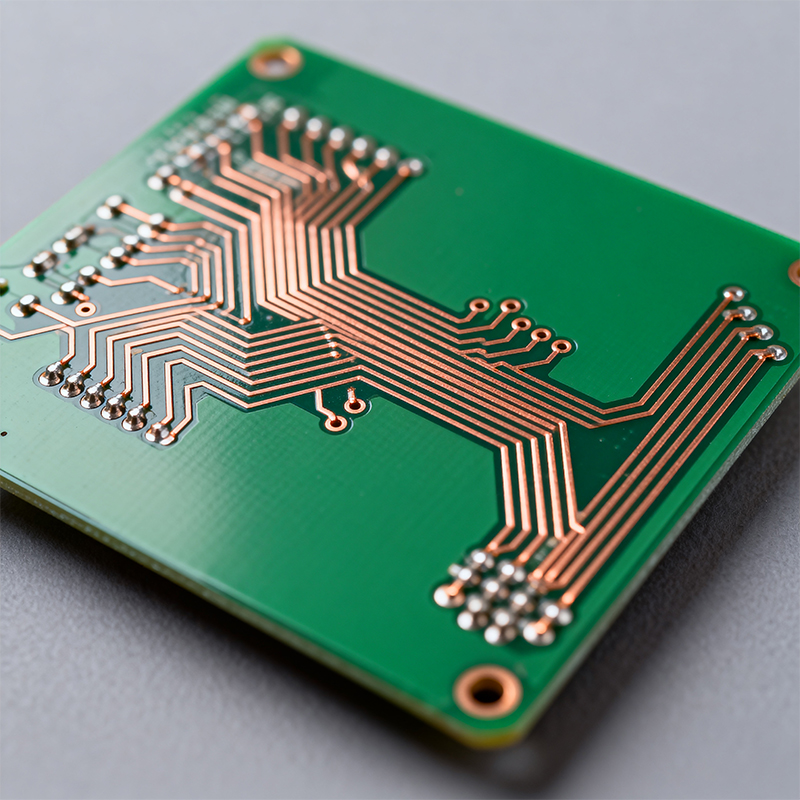
Going custom opens up possibilities, and also some new ways to encounter delays:
The Specification Gap: Assuming the fabricator knows exactly what you want without explicit, documented specs. Every custom detail—from material grade to final finish—needs to be clearly stated.
Underestimating the Prototype Phase: Trying to skip or rush through prototyping to save time often leads to multiple, more expensive production re-spins later.
Choosing the Wrong Partner: A shop that excels at fast, standard boards might not have the engineering depth or patience for a true custom collaboration. You need a problem-solving partner, not just an order-taker.
A manufacturer built for custom PCB work acts as an extension of your team. They ask a lot of questions upfront because they know those answers prevent problems down the line.
At Kaboer, our factory in Shenzhen is set up for this kind of collaborative engineering. Here’s what we focus on for custom projects:
We Start with ‘Why?’: Before we talk about ‘how,’ we want to understand the ‘why’ behind your design choices. This context helps us suggest better solutions.
We Have a Broad Material Palette: We have access to and experience with a wide range of materials—not just FR-4, but various high-Tg laminates, Rogers for RF, aluminum substrates for thermal management, and flexible materials. We help you select the right one, not just the most common one.
We Bridge Fabrication and Assembly: Because we handle both under one roof, we have a unique perspective. We’ll consider how a custom board’s material or thickness will behave in our SMT lines, and design for that reality. This prevents nasty surprises during assembly.
We’re Transparent About the Journey: Custom work can have unknowns. We communicate them early, provide clear milestones, and make sure you’re never in the dark about your project’s status.
Opting for a custom PCB is a strategic investment in your product’s differentiation and performance. The key to a good return on that investment is choosing a partner whose capabilities and communication style match the complexity of your needs.
Look for a collaborator who is curious about your project, transparent about their process, and has the technical depth to guide your custom vision into a reliable, manufacturable reality.

Kaboer manufacturing PCBs since 2009. Professional technology and high-precision Printed Circuit Boards involved in Medical, IOT, UAV, Aviation, Automotive, Aerospace, Industrial Control, Artificial Intelligence, Consumer Electronics etc..


 English



 Wechat
 +86 13670210335
 +86 13670210335
 E-mail