
Date: 2026-05-15
You’ve seen what happens when a smartphone freezes or a laptop crashes. Annoying, right? Now imagine that happening to your car’s brake control or engine management while you’re driving 70 miles per hour. That’s not an annoyance – that’s a disaster.
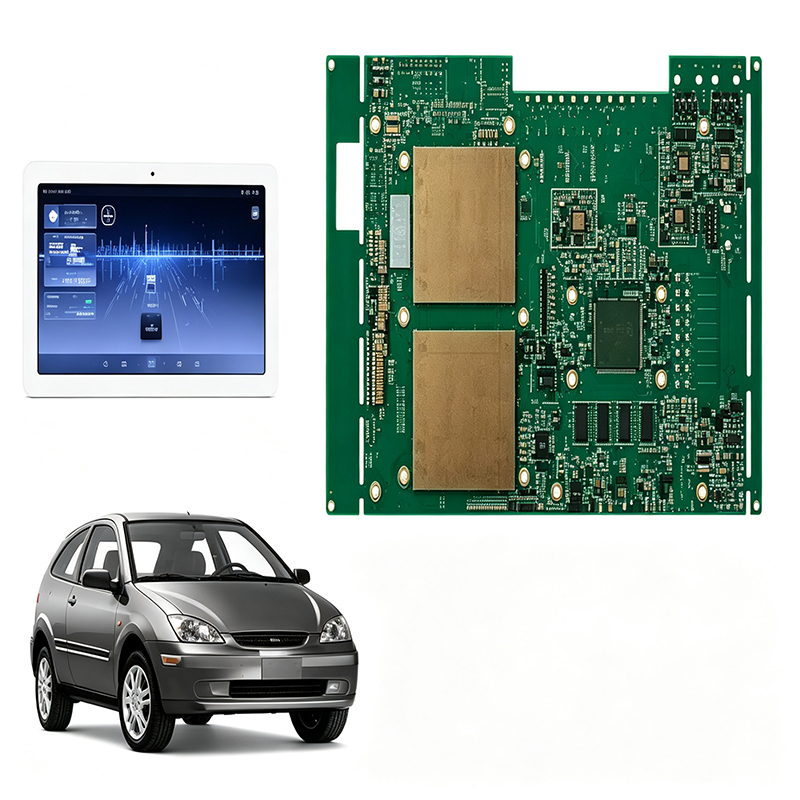
Automotive PCB assembly isn’t just regular electronics put in a car. It’s a whole different ballgame. Higher temperatures, brutal vibration, moisture, salt, and years of non‑stop operation. And it has to work every single time.
Let’s break down what automotive PCB assembly really means, what makes it special, and what you need to look for when sourcing boards for your vehicle‑related products.
What Is Automotive PCB Assembly?
Automotive PCB assembly means taking a printed circuit board and populating it with components – resistors, capacitors, chips, connectors – but following strict rules designed for the harsh environment of a car, truck, or any other vehicle.
It’s not just about soldering. It’s about using the right materials, the right testing, and the right design rules so the board survives extreme heat, freezing cold, constant shaking, and maybe even splashes of water or oil.
Why Is Automotive Different from Consumer Electronics?
Let’s compare:
| Requirement | Consumer Electronics (phone, laptop) | Automotive Electronics |
|---|---|---|
| Temperature range | 0°C to 35°C typical | -40°C to +125°C (engine compartment can be higher) |
| Vibration | Minimal | Severe, constant, random |
| Humidity | Low to medium | High, plus condensation, salt spray |
| Power fluctuations | Clean, regulated battery | Dirty, noisy, load‑dump spikes |
| Lifespan | 2–5 years | 10–15+ years |
| Failure tolerance | Annoying, reboot | Potentially dangerous, life‑threatening |
A phone that reboots once a month is frustrating. An engine control unit that reboots once is a crash. That’s the difference.
Key Requirements for Automotive PCB Assembly
To make electronics that survive in a car, you have to follow standards – most notably IATF 16949 (the automotive quality management standard) and IPC‑A‑610 Class 2 or 3 for assembly workmanship.
Here are the main things that make automotive assembly different:
1. High‑Temperature Materials
Standard FR4 material might soften or delaminate under the hood. Automotive PCBs often use high‑Tg FR4 (glass transition temperature above 170°C) or polyimide for extreme heat. For flexible sections, polyimide is the standard – it handles the heat and bending.
2. Vibration Resistance
Solder joints crack under constant shaking. Automotive assemblies use:
Underfill – epoxy under large chips (BGAs) to glue them to the board.
Staking adhesive – blobs of silicone or epoxy on large components like capacitors and connectors.
Potting – filling the entire enclosure with epoxy or silicone for modules like sensors or ECUs.
Flex‑rigid designs – flexible tails can absorb vibration better than rigid boards with connectors.
3. Thermal Cycling Tolerance
A car’s interior goes from freezing cold to baking hot many times over its life. Every time, materials expand and contract. That cracks solder joints over time. To prevent that, automotive PCBs use:
Matched CTE (coefficient of thermal expansion) – choose materials that expand at similar rates.
Larger pads and fillets – more solder to absorb stress.
Avoiding sharp corners on traces – rounded corners reduce stress points.
4. Corrosion Protection
Under‑hood electronics see salt, water, oil, and chemicals. Automotive boards almost always get conformal coating – a thin protective layer sprayed over the board. For extreme conditions, potting is used.
For flexible PCBs, the coverlay (polyimide film) provides excellent protection, but exposed contacts still need gold plating (ENIG or hard gold).
5. Zero‑Defect Testing
Consumer electronics might sample‑test 1% of boards. Automotive requires 100% testing – every board gets tested. Common tests include:
ICT (In‑Circuit Test) – checks each component for correct placement and value.
FCT (Functional Test) – powers up the board and simulates real operation.
Burn‑in / thermal cycling – runs boards at extreme temperatures to catch early failures.
X‑ray inspection – for hidden solder joints under BGAs and other large packages.
AOI (Automated Optical Inspection) – camera inspection for every board.
6. Traceability and Documentation
Every component used in automotive assembly must be traceable. If a batch of capacitors turns out bad five years later, the manufacturer needs to know which cars got them. That means:
Serialized boards with barcodes or RFID.
Records of every component's lot number.
Detailed assembly process logs (temperatures, timers, operator IDs).
Flexible and Rigid‑Flex in Automotive
You might think flexible PCBs are only for wearables or phones. But cars use them too – and for good reasons.
Space constraints – Under the dashboard or inside door modules, space is tight. A flex board folds where a rigid board can’t.
Vibration isolation – A flexible tail between two rigid sections absorbs vibration better than connectors.
Weight reduction – Every gram counts in electric vehicles. Replacing wiring harnesses with flex circuits saves weight.
Dynamic bending – Moving parts like a power seat or folding mirror need circuits that bend repeatedly.
Common automotive flex and rigid‑flex applications:
Battery management systems (BMS) in EVs
LED headlight modules
Steering wheel controls (buttons on a flexible circuit)
Camera modules for ADAS
Transmission control modules
HDI High‑Frequency Boards for Automotive
Modern cars are full of high‑speed signals: radar, LiDAR, camera data, V2X communication. These need HDI (High Density Interconnect) and high‑frequency materials like Rogers or low‑loss FR4.
HDI allows smaller vias (microvias) and finer traces, so you can pack more into less space. High‑frequency materials reduce signal loss at GHz frequencies – critical for 77GHz automotive radar.
PCBA – Full Assembly Under One Roof
When you’re building automotive electronics, you don’t want to source bare boards from one place and assembly from another. Every handoff adds risk. That’s why we offer PCBA – we make the custom board (flex, rigid‑flex, HDI, or any mix) and then assemble it completely, including testing.
You send us your BOM and design files. We source the components (automotive‑grade, with traceability), fabricate the board, assemble it, test every unit, and ship ready‑to‑install assemblies.
What You Should Ask a Potential Automotive PCB Assembly Partner
Before you trust someone with your car‑related electronics, ask these questions:
Are you IATF 16949 certified? – That’s the automotive quality standard. If they’re not, walk away.
What’s your defect rate? – For automotive, aim for less than 100 ppm (parts per million).
Do you do 100% testing? – Sampling is not enough.
Can you handle flex, rigid‑flex, and HDI? – Many assemblers only do rigid boards.
What’s your component traceability system? – You need lot‑level traceability.
What’s your typical lead time? – Automotive often needs just‑in‑time delivery.
A Real‑World Example: Replacing a Wiring Harness with Flex
A customer made battery packs for electric buses. They used a heavy wiring harness to connect each cell’s voltage sensor to the BMS – dozens of wires, lots of connectors, and hours of hand assembly. We replaced the whole harness with a single rigid‑flex board. The rigid sections held the connectors and electronics; the flexible sections ran between cell groups. Assembly time dropped from 3 hours to 10 minutes. Weight dropped by 80%. And reliability went way up – no loose wires.
What We Offer
We’re a custom circuit board manufacturer that specializes in the exact technologies automotive electronics need:
Flexible PCBs – single‑, double‑sided, multi‑layer polyimide circuits.
Rigid‑flex boards – rigid sections with integral flex tails, ideal for vibration‑prone areas.
HDI high‑frequency boards – microvias, fine lines, Rogers materials for radar and high‑speed data.
PCBA – full assembly, including sourcing automotive‑grade components, soldering, and all necessary testing (ICT, FCT, AOI, X‑ray, burn‑in).
We’re IATF 16949 compliant. We test every board. And we keep full traceability on every component.
Ready to Talk About Your Automotive Project?
Whether you’re making an ECU, a BMS, a radar sensor, or an LED headlight – we can build the custom PCBs and assemble them to automotive standards. Send us your requirements (even a rough sketch) and we’ll give you a quote and a timeline.

Kaboer manufacturing PCBs since 2009. Professional technology and high-precision Printed Circuit Boards involved in Medical, IOT, UAV, Aviation, Automotive, Aerospace, Industrial Control, Artificial Intelligence, Consumer Electronics etc..


 English



 Wechat
 +86 13670210335
 +86 13670210335
 E-mail