
Date: 2026-06-12
You're an electronics manufacturer. You've already had your PCBs assembled. But there's still a long list of things to do: enclosure, screen, battery, cables, screws, labels… putting all of them together into a working product that you can ship. That process is called box build assembly.
Many hardware companies, especially early‑stage startups, underestimate how complex this final step can be. In this guide, I'll explain what box build assembly is, what steps it includes, why you should outsource it, and how to pick a reliable assembly partner. Plain English, no fluff.
Simply put, box build assembly is taking one or more PCBs (populated with components), plus an enclosure, cables, power supply, display, buttons, heat sinks, screws, and all other parts, and assembling them into a complete, functional product.
It typically covers these stages:
| Stage | Main Tasks |
|---|---|
| PCBA preparation | Your boards or our flex/rigid‑flex/HDI boards, SMT and testing |
| Enclosure work | Plastic or metal cases – may include silk‑screening, film application, laser marking |
| Component assembly | Screen, battery, speaker, antenna, buttons, cables, heat sinks, fans |
| Cable routing | Organize internal wiring with clips and ties – no loose or interfering cables |
| Fastening & sealing | Screws, adhesive dispensing, waterproof gaskets, seals |
| Final testing | Power‑on, functional test, burn‑in, water resistance, button feel |
| Packaging & shipping | Serial number labels, manuals, foam inserts, box sealing, shipping labels |
Some call it "system integration". The idea is the same.
Some hardware teams think: "It's just putting parts into a box and screwing them – we can do that in‑house." But reality often hits hard:
1. It looks simple but eats up a lot of time
A moderately complex product (like a smart sensor or an access control panel) may require 30‑50 assembly steps. Hiring workers, managing materials, and dealing with exceptions needs a full‑time production supervisor and lines. For low to medium volumes, outsourcing is far cheaper.
2. Testing is often overlooked
Many products need custom test fixtures (firmware flashing, sensor calibration, airtightness tests). Developing those in‑house costs time and money. A professional box build shop often already has proven testing solutions.
3. Supply chain coordination is a nightmare
PCBA from one factory, enclosure from another, cables from a third. You have to chase orders, inspect incoming parts, handle returns… it can drive you crazy. One shop that does box build assembly manages all those parts for you – you deal with a single point of contact.
Here's a six‑step process, using our shop as an example:
Step 1 – Review BOM and assembly instructions
You send us your product drawings, BOM, and any assembly notes. We check: which parts need to be sourced? Any custom tooling required (molds, fixtures)? Any special processes (gluing, heat staking)?
Step 2 – Quote and samples
We provide a quote based on labor, materials, and fixture costs. Then we build 5‑10 samples and ship them to you for functional and cosmetic approval.
Step 3 – Pilot run
After you approve the samples, we run a small batch of 50‑200 units. The goal is to identify any issues that only appear in volume (stripped screws, wire interference, unstable test results).
Step 4 – Set up the assembly line
We create a dedicated line for your product, including test stations, burn‑in racks, packaging tables. If needed, we can add automated screwdrivers or glue dispensers.
Step 5 – Volume production
We build in batches according to your purchase orders. In‑process quality control (IPQC) and final quality control (FQC) ensure every unit meets your specs.
Step 6 – Shipping
We apply your brand nameplates, serial number labels, and package according to your requirements, then ship to your warehouse or directly to your customers.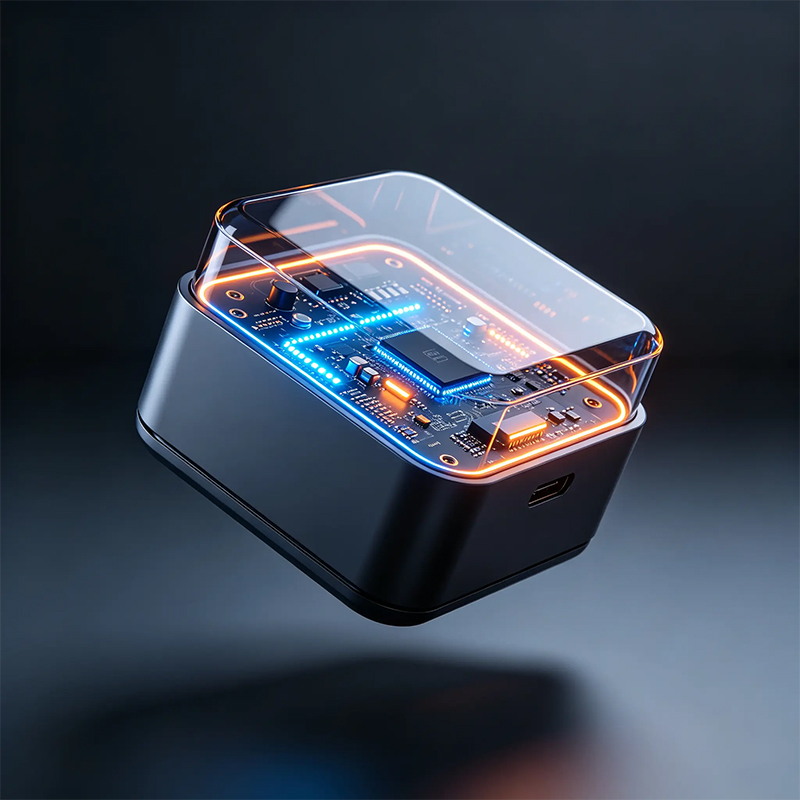
Almost any product that requires putting a PCBA inside an enclosure. Common examples:
Consumer electronics – Smartwatches, TWS earbud charging cases, POS terminals, smart home gateways
Industrial devices – Sensor modules, data loggers, motor controllers, industrial gateways
Medical devices – Handheld monitors, home therapy devices, oxygen concentrator control panels
Automotive electronics – Car chargers, dashcams, parking sensor controllers
Communication equipment – Routers, switches, 5G CPEs
If your product uses flexible PCBs or rigid‑flex boards, it's even more important to work with a shop that understands those technologies – because handling flex PCBs during assembly is different from standard rigid boards.
1. Do you do your own PCBA, or do you outsource it?
If PCBA is outsourced, you add another hand‑off and potential quality risks. Best is a one‑stop shop that does PCBs (including flex, rigid‑flex, HDI), SMT, and assembly under one roof.
2. Do you have ESD protection and clean work areas?
Many consumer electronics are static‑sensitive. Camera modules and screens hate dust. A professional shop should have ESD workbenches, grounding wrist straps, ionizers, and a clean assembly area.
3. How do you test?
Ask: do you have ICT, functional test, burn‑in, waterproof testing? Do you design your own test fixtures? What is your test coverage?
4. How do you manage incoming parts?
The assembly shop must receive, inspect, and store parts from your various suppliers (enclosures, cables, screens, etc.). Ask if they have an ERP system and whether they can give you real‑time material status.
5. Who is responsible if something goes wrong?
Define the rules upfront: if a solder joint on the PCBA is bad, the PCBA supplier is responsible. If a screw scratches the enclosure, the assembly shop is responsible. A clear agreement avoids disputes.
We are not just a PCB manufacturer or a pure SMT house. We are a one‑stop solution that designs and makes flexible PCBs, rigid‑flex boards, HDI high‑frequency boards, and then does PCBA and finally box build assembly.
We make our own PCBs – Flex, rigid‑flex, HDI, all in‑house. No hand‑offs, no miscommunication between board fab and assembly.
We do our own SMT – Including a dedicated flex PCB assembly line to handle warpage and fine‑pitch components.
We have an assembly workshop – ESD workbenches, glue dispensers, automated screwdrivers, burn‑in rooms, functional test fixtures – all ready.
We manage your parts – We receive, inspect, and store parts from your other suppliers. You only deal with us.
We've done many types of products – Consumer, industrial, medical, automotive, communication. We understand the special requirements of each (e.g., traceability for medical, high‑temp testing for automotive).
What we don't do – Plastic injection molding, die casting, custom cable harnesses. We'll be honest and recommend specialized suppliers for those, then we take their parts and assemble them. No false promises.
Three simple steps:
Send us your files – BOM, assembly drawings, any notes. Even rough sketches are fine – we'll help you organize.
We review and quote – Within 24 hours, we'll tell you: what parts are missing, any special tooling needed, estimated labor hours, and sample vs volume pricing.
Sample, pilot, then scale – We build 5‑10 samples for your approval. After that, a pilot run of 50‑200 units, then full production.
Box build assembly isn't rocket science. But it is the last mile from a design to a sellable product. Pick the right partner, and your product ships on time, on spec. Pick the wrong one, and you'll spend your days chasing parts, reworking defects, and arguing about responsibility.
If you have a product – even if it's still at the prototype stage – send it over. We won't push a big contract on you. Let's build a few samples first and let the results speak.
When you contact us, please include:
Product photos or renderings (so we know what it looks like)
A rough BOM (what parts are involved)
Estimated annual quantity (dozens, thousands, or tens of thousands)
We'll give you honest feedback: what we can do, what we can't, and how to redesign for better assembly cost. Let's talk.

Kaboer manufacturing PCBs since 2009. Professional technology and high-precision Printed Circuit Boards involved in Medical, IOT, UAV, Aviation, Automotive, Aerospace, Industrial Control, Artificial Intelligence, Consumer Electronics etc..


 English



 Wechat
 +86 13670210335
 +86 13670210335
 E-mail