
Date: 2026-01-29
Imagine leaving your smartphone out in the rain, or your car’s engine control unit covered in road salt. That’s the kind of harsh environment many electronic circuit boards face daily. To survive, they often need an invisible suit of armor. That’s where conformal coating comes in. Let’s talk about this protective layer – what it is, why you’d use it, and what it’s made of, in plain language.
What Is Conformal Coating, Really?
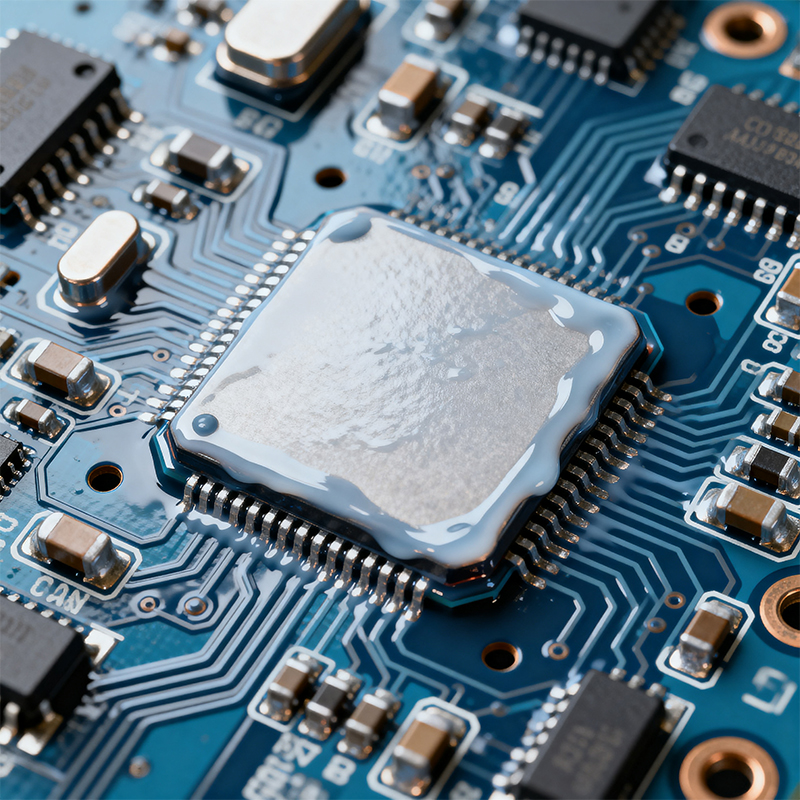
Think of it as a thin, transparent protective film that’s sprayed, brushed, or dipped onto a fully assembled circuit board. The key word is “conformal” – it conforms to the shape of every component, trace, and joint, creating a uniform protective barrier. It’s not a thick glob of glue; it’s a precisely applied layer measured in microns.
Why Bother? The Top Reasons to Use It
This coating isn’t for every board on your desk. It’s for boards that step out into the real world.
Fights Moisture & Corrosion: This is job number one. It seals out humidity, condensation, and water splashes, preventing short circuits and the dreaded green corrosion on copper traces.
Defends Against Contaminants: It creates a barrier against dust, dirt, chemicals, fuels, and mold that could degrade performance or cause leakage currents.
Improves Dielectric Strength: It adds an extra layer of electrical insulation, preventing arcing between closely spaced components, especially in high-voltage or high-altitude applications.
Provides Mechanical Stability: It can help secure small components against vibration and mild physical shock, and reduce stress on solder joints from thermal cycling.
Common Types of Coatings (It’s Not One-Size-Fits-All)
Choosing a coating is like choosing the right jacket for the weather. Here are the main types:
Acrylic (AR): The “all-rounder.” Easy to apply, dries fast, and offers good moisture resistance. Best of all, it’s easy to repair – you can dissolve it with common solvents to rework components. Great for general-purpose protection.
Silicone (SR): The “extreme conditions specialist.” Excellent flexibility and performance across a huge temperature range (-55°C to +200°C). Very resistant to moisture and chemicals. However, it’s harder to remove and can be a bit sticky, attracting dust.
Urethane/Polyurethane (UR): The “tough guy.” Offers superb abrasion, chemical, and solvent resistance. Often used in automotive or military applications. The downside is that removal for repairs is very difficult.
Epoxy (ER): The “hard shell.” Forms a very hard, rigid, and thick protective layer with great moisture and chemical resistance. However, its rigidity can be a problem under thermal stress, and rework is nearly impossible.
Parylene (XY): The “premium vapor.” Applied as a gas in a vacuum chamber, it creates an ultra-thin, perfectly uniform, and incredibly protective pinhole-free film. It’s top-tier for reliability but also the most expensive process.
Where You’ll Find Conformal Coating in Action
Look for it in devices that operate outside of a clean, climate-controlled box:
Automotive: Engine control units (ECUs), sensors, lighting.
Industrial: Factory automation controls, motor drives, outdoor instrumentation.
Marine & Aerospace: Navigation systems, avionics.
Consumer: Outdoor lighting, smart garden devices, dash cams.
Medical: Devices that may be exposed to cleaning agents or bodily fluids.
A Few Practical Pointers
Masking is Key: Areas like connectors, test points, and heatsinks must be kept coating-free. This requires careful masking before application.
Curing Matters: Some coatings air-dry, others need heat or UV light to fully cure and develop their protective properties.
Inspection & Thickness: The coating must be applied evenly and at the right thickness. Too thin won’t protect; too thick can trap heat or cause stress.
In short, conformal coating is the unsung hero that lets electronics venture into wet, dirty, and demanding environments. It’s a critical finishing step that bridges the gap between a delicate circuit board and the rugged world it needs to operate in.

Kaboer manufacturing PCBs since 2009. Professional technology and high-precision Printed Circuit Boards involved in Medical, IOT, UAV, Aviation, Automotive, Aerospace, Industrial Control, Artificial Intelligence, Consumer Electronics etc..


 English


 Wechat
 +86 13670210335
 +86 13670210335
 E-mail