
Date: 2025-12-04
Rigid flex PCB assembly is the critical, make-or-break stage where your innovative hybrid circuit board design is transformed into a functional, reliable electronic component. It’s where theoretical elegance meets practical precision. Think of it like this: you’ve designed a revolutionary folding smartphone. The rigid-flex PCB is the brilliant blueprint for its circuitry. But if that board isn’t assembled with absolute expertise, the phone won’t fold reliably ten times, let alone ten thousand. The truth is, the most advanced rigid-flex design can be rendered useless by subpar assembly. This article cuts straight to the heart of what truly matters: the specialized manufacturing and assembly process that brings your rigid-flex PCB to life.
Assembling a rigid-flex PCB isn’t just “regular SMT with a twist.” It’s a specialized discipline that acknowledges the board itself is a complex, hybrid structure. The goal isn’t just to place components correctly; it’s to do so without inducing stress, compromising the flex areas, or creating points of future failure. The process is governed by one non-negotiable principle: respect the board’s nature.
The rigid sections provide solid ground, but the flexible sections are vulnerable. They can be damaged by excessive heat, mechanical stress during handling, or even the thermal expansion of a poorly soldered large component near a transition zone. A standard assembly line, optimized for rigid boards, will stumble here. Success requires targeted adaptations at every stage.
To transform your rigid-flex boards into robust assemblies, the process must stand on three foundational pillars:
Specialized Process Engineering & Handling:
Customized SMT Profiles: The flexible polyimide materials react differently to heat than standard FR-4. Reflow soldering requires a meticulously tailored thermal profile. It must be hot enough to form perfect solder joints on the rigid areas without overheating, warping, or delaminating the sensitive flex layers.
Precision Support & Tooling: During solder paste printing and component placement, the board must be perfectly supported across both rigid and flex zones to prevent sagging or stress. This often requires custom-designed fixtures and pallets that hold the board flat without pinching or crushing the flexible parts.
Stress-Free Logistics: From the moment panels arrive, every movement matters. They must be stored, transported, and loaded onto the line in a way that prevents kinks, creases, or permanent bends in the flex regions before assembly even begins.
Enhanced Soldering & Component Management:
Strategic Gluing/Underfilling: For any component located near a bend area or on a small rigid section, mechanical reinforcement is key. Selective application of adhesives or underfill secures these components against the stresses of flexing and vibration, a step rarely needed in pure rigid-board assembly.
Component Orientation & Mass: Assembly planning involves analyzing the weight and placement of every component. A heavy connector placed at the edge of a rigid section can act as a lever, stressing the adjacent flex during movement. Engineers may specify lighter alternatives or mandate additional strain relief.
Rigid-Flex Specific Inspection: Post-reflow inspection goes beyond standard AOI (Automated Optical Inspection). It includes careful manual checks of the transition zones and flex areas for micro-cracks in solder joints or signs of material stress that automated systems might miss.
Robust Testing & Conformal Coating:
Electrical Testing with Finesse: Flying probe or bed-of-nails testing must be configured to safely contact test points without applying damaging pressure to unsupported flex areas. Test sequences often include monitoring for intermittent opens that might only appear when the flex is in a bent position.
Targeted Conformal Coating: Applying a protective conformal coating is often essential for reliability, but on rigid-flex, it’s an art. The coating must protect the rigid areas while remaining flexible enough on the flex zones not to crack during movement. Masking and application techniques are precise to ensure perfect coverage without bridging or pooling.
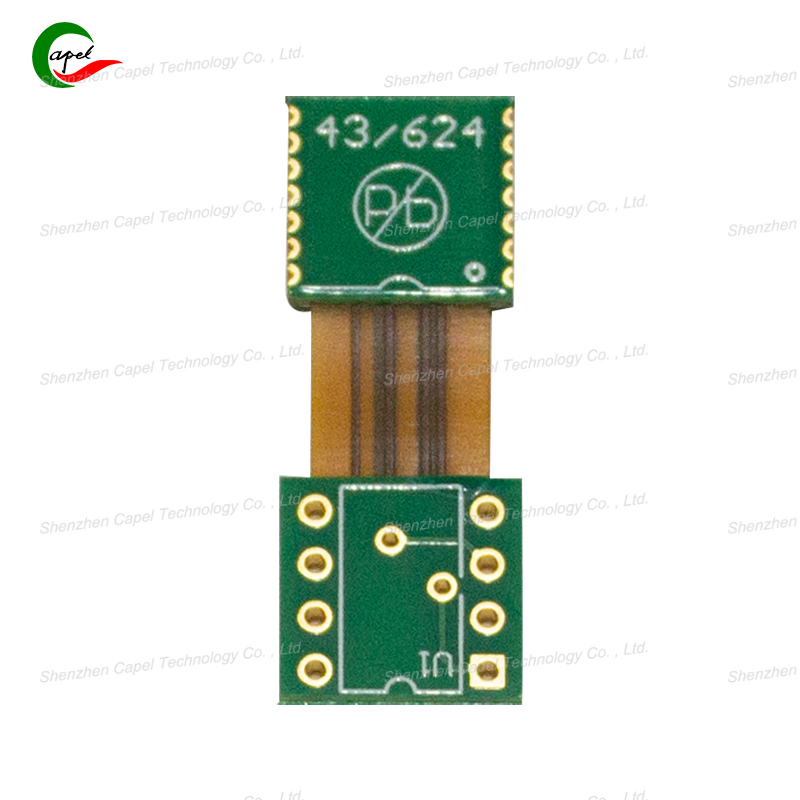
Our role is singular and focused: to be the undisputed expert in the manufacturing and assembly of rigid-flex PCBs. We are the execution partner you rely on after the design is finalized.
You handle the innovation—creating the schematics, defining the layer stack-up, and specifying the bend radii. We handle the translation—taking your supplied Gerber files, bill of materials (BOM), and assembly drawings and executing a flawless build. Our value is not in design consultation, but in manufacturing translation and process mastery. We ask the right manufacturing-oriented questions upfront to ensure your design is assembled reliably and efficiently, focusing on buildability, yield, and long-term performance.
The complexity of rigid-flex PCB assembly is why it remains a specialist field. Choosing a partner with deep, specific experience in this niche is not a luxury; it’s a prerequisite for product success. It’s the difference between a prototype that works on your bench and a thousand units that perform reliably in your customer’s hands.
Ready to see what a dedicated rigid-flex assembly focus can do for your product? If you have a finalized design and are seeking a manufacturing partner that understands the intricacies of bringing a rigid-flex PCB to life with precision and reliability, we are built for this.
Contact us today to discuss your project requirements and receive a detailed manufacturing plan. Let’s build something reliable together.

Kaboer manufacturing PCBs since 2009. Professional technology and high-precision Printed Circuit Boards involved in Medical, IOT, UAV, Aviation, Automotive, Aerospace, Industrial Control, Artificial Intelligence, Consumer Electronics etc..


 English



 Wechat
 +86 13670210335
 +86 13670210335
 E-mail