
Date: 2026-06-05
You’ve designed a great electronic product. The prototype works. Your team is ready to manufacture. Then a buyer asks: “Is it RoHS compliant?” If you don‘t have the right answer, your shipment could be stopped at customs — or never ordered at all.
RoHS isn’t just another regulation. It‘s the global passport for electronics. Without it, you can’t sell in the EU, and increasingly, you’ll struggle in North America and Asia too. Let‘s break down what RoHS compliant actually means, what’s changed in 2026, and how to make sure your boards meet the standard.
What Is RoHS Compliance? (In Plain English)
RoHS stands for Restriction of Hazardous Substances. It‘s a European Union law that limits the amount of certain toxic materials in electrical and electronic equipment. The idea is simple: if you can’t take the poison out of electronics, at least keep it below levels that hurt people and the planet.
Think of it like a “no toxic ingredients” label for electronics. Products that pass RoHS can be sold in the EU. Products that don‘t — can’t. Simple as that.
The original RoHS (Directive 2002/95/EC) took effect in 2003. Then came RoHS 2 (2011), which made CE marking mandatory and expanded product categories. Then RoHS 3 (2015) added four more substances to the restricted list, bringing the total to ten.
The 2026 Reality: Why This Year Is Different
2026 is a turning point for RoHS compliance. Three major shifts are happening right now:
Substances expanded from 6 to 10 – Four phthalates (DEHP, BBP, DBP, DIBP) are now fully restricted. These chemicals are common in PVC wire insulation, adhesives, inks, and soft plastics. Many manufacturers are still catching up.
Key lead exemptions are expiring – Some industries (medical, industrial monitoring, telecom infrastructure) were allowed to use lead in certain applications where alternatives didn‘t exist. Those exemptions are being reviewed — and many end in 2026-2027. If your product relies on an expiring exemption, you need to redesign now.
China RoHS now aligns with EU RoHS – As of January 1, 2026, China’s RoHS standard expanded from 6 to 10 substances and adopted the same testing methods (GB/T 39560 series) used in the EU. That means a single compliance approach works for both markets — but also that China is now enforcing just as strictly.
Bottom line: 2026 RoHS compliance is no longer just about lab tests. It requires full supply chain transparency and proactive material management.
The 10 Restricted Substances (And Where They Hide)
The EU RoHS currently restricts ten substances. Each has a maximum concentration limit of 0.1% by weight (1000 ppm), except cadmium at 0.01% (100 ppm).
| Substance | Limit | Where it hides in electronics |
|---|---|---|
| Lead (Pb) | 0.1% | Solder, PCB surface finishes, connector pins |
| Mercury (Hg) | 0.1% | Switches, relays, backlights |
| Cadmium (Cd) | 0.01% | Batteries, contacts, pigments |
| Hexavalent Chromium (Cr⁶⁺) | 0.1% | Corrosion coatings, metal finishes |
| PBB (flame retardant) | 0.1% | Plastic housings, connectors |
| PBDE (flame retardant) | 0.1% | Plastic housings, cables |
| DEHP (phthalate) | 0.1% | PVC insulation, adhesives, inks |
| BBP (phthalate) | 0.1% | Soft plastics, rubber components |
| DBP (phthalate) | 0.1% | Adhesives, printing inks |
| DIBP (phthalate) | 0.1% | Plasticizers in flexible materials |
[The four phthalates have become the new compliance headache because they are found everywhere — PVC wire jackets, solder mask inks, rubber seals, adhesives. They‘re often buried deep in the supply chain, making them hard to trace and verify.]
RoHS vs. REACH: Don’t Confuse Them
RoHS and REACH are often mentioned together, but they are different:
RoHS – Restricts specific hazardous substances in electrical and electronic equipment only. Focus: finished products.
REACH – Regulates all chemical substances across all industries. Focus: chemicals themselves.
If your product is electronic, you likely need both. But RoHS is the one that stops your boards at customs.
What Happens If You’re Not RoHS Compliant?
The consequences are serious — and expensive:
Customs can detain or ban your shipment at the border
Authorities can issue fines up to 2% of annual turnover or €1,000,000
You may face product recalls, redesign costs, and brand damage
Your distributors and customers may simply refuse to buy from you
[For manufacturers selling to Europe, RoHS compliance is mandatory. Without it, your products cannot legally enter the market. And with China RoHS now fully aligned, the same standards apply to one of the world‘s largest manufacturing bases and consumer markets.]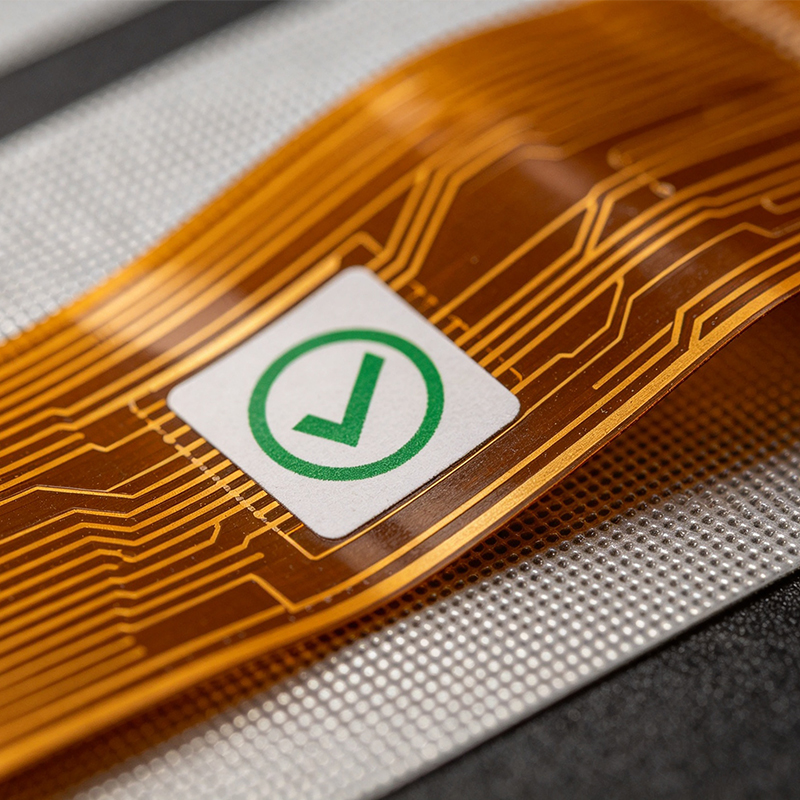
Why Flexible and Rigid‑Flex PCBs Face Extra Compliance Challenges
If your product uses flexible or rigid‑flex PCBs, RoHS compliance gets trickier. Here’s why:
Material complexity – Flex circuits use polyimide films, adhesives, and coverlays that may contain plasticizers, flame retardants, or stabilizers. These additives are exactly what the new phthalate restrictions target.
Supplier variability – Flexible laminates vary widely between suppliers, and adhesives introduce chemical interfaces that don’t exist in standard FR‑4 rigid boards.
Hidden contaminants – Because these materials are embedded inside laminated stacks, detecting prohibited substances is much harder than on a rigid board.
Thermal sensitivity – Flex materials respond differently to heat. Higher lead‑free soldering temperatures can degrade adhesives, release restricted substances, or alter material chemistry during reflow.
A compliance strategy designed for rigid boards simply won‘t work for flex circuits. You need a manufacturer that understands these unique risks and manages them from material sourcing through final testing.
How to Ensure Your PCBs Are RoHS Compliant
Here’s a practical roadmap for electronics manufacturers:
Know your product category – Determine which RoHS rules and exemptions apply to you.
Break down your BOM – Identify every material in every component. Homogeneous material is the unit of measurement — each individual material must comply, not just the whole board.
Verify your supply chain – Require RoHS compliance declarations and third‑party test reports from all component and raw material suppliers.
Test strategically – Use XRF screening for rapid detection, backed by chemical analysis (ICP‑OES) for high‑risk materials.
Document everything – Maintain your BOM, MSDS, test reports, supplier declarations, and a Declaration of Conformity (DoC). Keep these records for 10 years — by law.
Affix CE marking – For products sold in the EU, RoHS compliance is part of the CE mark requirements.
Monitor exemptions – If your product uses a lead exemption that’s expiring in 2026-2027, start alternative material testing now.
What We Offer – RoHS Compliant Custom PCBs and PCBA
We‘re a custom circuit board manufacturer that builds RoHS compliance into every board — from day one.
Flexible PCBs – Polyimide circuits with RoHS‑compliant coverlays, adhesives, and surface finishes (ENIG, immersion tin, etc.)
Rigid‑flex boards – Seamless integration of rigid and flexible sections, fully RoHS compliant
HDI high‑frequency boards – Fine lines, microvias, and low‑loss materials (Rogers, etc.) — all with RoHS‑controlled substances
PCBA – Full turnkey assembly using lead‑free SAC305 solder, RoHS‑certified components, and 100% testing
Our approach to RoHS compliance is not a last‑minute checkbox. We work with approved suppliers, maintain strict process controls, and keep full material traceability. Every board we ship is backed by documentation you can use for your own compliance filings.
Ready to Make Your Product RoHS Compliant?
If you‘re selling electronics to global markets, RoHS compliance isn’t optional — it‘s the price of entry. Send us your design files and BOM. We’ll review your materials, flag any compliance risks, and build your boards to meet RoHS standards — whether they‘re rigid, flexible, rigid‑flex, or HDI.
We also provide full PCBA assembly with lead‑free solder and compliance documentation, so you have everything you need for customs and customer audits.

Kaboer manufacturing PCBs since 2009. Professional technology and high-precision Printed Circuit Boards involved in Medical, IOT, UAV, Aviation, Automotive, Aerospace, Industrial Control, Artificial Intelligence, Consumer Electronics etc..


 English



 Wechat
 +86 13670210335
 +86 13670210335
 E-mail