
Date: 2026-05-22
When people imagine a circuit board, they often picture a green board covered with copper lines and tiny components. But not all boards are complex multi‑layer monsters. The simplest, most common, and often most cost‑effective type is the single‑sided PCB.
If you’re making a product that doesn’t need a lot of circuitry, or you want to keep costs low and assembly simple, a single‑sided board might be exactly what you need. Let’s explore what it is, how it’s made, where it shines, and when you should consider moving to something more advanced.
What Is a Single‑Sided PCB?
A single‑sided PCB (also called a single‑layer board) has copper traces on only one side of the insulating base material. The other side is bare substrate – usually FR4 fiberglass or sometimes a flexible material like polyimide. All the electronic components are mounted on the same side as the copper traces, and solder joints are made on that side as well.
In plain English: it’s a circuit board where everything happens on one side. No holes to connect to the other side (except for component leads that go through). Simple, straightforward, and cheap.
Why Would You Choose a Single‑Sided PCB?
Cost is the number one reason. Single‑sided boards require fewer materials, simpler processing, and less inspection. They’re the cheapest type of PCB to manufacture, especially in large volumes.
Other advantages:
Simple design – Easier for beginners or for circuits that don’t need complex routing.
Fast production – Fewer steps mean faster turnaround.
Easy to repair – All components and traces are visible and accessible.
Good for low‑frequency, low‑density circuits – Perfect for power supplies, sensor interfaces, LED boards, and many consumer products.
Where Are Single‑Sided PCBs Used?
You’ve seen them more often than you think. Single‑sided PCBs are everywhere in low‑cost, low‑complexity electronics:
Power supplies – Simple AC‑DC converters, chargers, LED drivers.
Consumer electronics – TV remote controls, clocks, radios, toys.
Sensors and detectors – Smoke detectors, motion sensors, thermometer boards.
Lighting – LED light strips, indicator boards.
Industrial controls – Relay boards, simple motor controllers.
Automotive – Some non‑critical interior electronics like window switches or light modules.
Even in the age of smartphones and smartwatches, single‑sided PCBs are still produced by the millions for products that don’t need complexity.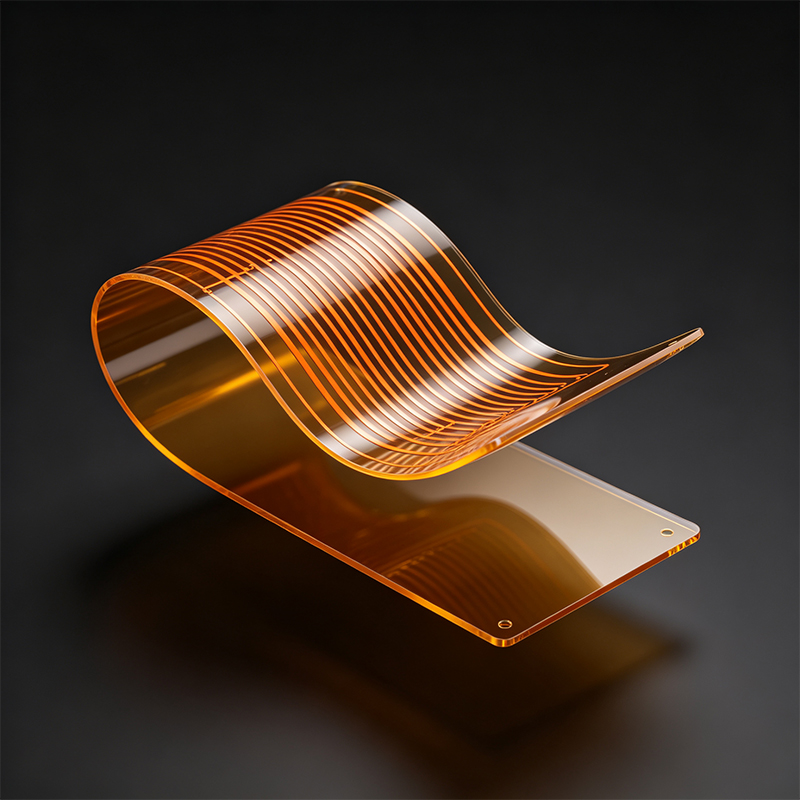
How Is a Single‑Sided PCB Made? (The Simple Version)
The manufacturing process is straightforward:
Prepare the copper‑clad board – A sheet of FR4 (or other insulator) with copper foil laminated on one side.
Drill holes – For through‑hole components, holes are drilled where leads will go. (Surface‑mount designs skip this step.)
Apply photoresist – The board is coated with a light‑sensitive film.
Expose and develop – A film negative of the circuit pattern is placed over the board, then exposed to UV light. The exposed areas harden; the unexposed areas are washed away.
Etch – The board is bathed in a chemical that removes unprotected copper, leaving only the desired traces.
Strip resist – The remaining photoresist is stripped off.
Apply solder mask – The green (or other color) protective coating is applied over the traces, leaving pads exposed.
Silkscreen – White text and component outlines are printed.
Surface finish – Pads are coated with HASL, ENIG, or OSP to make them solderable.
Electrical test – A quick test checks for shorts and opens.
Route or score – Individual boards are cut from the panel.
That’s it. No inner layers, no lamination of multiple cores, no buried vias. Simple.
Single‑Sided vs. Double‑Sided vs. Multi‑Layer – A Quick Comparison
| Feature | Single‑Sided | Double‑Sided | Multi‑Layer (4+ layers) |
|---|---|---|---|
| Copper layers | 1 | 2 | 4, 6, 8+ |
| Routing complexity | Low | Medium | High |
| Component density | Low | Medium | High |
| Cost per board | Very low | Low to medium | Medium to high |
| Typical use | Simple circuits, power supplies | More complex consumer electronics | Smartphones, computers, high‑speed designs |
Can a Single‑Sided PCB Use Surface‑Mount Components?
Yes, absolutely. Single‑sided boards are not limited to through‑hole parts. You can place surface‑mount components (SMDs) on the same side as the copper traces. In fact, many modern single‑sided designs use mostly SMDs to save space and assembly cost. The only trick is that you can’t place components on the bare substrate side (there’s no copper there to solder to). So all components must go on the copper side.
What About Flexible Single‑Sided PCBs?
Yes, single‑sided flexible circuits are common. Instead of FR4, the base material is polyimide (like Kapton). The copper is on one side, and a polyimide coverlay protects it. These are used in simple flex applications like membrane switches, ribbon cables for moving parts, or low‑cost wearables where only a few connections are needed.
If you need a board that bends but only has a handful of traces, a single‑sided flexible PCB is an affordable option.
When Should You NOT Use a Single‑Sided PCB?
Single‑sided boards have limitations. They are not suitable for:
High‑density circuits – If you have many components or complex routing, you’ll need more than one copper layer.
High‑frequency signals – Lack of a ground plane can cause signal integrity issues above a few MHz.
Very compact designs – You can’t cross traces without a jumper wire (or a zero‑ohm resistor). Double‑sided or multi‑layer boards let you route traces on different layers.
High‑power or high‑heat – Single‑sided boards often have no thermal vias, so heat dissipation is limited.
Jumper Wires on Single‑Sided Boards
One old‑school trick: when a single‑sided board needs a trace to cross another trace, you can use a jumper wire – a piece of insulated wire soldered between two points, arching over the other traces. It works, but it’s messy and not suitable for automated assembly. For modern designs, it’s better to use a double‑sided board or route the traces differently.
The Role of Single‑Sided PCBs in Prototyping
Single‑sided boards are great for hobbyist prototypes. You can even make them at home using toner transfer or UV exposure. But for professional prototypes, you still order from a PCB manufacturer – and single‑sided is the cheapest and fastest option.
What We Offer – Custom Single‑Sided PCBs and Much More
We’re a custom circuit board manufacturer. Yes, we make single‑sided PCBs – rigid and flexible. But we also know that many products start simple and grow complex. That’s why we offer the full range:
Single‑sided PCBs – Rigid (FR4) or flexible (polyimide). Fast turnaround, low cost.
Double‑sided and multi‑layer PCBs – When you need more routing space.
Flexible PCBs – Single‑sided, double‑sided, multi‑layer, with stiffeners and coverlay.
Rigid‑flex boards – Rigid sections with flexible tails, ideal for moving parts or space‑constrained designs.
HDI high‑frequency boards – Microvias, fine lines, low‑loss materials for 5G, radar, and high‑speed digital.
PCBA – Full assembly, including component sourcing, SMT, through‑hole, and testing.
Here’s how we help you with single‑sided PCBs:
Design review – We check your layout to ensure it’s manufacturable and cost‑effective.
Prototypes – Fast turnaround (3‑5 days for rigid single‑sided, 5‑7 days for flexible).
Volume production – Competitive pricing for large batches.
Flexible and rigid‑flex options – If your design evolves, we can help you upgrade.
When to Start with a Single‑Sided PCB and Later Upgrade
Many products begin as single‑sided designs. As you add features, you may need more layers or flexible sections. We can help you migrate – from single‑sided to double‑sided, from rigid to flex, or from basic to HDI. We keep the same manufacturing quality and service level throughout.
Real‑World Example: A Simple LED Lamp
A customer wanted a low‑cost LED lamp with a few LEDs, a resistor, and a switch. The circuit was simple. We recommended a single‑sided FR4 board. The board cost less than $0.50 each in volume. The customer saved money and got a reliable product. Later, they added a Bluetooth module and needed a more complex design – we moved them to a double‑sided flex‑rigid hybrid. But for the initial simple product, single‑sided was perfect.
Final Answer – What Is a Single‑Sided PCB?
A single‑sided PCB has copper traces on only one side of the insulating base. It’s the simplest, cheapest type of circuit board, ideal for low‑density, low‑cost, and low‑frequency applications like power supplies, remote controls, and LED lights. It can be rigid (FR4) or flexible (polyimide). While it has limitations, it remains a workhorse for millions of electronic products.
If your product needs a simple, reliable, and affordable circuit board, start with a single‑sided PCB. And when you need to add more complexity, we’re here to help you upgrade to flex, rigid‑flex, HDI, or PCBA.

Kaboer manufacturing PCBs since 2009. Professional technology and high-precision Printed Circuit Boards involved in Medical, IOT, UAV, Aviation, Automotive, Aerospace, Industrial Control, Artificial Intelligence, Consumer Electronics etc..


 English



 Wechat
 +86 13670210335
 +86 13670210335
 E-mail