
Date: 2025-12-26
An SMT Line is a fully integrated, automated production system designed to assemble electronic components onto printed circuit boards using Surface Mount Technology. It consists of a series of specialized machines connected by a conveyor system, working in sequence to complete the core steps of PCB assembly with high speed, precision, and repeatability. For electronics manufacturers, understanding the composition, capabilities, and types of SMT lines is essential for selecting the right manufacturing partner and ensuring product quality at scale.
An SMT Line transforms bare PCBs into populated, functional assemblies through a seamless, automated workflow. It is the central nervous system of any modern PCBA factory. The core objective of the line is to accurately place thousands of minuscule Surface Mount Devices (SMDs) per hour onto PCB pads, followed by a controlled soldering process to create permanent connections.
The transition from manual or semi-automated assembly to a full SMT Line represents a commitment to volume, consistency, and technological sophistication.
A typical high-speed SMT line is configured in the following sequence:
Loading / Unloading Unit: Automatically feeds bare PCBs into the line and removes finished assemblies.
Solder Paste Printer: The first critical station. A stainless steel stencil is aligned, and a squeegee blades solder paste onto the PCB pads. Solder Paste Inspection (SPI) systems are often integrated here for 3D measurement of paste volume, height, and alignment.
Pick-and-Place Machine: The heart of the line. These high-speed robots use vacuum nozzles to pick components from reels, sticks, or trays and place them with micron-level accuracy onto the pasted pads. Modern lines often combine a high-speed chip shooter for small passives and a flexible placement unit for larger, fine-pitch ICs.
Reflow Oven: The assembled PCB travels through a multi-zone oven with precisely controlled temperature zones. The thermal profile melts the solder paste (reflow), forming reliable solder joints, and then cools the board solidly.
Automated Optical Inspection (AOI): A post-reflow inspection station where high-resolution cameras scan the board to detect defects such as missing, misaligned, or tombstoned components, and solder bridging or insufficient solder.
Conveyor System: The "spine" that connects all machines, transporting PCBs between stations at a synchronized speed.
Additional Advanced Stations may include:
X-Ray Inspection Unit: For examining hidden solder joints under Ball Grid Array (BGA) or other concealed components.
Selective Soldering Machine: For mixed-technology boards requiring through-hole components after SMT.
Conformal Coating & Curing Line: For applying and curing protective coatings.
Not all SMT lines are the same. Their configuration determines their best use case:
| Type | Typical Configuration | Best Suited For | Key Characteristics |
|---|---|---|---|
| High-Speed / High-Volume Line | Multiple ultra-fast chip shooters + flexible placers. High-throughput ovens. | Mass production of consumer electronics (smartphones, tablets). | Maximum placement speed (>100,000 CPH), optimized for high-density, smaller components. Focus on throughput. |
| High-Mix, Low-Volume / Flexible Line | Versatile, multi-function placement heads. Quick changeover capabilities. | Prototypes, NPI runs, and production with frequent product changes. | Emphasis on flexibility, setup speed, and handling a wide variety of component packages. |
| High-Precision / Advanced Packaging Line | Ultra-precise placers, advanced flux management, underfill dispensers. | Advanced IC packaging, SiP, micro-LED assembly, and complex modules. | Sub-micron placement accuracy. Capabilities for handling ultra-fine-pitch (<0.3mm) and delicate components. |
When evaluating a manufacturer's SMT capability, consider these KPIs:
Placement Speed (Components Per Hour - CPH): The theoretical maximum speed of the pick-and-place machines.
Placement Accuracy (in microns): Critical for fine-pitch components. A higher-precision line offers accuracy down to ±25µm or better.
Line Uptime / Overall Equipment Effectiveness (OEE): Measures the actual productive output, factoring in availability, performance, and quality.
Minimum Component Size: The smallest component the line can reliably handle (e.g., 01005 metric, 0.3mm x 0.15mm).
Supported PCB Size: The range of board dimensions the conveyor and machines can accommodate.
A state-of-the-art SMT line is only as good as the processes that support it:
Feeder Management: Organized setup and calibration of thousands of component reels/tapes.
Stencil Management: Proper storage, cleaning, and alignment of stencils for perfect paste printing.
Solder Paste Management: Refrigeration, warming, and handling to maintain paste viscosity and performance.
Thermal Profiling: Creating and validating the optimal temperature curve for each unique PCB assembly in the reflow oven.
Line Balancing: Optimizing the workload across each machine to prevent bottlenecks and maximize throughput.
For global brands seeking manufacturing partners, the quality and sophistication of the SMT line are non-negotiable. At Kaboer, we have built our reputation on a foundation of advanced, in-house SMT production lines within our own facility in Shenzhen, China. This direct ownership translates into tangible benefits for our clients.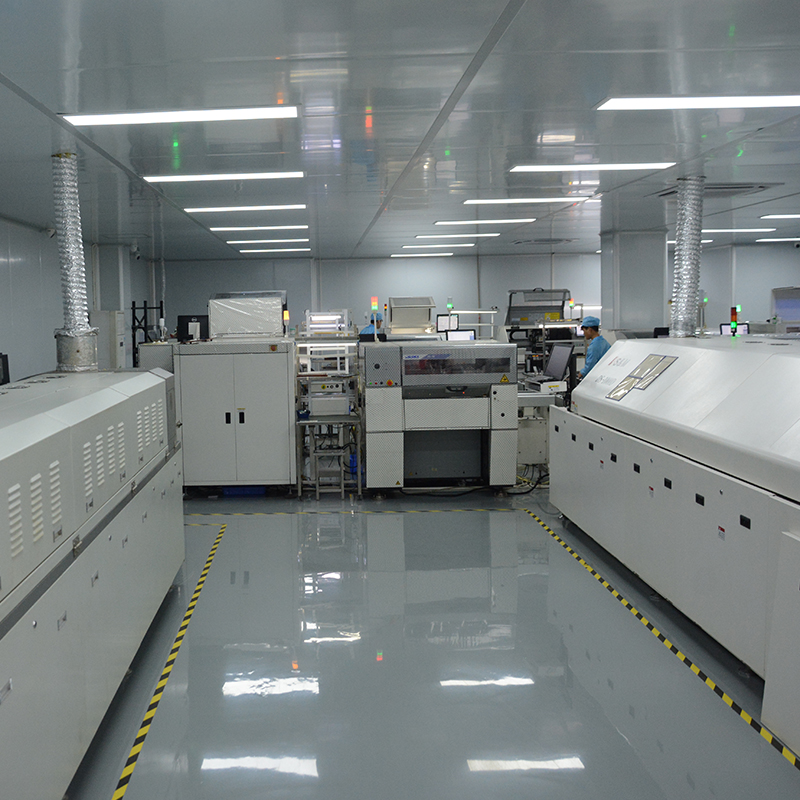
Why Your Project Belongs on a Kaboer SMT Line:
Direct Oversight & Guaranteed Consistency: By operating our own lines, we maintain absolute control over every process parameter—from paste printing to reflow profiling. This eliminates the variability and communication delays inherent in using a subcontracted factory, ensuring consistent, predictable quality for every batch.
Optimized for Flexibility and Scale: Our factory floor is equipped with a mix of high-speed and flexible SMT lines. This hybrid approach means we can efficiently manage your New Product Introduction (NPI) and prototyping on agile lines, then seamlessly transition volume production to dedicated high-speed lines without requalification risks.
Integrated Quality at Every Stage: Quality isn't just an inspection step; it's built into our line. With integrated SPI and AOI at critical checkpoints, defects are caught and corrected in real-time, drastically reducing scrap rates and improving final yield.
Engineering Depth, Not Just Machinery: Our team doesn't just run the machines; we master the process. We provide expert Design for Manufacturing (DFM) feedback specifically tailored for optimal SMT assembly, helping you avoid costly redesigns and production issues.
The Shenzhen Advantage, Fully Leveraged: Our location gives us direct, rapid access to the world's most dynamic electronics supply chain for components, consumables, and technical support, keeping your production agile and cost-competitive.
Don't just outsource assembly; invest in a manufacturing partnership built on controlled, advanced SMT technology. Contact Kaboer to discuss how our SMT lines can bring precision and reliability to your next project.
Q1: What is the difference between an SMT line and a PCBA assembly line?
A: An SMT Line specifically refers to the automated equipment chain for Surface Mount Technology assembly (printing, placing, reflow). A PCBA Assembly Line is a broader term that may include the SMT line plus additional processes for through-hole components, conformal coating, final assembly, and boxing.
Q2: How many SMD components can a modern line place per hour?
A: A single, modern high-speed chip shooter can place over 250,000 components per hour (CPH). A complete, optimized SMT line with multiple machines can achieve total placement rates exceeding 400,000 CPH.
Q3: What is the most common cause of defects on an SMT line?
A: Solder paste printing issues are the root cause of a majority of defects. Inconsistent paste volume, misalignment, or stencil clogging can lead to soldering defects like bridging, insufficient solder, or tombstoning. This is why SPI systems are now considered essential.
Q4: Can an SMT line handle all types of components on a board?
A: Mostly, but with limits. Standard SMT lines excel at passive components (resistors, capacitors) and standard ICs. Odd-form components (large connectors, transformers, etc.) may require a dedicated station or offline manual assembly, which is then integrated into the line flow.

Kaboer manufacturing PCBs since 2009. Professional technology and high-precision Printed Circuit Boards involved in Medical, IOT, UAV, Aviation, Automotive, Aerospace, Industrial Control, Artificial Intelligence, Consumer Electronics etc..


 English



 Wechat
 +86 13670210335
 +86 13670210335
 E-mail