
Date: 2026-06-03
You’ve designed a great electronic product. The schematic is solid. The PCB layout is done. Now comes the hard part: turning those files into physical, working boards that you can sell.
You need to source components. You need to fabricate the bare boards. You need to assemble them. You need to test them. And you need to do all of this without missing your launch date.
That’s a lot of moving parts. And if you try to manage each step with a different vendor, you’re signing up for endless emails, shipping delays, quality mismatches, and finger‑pointing when something goes wrong.
That’s why many electronics manufacturers choose turnkey manufacturing.
What Is Turnkey Manufacturing?
Turnkey manufacturing means you hand over your design files and a bill of materials (BOM) to one company, and that company takes care of everything – from sourcing components to fabricating the bare PCBs, assembling the boards, testing them, and shipping the finished product to your door.
You don’t need to chase three different suppliers. You don’t need to manage logistics between a board fab and an assembly house. You just get one quote, one timeline, one point of contact, and one invoice.
Think of it like ordering a custom‑built house from a general contractor. You don’t hire the electrician, plumber, and roofer separately – you hire one company that handles everything. Turnkey manufacturing does the same for electronics.
What Does Turnkey Manufacturing Include?
A full turnkey service typically covers:
Component sourcing – The manufacturer buys all the parts (resistors, capacitors, ICs, connectors, etc.) from trusted distributors. They check availability, verify authenticity, and manage lead times.
PCB fabrication – They manufacture the bare circuit boards – rigid, flexible, rigid‑flex, or HDI – exactly to your design.
PCBA (assembly) – They solder all the components onto the boards using automated SMT and through‑hole assembly lines.
Inspection and testing – They run AOI, X‑ray, ICT, and functional tests to catch defects.
Conformal coating (if needed) – They apply protective coatings for moisture, dust, or chemical resistance.
Packaging and shipping – They pack the finished boards in anti‑static bags and ship them to your warehouse or directly to your customers.
You send them Gerber files and a BOM. They send you ready‑to‑install boards. That’s turnkey.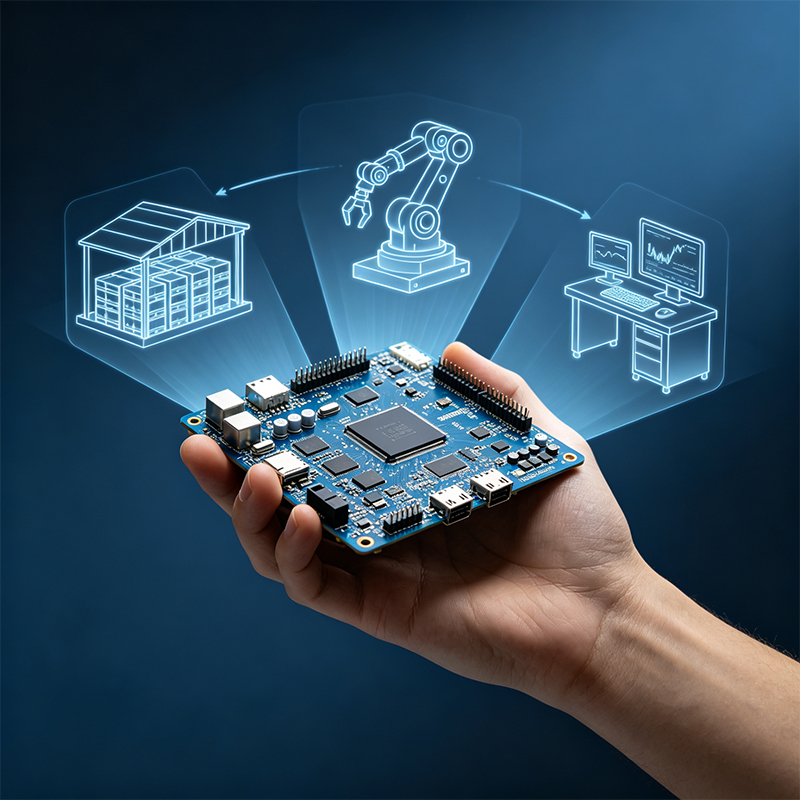
Why Turnkey Manufacturing Makes Sense for Electronics
Here are the big benefits:
1. One point of contact – No more juggling emails between a board fab here, an assembler there, and a component supplier somewhere else. You talk to one project manager who knows your entire project.
2. Faster time to market – When one company controls the whole process, there’s no waiting for bare boards to ship to an assembler. The fabrication and assembly can be scheduled in parallel. Delays are minimized.
3. Fewer quality issues – If a board fails, who’s responsible? In a non‑turnkey setup, the fab might blame the assembler, and the assembler might blame the component supplier. With turnkey, one company owns the whole outcome. They fix the problem, not the blame.
4. Lower total cost – Turnkey manufacturers buy components in volume and often get better pricing than you can. They also save you the overhead of managing multiple vendors – your team spends less time on procurement and logistics.
5. Reduced risk – Turnkey vendors validate your BOM for obsolete or long‑lead‑time parts. They catch design issues early through DFM (Design for Manufacturing) reviews. They test every board before shipping.
What Types of Boards Work with Turnkey Manufacturing?
Almost any board, but especially:
Rigid PCBs – Standard FR4 boards, from 2 layers to 16+ layers.
Flexible PCBs – Polyimide circuits that bend and fold. Turnkey is great for flex because the same vendor ensures the coverlay, stiffeners, and assembly all work together.
Rigid‑flex PCBs – Hybrid boards with rigid sections and flexible tails. These are complex, and a turnkey vendor is often the only way to avoid mismatches between the flex and rigid parts.
HDI high‑frequency boards – Boards with microvias, fine traces, and low‑loss materials (Rogers, etc.) for 5G, radar, and high‑speed digital. Turnkey ensures impedance control and material handling are done right.
Turnkey vs. Partial Turnkey vs. Consignment – A Quick Look
Here’s a no‑nonsense comparison:
| Model | One‑sentence summary |
|---|---|
| Full turnkey | You provide the design files and BOM – we handle everything else. |
| Partial turnkey | You supply expensive or hard‑to‑find parts – we source the rest and assemble. |
| Consignment (kitted) | You already have a stockroom full of parts – we just assemble the boards. |
Most customers choose full turnkey because it saves the most time and hassle.
What to Look for in a Turnkey Manufacturing Partner
If you’re outsourcing your production, here are the key things to check:
Do they do everything in‑house? – Some companies claim turnkey but outsource fabrication or assembly. In‑house control means better quality and faster turnaround.
Can they handle your board type? – If you need flexible or rigid‑flex boards, make sure they have flex‑specific processes (vacuum fixtures, laser cutting, coverlay lamination).
What’s their component sourcing process? – Do they buy from authorized distributors? Do they check for counterfeit parts? Do they have a stock of common passives to avoid delays?
What testing do they offer? – AOI? X‑ray? ICT? Functional test? 100% electrical test? Don’t assume – ask.
Do they provide DFM feedback? – A good turnkey vendor will review your design before production and suggest improvements. If they just run your files, walk away.
What’s their lead time for prototypes vs. production? – Fast prototypes (5‑10 days) let you test before you commit to volume.
Common Misconceptions About Turnkey Manufacturing
“It’s more expensive than managing my own vendors.” – Not usually. When you factor in your team’s time (emails, purchase orders, shipping coordination, quality checks), turnkey often ends up cheaper.
“I lose control over component choices.” – No, you still specify the manufacturer part numbers. The turnkey vendor just buys exactly what you ask for.
“Turnkey is only for large volumes.” – False. Many turnkey services accept prototype quantities (5‑50 boards) and small batches (100‑500 boards). The per‑board cost may be higher, but you save on setup and management.
How to Get Started with Turnkey Manufacturing
Prepare your files – Gerber files (RS‑274X), a complete BOM (with manufacturer part numbers), and any assembly notes (polarity, test points, etc.).
Request a quote – Send your package to a few turnkey vendors, including us.
Review the DFM report – A good vendor will send you a report with any design issues. Fix them before production.
Approve a prototype – Order a small batch (5‑50 boards) to test. Verify the boards work in your product.
Scale to production – Once the prototype passes, order your volume quantities.
Real‑World Example: A Medical Sensor Startup
A startup was developing a wearable heart‑rate sensor. They had a small rigid‑flex board with a Bluetooth chip, a battery connector, and several sensors. They tried to manage the project themselves: one vendor for the rigid‑flex bare boards, another for component sourcing, a third for assembly. The rigid‑flex vendor delivered boards that didn’t match the assembler’s fixtures. The assembler blamed the board design. The startup lost three months. They switched to a turnkey manufacturer (us). We sourced components, fabricated the rigid‑flex boards, assembled them, tested each one, and shipped 500 units in four weeks. The startup launched on time.
What We Offer – True Turnkey Manufacturing
We’re a custom circuit board manufacturer that does everything in‑house:
Flexible PCBs – Single‑sided, double‑sided, multi‑layer, with stiffeners and coverlay.
Rigid‑flex boards – Rigid sections with flexible tails – we fabricate and assemble them.
HDI high‑frequency boards – Microvias, fine lines, Rogers and other low‑loss materials.
PCBA – Full assembly, including component sourcing, SMT, through‑hole, and testing.
Our turnkey service includes:
Component sourcing from authorized distributors (no counterfeits)
DFM review on every order – we catch issues before they cost you money
100% electrical test, AOI, X‑ray, and ICT (if your design has test points)
Functional test per your test plan (we can build custom test fixtures)
Conformal coating – spray or dip
Global shipping – DHL, FedEx, air freight, sea freight
Ready to Stop Juggling Vendors?
If you’re tired of managing multiple suppliers and chasing down delays, it’s time for turnkey manufacturing. Send us your Gerber files and BOM. We’ll give you a single quote, a single timeline, and a single point of contact.
👉 Click below to request a turnkey quote. Let us do the heavy lifting – you focus on selling your product.

Kaboer manufacturing PCBs since 2009. Professional technology and high-precision Printed Circuit Boards involved in Medical, IOT, UAV, Aviation, Automotive, Aerospace, Industrial Control, Artificial Intelligence, Consumer Electronics etc..


 English



 Wechat
 +86 13670210335
 +86 13670210335
 E-mail