
Date: 2026-06-21
You have a circuit board. It passed every test before it left the factory. Power on? Check. Functions? Check. Everything works. A few weeks later, your customer calls. The device stopped working. You get it back and check — all the solder joints look perfectly fine. What went wrong?
The problem was hiding in plain sight. Its name is cold solder joint.
A cold solder joint is simply a solder joint where the solder did not fully melt before it solidified. It looks like it’s connected, but the solder is just “sitting” on top of the pad rather than actually bonding with it.
Think of it this way: a good solder joint is like gluing two pieces of wood together — the glue soaks into the wood and dries rock solid. A cold solder joint is like spreading glue on the surface, touching it before it dries, and thinking it’s stuck. It looks attached, but one good bump and it falls apart.
The scary part? Cold solder joints are masters of disguise. They might conduct electricity at first and pass your tests, but the connection is weak and brittle. After a few weeks of vibration or temperature changes, they finally give out.
In environments with vibration or thermal stress, a single cold solder joint can take down an entire system.
Identifying cold solder joints is all about looking closely — with a magnifying glass or microscope. Here’s how to tell a cold joint from a good one:
A good solder joint looks like:
Smooth and shiny — like a little mirror
Volcano-shaped — concave sides, solder smoothly feathers onto the pad
Smooth edges — the transition from solder to pad is seamless
A cold solder joint looks like:
Dull, grainy, and rough — like sandpaper, no metallic shine
Ball-shaped — solder is balled up on the pad, edges are abrupt
Gaps or micro-cracks — you might see a gap between the solder and the lead
Important: Lead-free solders (like SAC305) are naturally duller than leaded solder. So don't rely on color alone — look for graininess and a “dry” appearance.
The root cause of cold solder joints is simple: not enough heat. Here are the specific ways it happens:
1. Temperature too low
The soldering temperature never reached the melting point of the solder. Maybe the iron was set too low, or the reflow oven’s peak temperature wasn’t high enough.
2. Not enough time
The temperature was right, but the heat didn’t last long enough for the solder to fully melt.
3. Big components steal the heat
Large components (big inductors, heat sinks) soak up heat like a sponge, leaving nearby joints too cold. It’s like a group of people huddling around a small fire — the big person blocks all the heat, and the people behind them stay cold.
4. The joint moved while cooling
If you bump the board or component while the solder is still molten, the solder solidifies with a rough, grainy surface. This is called a “disturbed joint” — another type of cold solder joint.
5. Dirty or oxidized surfaces
Oxides or contaminants on the pad or component lead prevent the solder from wetting the surface. It’s like water on a greasy pan — it beads up instead of spreading out.
The deadliest thing about cold solder joints isn’t that they fail — it’s that they fool you into thinking everything is fine.
Trap #1: They pass the test
A board with a cold solder joint can pass power‑on testing. The joint still conducts — just with high resistance. By the time it fails, the product is already in your customer’s hands.
Trap #2: They fail intermittently
When the device heats up, the board expands slightly. Thermal expansion can pull a cold joint apart. Then it cools down and reconnects. These “comes and goes” failures are an absolute nightmare to debug.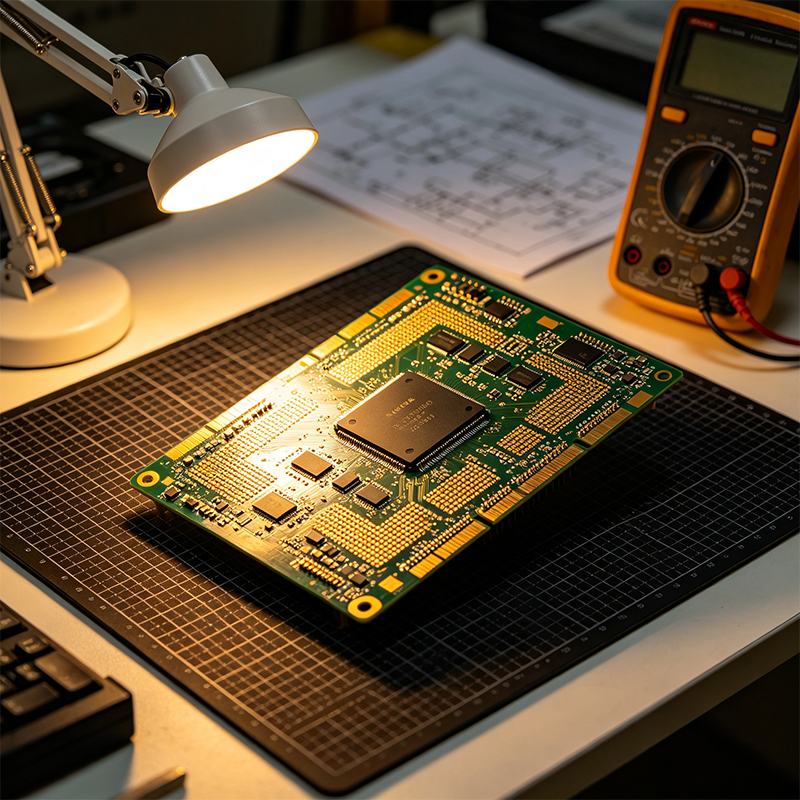
Trap #3: They hate vibration
In cars, drones, and aerospace equipment, vibration is constant. Cold solder joints are brittle and crack under fatigue. One cold joint, one cracked connection, one dead system.
Cold solder joints are sneaky, but not invisible:
1. Visual inspection (with magnification)
Look at the joint under a magnifying glass or microscope — dull? Grainy? Ball‑shaped?
2. The tweezer test
Gently poke the joint with tweezers. If it cracks or moves, it’s cold.
3. AOI (Automated Optical Inspection)
AOI machines use high‑resolution cameras to check joint shape and wetting angle against a standard.
4. X‑ray inspection
For hidden joints (like BGAs), X‑ray is the only way to check for voids and defects inside the joint.
5. Electrical testing
Measure resistance — cold joints have much higher contact resistance than good joints.
If you find a cold solder joint, fixing it is straightforward:
Method 1: Re‑heat it
Apply the soldering iron to the joint and let the solder melt and flow again. Adding a little fresh flux helps the solder wet properly.
Method 2: Add fresh solder
While re‑heating, add a tiny bit of new solder to improve flow.
Method 3: Remove and re‑do
If there’s too much solder, use solder wick or a solder sucker to remove the old solder, then solder it fresh.
Important: After rework, re‑inspect the joint. It should look smooth and shiny.
Prevention is always better than repair. Follow these rules and you’ll see far fewer cold solder joints:
1. Use the right temperature
Set your iron at least 15°C above the solder’s melting point. For reflow, follow the solder paste manufacturer’s profile.
2. Give it enough time
Make sure the solder stays above its melting point long enough to fully melt.
3. Watch out for big components
If your board has large heat‑sucking components, increase the temperature or time to compensate.
4. Don’t move the joint while it’s molten
No bumping, no touching, no moving — let it cool in peace.
5. Keep surfaces clean
Pads and leads must be free of oxides and contaminants. Store components in dry conditions.
6. Use the right flux
Flux helps solder wet the surface and prevents cold joints.
A cold solder joint is a joint where the solder didn’t fully melt before solidifying. It looks dull and grainy, balled up on the pad instead of flowing smoothly. It might pass your tests, but it’s weak and brittle — and it will fail when you least expect it.
Next time you’re debugging a board that “works sometimes but not always” — grab a magnifying glass and take a close look at every joint. Good joints are shiny, smooth, and volcano‑shaped. Cold joints are dull, grainy, and ball‑shaped. Knowing the difference will save you hours of frustration.

Kaboer manufacturing PCBs since 2009. Professional technology and high-precision Printed Circuit Boards involved in Medical, IOT, UAV, Aviation, Automotive, Aerospace, Industrial Control, Artificial Intelligence, Consumer Electronics etc..


 English



 Wechat
 +86 13670210335
 +86 13670210335
 E-mail