
Date: 2026-04-24
Remember the first time you wondered how a light bulb actually turns on? Or why your remote control needs batteries? For most of us, those were mysteries solved by "magic." But today, a children's circuit board is turning those mysteries into hands-on adventures.
In 2026, as AI and robotics become part of daily life, understanding the "heartbeat" of technology—electronics—is no longer just for experts. It’s for kids sitting on their living room rugs.
In simple terms, a children's circuit board is a simplified, ultra-safe version of the green boards you find inside your TV or phone. Instead of tiny components and messy solder, these kits use large, colorful modules that "snap" or "clip" together.
It’s like LEGO, but instead of building a castle, you’re building a functioning FM radio, a motion-activated alarm, or a light-up doorbell.
Try explaining "electrons" to a 7-year-old, and you’ll see their eyes glaze over. But tell them it’s like a water park, and they get it instantly!
The Battery: It’s the water pump that pushes the water.
The Wires: These are the pipes.
The Switch: A valve that stops or starts the flow.
The LED/Buzzer: The water wheel that spins when the water hits it.
A children's circuit board lets kids literally see the "pipes" connect. When the light goes on, that "Aha!" moment is worth more than any textbook chapter.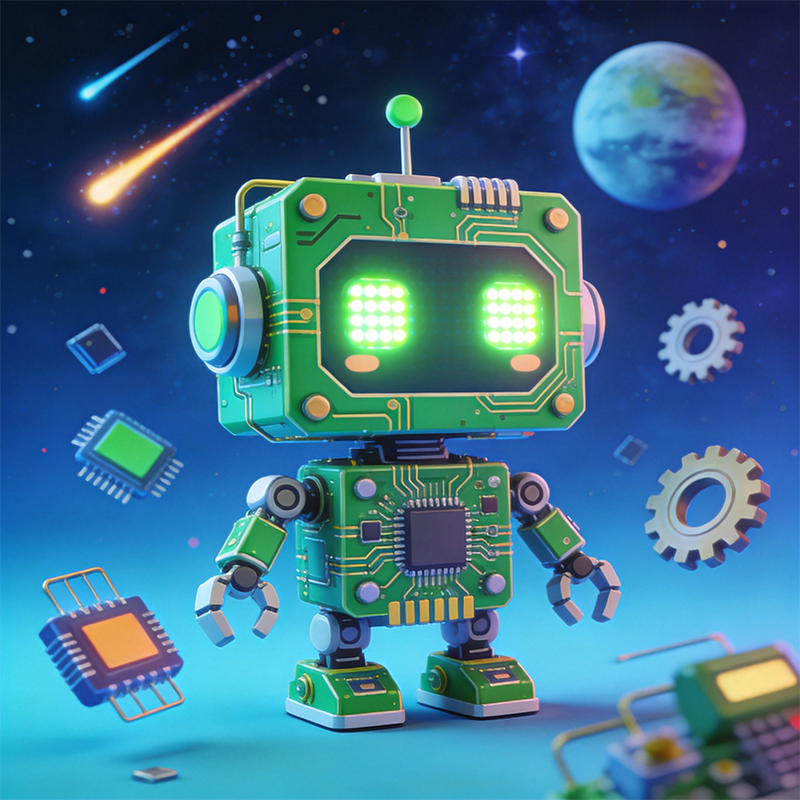
Not all kits are the same. If your child is younger (ages 5-8), Snap Circuits are the way to go. They use sturdy plastic blocks that are almost impossible to break.
For older kids (ages 9+), Breadboard Kits or Paper Circuits are better. They use real-looking wires and resistors, making them feel like "real" engineers. It’s a bit more challenging but incredibly rewarding for their motor skills and patience.
One of the biggest hurdles for kids getting into electronics used to be the soldering iron. It’s hot, it smells, and it’s a bit scary for parents. Modern children's circuit boards have fixed this. By using magnetic connectors or spring clips, we’ve removed the heat and the lead. It’s 100% "shock-proof" because most kits run on just 3V or 5V—less power than a household flashlight.
Playing with these boards isn't just about learning what a resistor does. It’s about logical thinking. If the light doesn't turn on, why? Is the battery backwards? Is there a gap in the "pipe"?
This is the foundation of debugging—a skill that applies to coding, math, and even life. It teaches kids that failure isn't the end; it's just a puzzle waiting to be solved.
A children's circuit board is more than a gift; it’s a door to curiosity. In a world of screens, giving a child something physical to build and control is a powerful way to turn them from "consumers" of tech into "creators."

Kaboer manufacturing PCBs since 2009. Professional technology and high-precision Printed Circuit Boards involved in Medical, IOT, UAV, Aviation, Automotive, Aerospace, Industrial Control, Artificial Intelligence, Consumer Electronics etc..


 English



 Wechat
 +86 13670210335
 +86 13670210335
 E-mail