
Date: 2026-01-03
In electronics manufacturing, "custom" is not a marketing term but a way of working. It means that from the very beginning, the manufacturing team needs to deeply understand your design intent—not just whether the circuits connect correctly, but the environment your product will operate in, the reliability it must achieve, and how it might evolve in the future.
True custom PCBA service never focuses solely on "mounting components onto a board." It focuses on how to translate your design into its optimal physical form, how to maintain consistency in mass production, and how to solve potential issues before they arise.
Phase 1: Understanding and Planning
We first take time to understand the complete context of your product. This isn't a formality—it's the foundation of customization. Will your board be used in consumer products or industrial equipment? What temperature variations must it withstand? What is its expected lifecycle? The answers directly influence material selection, process standards, and test plan development.
Phase 2: The Design Optimization Dialogue
We carefully analyze your design files, providing feedback from a manufacturing perspective. This dialogue is typically technical, direct, and focused on balancing design ideals with manufacturing realities. Certain component placements might affect production efficiency, or specific layer stack-ups might increase costs with minimal performance gain. We provide data and recommendations, but the final decision remains with you.
Phase 3: Smooth Transition from Prototype to Production
The most critical phase in a custom project is often the transition from prototype approval to volume production. During this phase, we establish dedicated quality control points on the production floor, ensuring each step meets the standards we've jointly confirmed. For custom projects, we usually recommend a small pilot run to validate the stability of the entire manufacturing process before committing to full-scale production.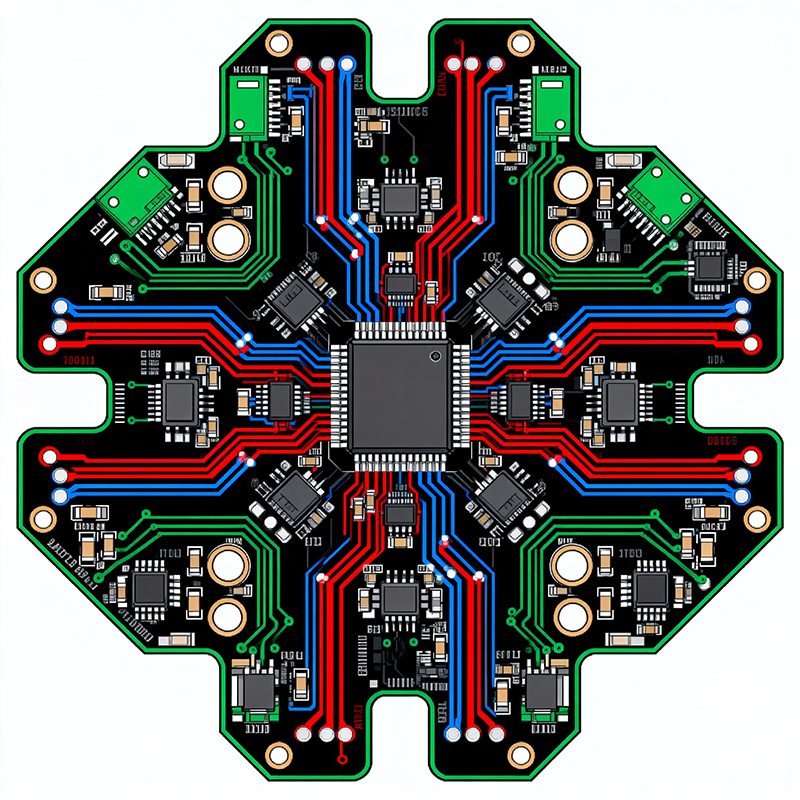
Unlike outsourced suppliers, a PCBA manufacturer with its own factory demonstrates distinct characteristics in daily operations:
Communication Is Direct
Your questions go directly to the technicians responsible for production, without passing through multiple layers. This directness typically means faster response times and more accurate information. When you ask about production progress, you get the actual situation on the floor, not a sanitized report.
Adjustments Are Flexible
Design changes are common in custom projects. An owned factory can adjust production schedules and rearrange material procurement more quickly, without extensive coordination with external facilities. This flexibility proves particularly valuable when project timelines are tight.
Responsibility Is Clear
From start to finish, we are your single point of contact. This means any manufacturing-related issues are our direct responsibility to resolve—no need to determine liability among multiple suppliers. This single point of accountability simplifies project management and reduces communication overhead.
If you're evaluating potential custom PCBA partners, several aspects deserve attention:
Focus on Their Working Methods, Not Just Promises
Listen to how they describe their typical workflow: how they engage during the design phase, how they handle engineering changes, how they manage supply chain risks. These daily working methods reveal more than any quality promise.
Confirm Their Capability Boundaries
An honest manufacturer knows their strengths and limitations. They should clearly explain which designs they can execute well within their capabilities and which might require special equipment or processes. This transparency is crucial for project success.
Consider the Long-Term Relationship
Custom PCBA is rarely a one-time transaction. Finding a manufacturing partner who understands your product roadmap and can provide ongoing support as your products evolve is more beneficial for long-term development.
At its core, custom PCBA is about establishing a working relationship that understands design intent, respects manufacturing realities, and finds the optimal balance between them. If you have a project in the planning stages, we welcome you to share your preliminary ideas and requirements. We can offer some initial thoughts from a manufacturing perspective.

Kaboer manufacturing PCBs since 2009. Professional technology and high-precision Printed Circuit Boards involved in Medical, IOT, UAV, Aviation, Automotive, Aerospace, Industrial Control, Artificial Intelligence, Consumer Electronics etc..


 English



 Wechat
 +86 13670210335
 +86 13670210335
 E-mail