
Date: 2025-12-05
If I told you the heart of your smartphone, your smartwatch, and even the camera in your car isn’t a stiff, green piece of fiberglass anymore, would you believe me? Welcome to the world of the Flexible PCB, or FPC. It’s the circuit board that laughs in the face of traditional design rules. You can’t bend your laptop’s motherboard, right? But a Flexible PCB? You can roll it, fold it, twist it, and make it fit into spaces where a rigid board would never stand a chance.
Think of it as the ligament or tendon of an electronic device. Your bones (the rigid structure and major components) give you shape and strength, but it’s the ligaments and tendons that allow for movement, flexibility, and compact form. That’s the exact role a Flexible PCB plays.
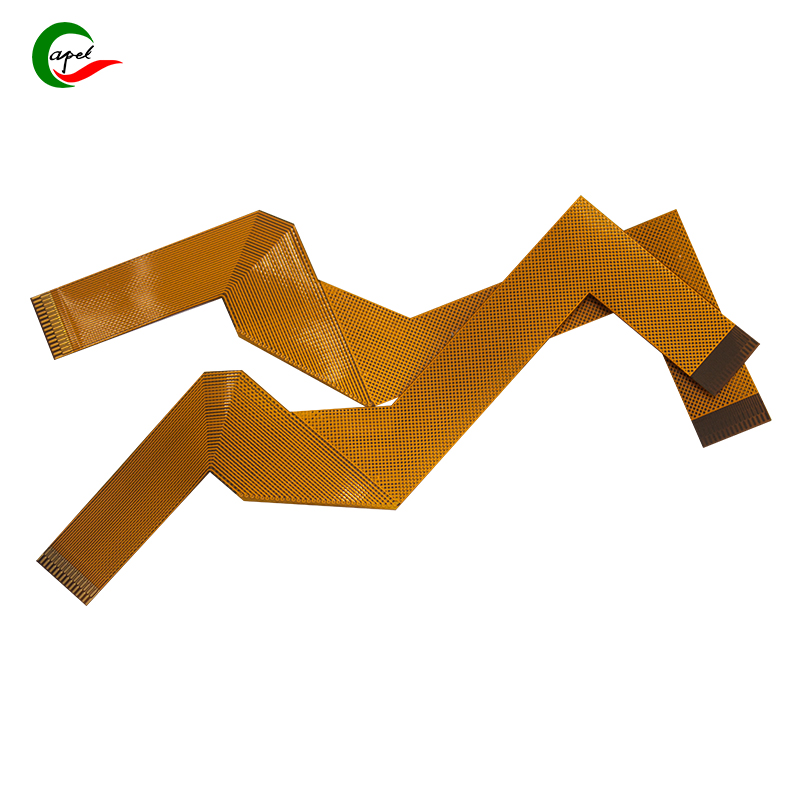
So, what is it, really? In simple terms, it’s a patterned arrangement of printed circuitry (like copper wires) on a flexible, plastic-like base material, usually Polyimide. This base is thin, tough, and can handle heat, which is why it doesn’t crack when you bend it. To protect the delicate copper traces, they’re covered with a protective layer, making the whole thing look like a slim, orange or yellow flat cable that’s actually packed with intelligence.
Once you know what to look for, you’ll see Flexible PCBs are the unsung heroes inside almost every modern gadget you own and many you don’t even think about. They solve one critical problem: connecting things in tight, moving, or oddly shaped spaces.
Let’s break it down by where you’ll find them working hard:
In Your Pocket and On Your Wrist (Consumer Electronics):
Smartphones: This is the big one. Every single smartphone uses multiple Flexible PCBs. They connect the main logic board to the display, the buttons to the motherboard, and most importantly, they are the essential component in folding and flip phones, allowing the screen to bend at the hinge thousands of times.
Laptops & Tablets: They connect keyboards to motherboards and allow for the sleek, thin designs of modern laptops by routing signals through the hinges.
Cameras: In both DSLRs and phone cameras, tiny Flexible PCBs connect the image sensor and lens control mechanisms, allowing for features like optical image stabilization (OIS) where the lens module actually moves.
Wearables: Smartwatches and fitness bands use them to wrap around your wrist comfortably and connect curved displays to the main chip.
On the Road (Automotive):
Modern cars are rolling computers. Flexible PCBs are perfect for the harsh, vibrating, and space-constrained car environment.
They connect dashboard displays, often curving behind the panel.
They’re inside LED lighting systems, conforming to the car’s aerodynamic shapes.
They link sensors throughout the vehicle—in doors, seats, and advanced driver-assistance systems (ADAS).
Saving Lives (Medical Devices):
This is where reliability is non-negotiable. Flexible PCBs are ideal because they are lightweight, reliable, and can be made biocompatible.
Wearable Monitors: Think of ECG patches, continuous glucose monitors. They need to be comfortable, flexible against the skin, and reliable for days.
Implantable Devices: Pacemakers and neurostimulators use highly specialized Flexible PCBs that must be incredibly reliable and last for years inside the body.
Diagnostic Equipment: In handheld ultrasound probes and endoscopic cameras, they can navigate tight spaces and complex shapes.
In the Sky and Factory (Aerospace & Industrial):
Drones & Satellites: Every gram matters. Flexible PCBs save crucial weight and space, allowing for more sensors or longer battery life. They also handle vibration from motors and launches.
Robotics: In robot arms and joints, they can flex with the movement, providing a more robust connection than a bundle of wires that could wear out.
Industrial Sensors: They fit into tight spots in machinery to monitor performance, temperature, and pressure.
Understanding what a Flexible PCB is and where it’s used is one thing. Getting one that actually performs, batch after batch, in your specific product is another. That’s where Kaboer comes in.
We’re not a design house or a middleman. We are a manufacturing partner with our own factory. In the world of Flexible PCBs, that’s a critical distinction. Here’s what that means for you:
Control and Consistency: Every step—from sourcing the raw polyimide film and copper, to the precision etching, plating, and final testing—happens under our roof. We control the entire process, which means we control the quality. No surprises, no blaming a subcontractor.
Built for Tough Jobs: We specialize in Flexible PCBs that go into demanding applications. Whether your device needs to survive the heat under a car hood, the constant flexing in a wearable, or the sterile environment of a hospital, we engineer and build our boards with that end-use in mind. We don’t just make “generic” flex circuits.
Transparency You Can Trust: We believe the best way to build a partnership is through openness. That’s why we invite our clients to visit our factory. Come see the clean rooms, the high-precision equipment, and the quality checks for yourself. See where and how your product will be made. Talk directly to our engineers. It’s the fastest way to build confidence.
Problem-Solving from the Start: While we focus on manufacturing, our experience allows us to provide valuable feedback on your design files. We can spot potential manufacturing headaches or reliability risks early—before they become costly delays.
In short, we take your innovative design and turn it into a physical, reliable, high-performance Flexible PCB that won’t let your product down. We’re the behind-the-scenes experts who ensure the “ligaments” of your device are as strong and durable as they need to be.
Ready to see if a Flexible PCB is the right solution for your next project? Or do you need a manufacturing partner you can rely on for your existing designs? Let’s talk. Reach out to the Kaboer team today and discover how our expertise and owned-factory control can bring your ideas to life, reliably.

Kaboer manufacturing PCBs since 2009. Professional technology and high-precision Printed Circuit Boards involved in Medical, IOT, UAV, Aviation, Automotive, Aerospace, Industrial Control, Artificial Intelligence, Consumer Electronics etc..


 English



 Wechat
 +86 13670210335
 +86 13670210335
 E-mail