
Date: 2026-01-09
In most consumer electronics, a circuit board failure might cause inconvenience. But in medical devices—whether patient monitors, diagnostic equipment, or implantable devices—the reliability of the PCB is directly tied to diagnostic accuracy and patient safety.
This means medical PCB assembly adheres to a set of standards and requirements far more stringent than those for consumer electronics. The focus isn't just on "functioning," but on functioning absolutely reliably under various demanding conditions, throughout the entire lifecycle of the device.
In a manufacturing environment like Shenzhen, handling medical-grade projects requires establishing special processes and controls across multiple dimensions.
Clean and Controlled Production Environment
Medical PCB production often needs to occur within dedicated cleanroom or controlled areas. This is to minimize dust, particulates, and other contaminants that could affect long-term reliability. Environmental conditions, from material storage to production zones, must be monitored and documented.
Extensive Traceability Requirements
Complete and accurate records must be kept for everything: each batch of components, every critical process parameter (like soldering temperature profiles), and all test data for every finished board. This level of traceability allows precise pinpointing of material batches and production timestamps, which is critical for quality management and potential issue investigation in the medical field.
Considerations for Biocompatibility
For devices that may contact the human body or are used in sensitive environments, the materials used on the PCB (solder, cleaning agents, conformal coatings) may need to be evaluated for biocompatibility to ensure they don't leach harmful substances or degrade during sterilization processes.
Compatibility with Sterilization Processes
Many medical devices require regular disinfection (e.g., alcohol wipes) or sterilization (e.g., autoclaving, ethylene oxide, radiation). The assembly process and chosen materials must withstand these procedures without performance degradation or physical damage.
Testing and Validation Beyond the Norm
Beyond standard functional testing, medical PCBs often require more rigorous environmental stress testing (like accelerated aging, thermal cycling) and more thorough electrical safety testing. This simulates years of real-world use and ensures compliance with safety standards for medical electrical equipment (such as the IEC 60601 series).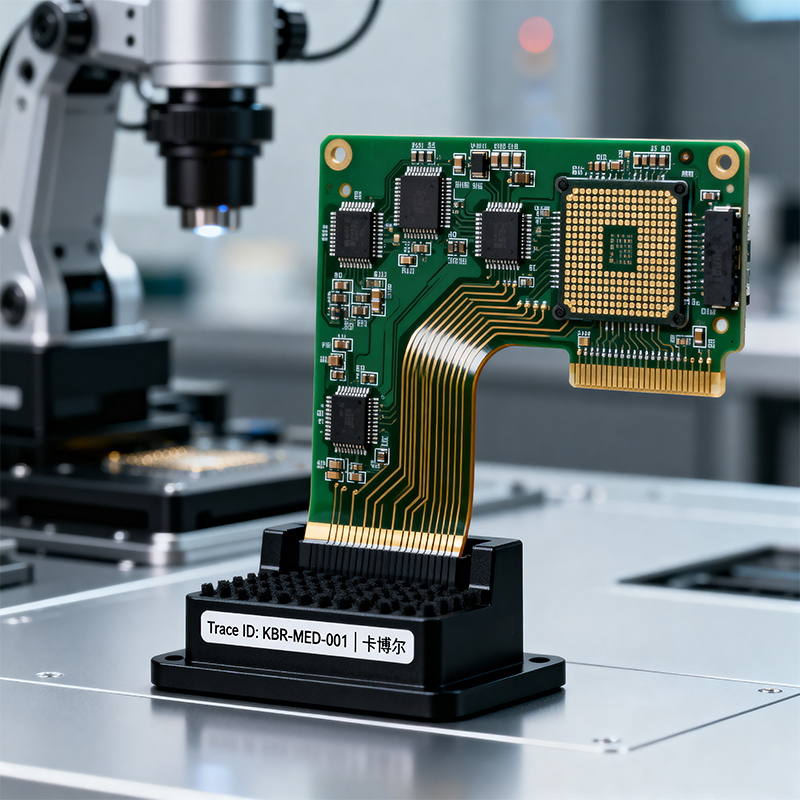
Given the strict regulations and high stakes involved, it's especially important to verify the following when selecting a medical PCB assembly partner:
Relevant Quality System Certification
ISO 13485 is the international standard for quality management systems specific to medical devices. A manufacturer holding this certification has demonstrated it has systematic processes in place to meet the medical industry's unique regulatory requirements. Experience supporting devices for specific markets (like the US FDA or EU MDR) is also beneficial.
Specific Project Experience
Inquire if the manufacturer has successful production experience with similar products (in terms of complexity or application). Past experience helps them anticipate and avoid many potential pitfalls.
Documentation and Change Control Processes
Medical projects demand extremely high levels of documentation completeness, accuracy, and rigorous change control. Understand how the manufacturer manages engineering changes, deviations, and generates production and test records that meet regulatory expectations.
Supply Chain Control Standards
Components for medical products require a higher degree of assurance regarding their origin, quality, and consistency. The manufacturer should be able to demonstrate how they vet and manage key material suppliers.
For medical projects, successful collaboration often starts at the design phase. An experienced manufacturing partner can provide input from a Design for Manufacturability (DFM) and Design for Testability (DFT) perspective early on, while also considering the constraints medical standards place on layout, material selection, and processes. This early cooperation helps optimize the design, avoiding costly redesigns later to meet compliance needs.
At Kaboer in Shenzhen, we have designated production areas and controlled processes for handling medical and high-reliability products. We understand that in this field, trust is built on consistently following established procedures and providing complete, traceable data every single time. Our role extends beyond assembling a circuit board; we become a link in building a safe, reliable medical ecosystem.
When your project involves medical device development, taking the time to find and vet a partner that truly understands and can execute medical-grade manufacturing standards is a crucial step toward success. It's not just a business decision; it's an entrustment of responsibility.

Kaboer manufacturing PCBs since 2009. Professional technology and high-precision Printed Circuit Boards involved in Medical, IOT, UAV, Aviation, Automotive, Aerospace, Industrial Control, Artificial Intelligence, Consumer Electronics etc..


 English



 Wechat
 +86 13670210335
 +86 13670210335
 E-mail