
Date: 2026-05-14
You touch a circuit board. The green parts feel like plastic. The shiny silver bits feel like metal. If you accidentally plug something in backward, the plastic‑like parts stop electricity from going where it shouldn’t. That’s the job of non conductive material.
Let’s talk about these invisible heroes – what they are, where you find them, and why your phone, laptop, and car would burst into flames without them.
What Is a Non Conductive Material?
A non conductive material (also called an insulator) is a substance that does not let electricity flow through it easily. Electrons in these materials are tightly bound to their atoms – they don’t wander around. So when you apply a voltage, almost no current moves.
In everyday terms: electricity treats non conductive materials like a brick wall. It can’t get through.
Why Are Non Conductive Materials So Important in Electronics?
Three big reasons:
Prevent short circuits – They keep copper traces and component leads from touching where they shouldn’t.
Protect people – They insulate you from high voltage so you don’t get shocked.
Provide mechanical support – They hold everything in place without interfering with the electrical signals.
Without non conductive materials, every circuit board would be a tangled mess of wires shorting against each other. Your phone would overheat instantly. And touching any metal part would give you a nasty shock.
Common Non Conductive Materials in Electronics
Let’s look at the ones you’ll meet most often.
1. FR4 (Fiberglass Epoxy) – The Circuit Board Base
That green (or blue, red, black) board itself – FR4 is a non conductive material. It’s made of woven fiberglass cloth soaked in epoxy resin. It’s strong, heat‑resistant, and an excellent insulator. Without FR4, you’d have no rigid PCB to solder components onto.
2. Solder Mask – The Green (or Other Color) Paint
That thin layer on top of the copper traces? Also non conductive. Solder mask is a photo‑imageable epoxy ink that covers everything except the solder pads. It stops solder from bridging between traces and protects the copper from oxidation.
3. Silicone Rubber – The Squishy Insulator
You’ve seen silicone as soft pads, gaskets, or wire coatings. It’s flexible, heat‑resistant, and a great insulator. Silicone wire is common in high‑voltage or high‑temperature applications. Silicone thermal pads also transfer heat while staying electrically insulating.
4. Polyimide (Kapton) – The Orange / Amber Film
That thin, orange, almost transparent film you see inside laptops or flexible circuits? Polyimide. It’s non conductive, very heat‑resistant (up to 400°C for short periods), and mechanically tough. It’s used as flexible PCB substrate, insulating tape, and wire insulation.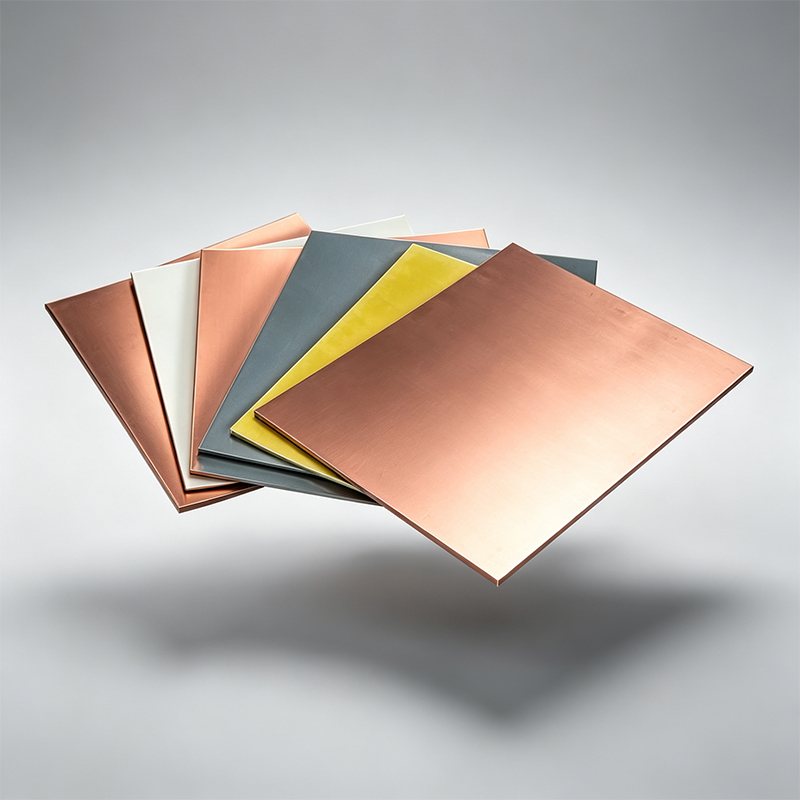
5. PTFE (Teflon) – The Slippery Insulator
PTFE is famous for non‑stick pans, but in electronics, it’s used for high‑frequency coaxial cables and PCB laminates. It has very low signal loss and excellent insulation resistance. It’s also chemically inert and heat‑resistant.
6. Plastic (Various Types) – Connectors, Enclosures, Switches
Most of the black plastic you see – connector housings, switch bodies, power supply cases – is non conductive. Common plastics include ABS, polycarbonate, nylon, and PBT. They provide structural insulation so you can touch the outside of a device safely.
7. Ceramic – For High Power and High Heat
Ceramic is an excellent insulator. It’s used for power transistor bases, high‑voltage insulators, and some surface‑mount resistor bodies. Ceramic doesn’t melt easily and can handle very high temperatures.
What About Wood, Glass, and Air?
Wood – Mostly non conductive, but can absorb moisture and become slightly conductive. Not used in serious electronics.
Glass – Excellent insulator. Used in old vacuum tubes, high‑voltage standoffs, and some sensors.
Air – Yes, air is a non conductive material! That’s why wires can run close together without touching – the air between them insulates. But high voltage can ionize air and cause a spark.
How Do You Know If a Material Is Non Conductive?
Easy test (but be careful): Use a multimeter in resistance mode. Touch the probes to two points on the material. If the meter reads “OL” or a very high resistance (millions of ohms), it’s non conductive. For low voltage electronics, anything over 10 megohms is essentially an insulator.
But don’t test high‑voltage insulation with a regular multimeter – you need a proper megohmmeter (insulation tester).
What Makes Something Conductive vs Non Conductive?
It’s all about free electrons. In conductive materials (copper, aluminum, gold), electrons can move easily. In non conductive materials (rubber, glass, plastic), electrons are stuck in place. Some materials, like silicon, are in between – those are semiconductors.
But Wait – Nothing Is Perfectly Non Conductive
Given enough voltage, any material will eventually conduct. That’s called breakdown voltage. Air breaks down at about 3kV per mm. FR4 can handle 10‑20kV per mm. Even diamond (an excellent insulator) will conduct at extremely high voltages. So “non conductive” really means “very high resistance under normal operating conditions.”
Non Conductive Materials in Action – Real Examples
Power cord – The rubber or plastic coating around copper wires is non conductive. Otherwise you’d get shocked every time you plugged something in.
PCB substrate – FR4 keeps the copper layers from shorting together.
Thermal pad between a CPU and heatsink – It’s non conductive so it doesn’t short the CPU’s tiny contacts, but it transfers heat.
Switch button – The plastic button is non conductive so you can push it without touching live parts.
Transformer bobbin – The plastic spool that holds the wire keeps the primary and secondary windings from shorting.
What’s the Opposite? Conductive Materials
For comparison: copper, aluminum, gold, silver, and graphite are conductive. They let electricity flow easily. In a circuit board, the copper traces conduct signals; the FR4 and solder mask insulate them from each other.
Can You Make Non Conductive Materials Conductive?
Yes, by adding conductive fillers – carbon powder, metal flakes, etc. That’s how conductive adhesives and paints work. But the base material remains non conductive; the filler creates paths for electricity.
How to Choose the Right Non Conductive Material for a Project
Ask yourself:
Temperature – Will it get hot? Use polyimide, ceramic, or silicone.
Flexibility – Does it need to bend? Use silicone rubber or polyimide film.
Voltage – High voltage needs thicker insulation or materials with high breakdown strength (like PTFE or ceramic).
Chemical exposure – Use PTFE or polyimide.
Cost – FR4 and common plastics are cheap; PTFE and ceramic are expensive.
A Quick Story: The Missing Insulator
A friend built a small power supply. He mounted a power transistor directly to a metal heatsink with no insulating pad. The transistor’s metal tab was connected to its collector (live voltage). When he turned it on, the whole heatsink became live. He touched it – shock! He added a non conductive mica pad and a plastic shoulder washer. Problem solved. Always use insulation when a component’s metal tab isn’t electrically neutral.
Myths About Non Conductive Materials
“Rubber gloves make you completely safe for high voltage.” No – only certified electrical gloves rated for the voltage.
“Wood is a good insulator.” Only when bone dry. Wet wood conducts.
“Plastic never conducts.” Some plastics can develop surface conductivity from dust and moisture.
Final Answer – What Is a Non Conductive Material?
A non conductive material (insulator) resists the flow of electricity. Common examples in electronics: FR4 (circuit boards), solder mask, silicone rubber, polyimide film, PTFE, and plastics. They prevent shorts, protect users, and provide structural support. Without them, every circuit would be a dangerous mess.
Next time you see a green circuit board or a rubber power cord, you’ll know – that non conductive material is quietly keeping electricity exactly where it belongs.

Kaboer manufacturing PCBs since 2009. Professional technology and high-precision Printed Circuit Boards involved in Medical, IOT, UAV, Aviation, Automotive, Aerospace, Industrial Control, Artificial Intelligence, Consumer Electronics etc..


 English



 Wechat
 +86 13670210335
 +86 13670210335
 E-mail