
Date: 2026-05-16
You’ve designed a new electronic product. The schematic looks perfect. The parts are all selected. Now comes the moment of truth: you need to see if it actually works. That’s where a PCB prototype board comes in.
A prototype board is a small batch of printed circuit boards – usually 5 to 50 pieces – built exactly to your design files. You use them to test your circuit, check the fit in your enclosure, and catch mistakes before you spend thousands on mass production.
Let’s talk about why prototype boards are essential, the different types available, and how to get them fast without breaking the bank.
What Is a PCB Prototype Board?
A PCB prototype board is a circuit board made in low quantity for testing and validation purposes. Unlike a production run of thousands, a prototype run focuses on speed and accuracy. The goal is not to get the lowest unit cost – it’s to get working boards quickly so you can move forward with confidence.
Prototype boards can be rigid, flexible, or a mix of both. They can be simple two‑layer boards or complex HDI designs with microvias. The key is that they match your final production board as closely as possible – same material, same layer stackup, same surface finish.
Why Do You Need a Prototype Board?
You might be tempted to skip prototyping and go straight to production. That’s almost always a mistake. Here’s why:
Catch design errors – A short circuit, a wrong pinout, or a missing trace is much cheaper to fix on a prototype than on 10,000 finished boards.
Test fit and mechanical integration – Does the board actually fit inside your case? Do the connectors line up with the holes? You won’t know until you hold one.
Verify electrical performance – Simulations are great, but real‑world signals can surprise you. A prototype lets you measure noise, impedance, and timing.
Check thermal behavior – Does that voltage regulator get too hot? Only a physical board can tell you.
Get early feedback from customers – A working prototype is worth a thousand slides. You can show it to potential buyers or testers.
Reduce production risk – By the time you order thousands, you want to be sure there are no surprises. A prototype gives you that peace.
What Types of Prototype Boards Can You Get?
Depending on your project, you might need different kinds of prototypes.
1. Rigid Prototype Boards (Standard FR4)
The most common type. Made from standard FR4 material, usually 1.6mm thick. Good for most consumer electronics, industrial controls, and power supplies. Fast and affordable.
2. Flexible PCB Prototypes
If your final product will use a flexible circuit (for bending, folding, or tight spaces), you need a flex prototype. Flexible boards are made from polyimide film. They require special handling, but they’re essential for wearables, foldable phones, cameras, and medical devices.
3. Rigid‑Flex Prototype Boards
These combine rigid FR4 sections with flexible polyimide tails. They replace multiple connectors and wiring harnesses. Prototyping a rigid‑flex board is more complex, but it’s the only way to verify the bend zones and the transition between rigid and flex areas.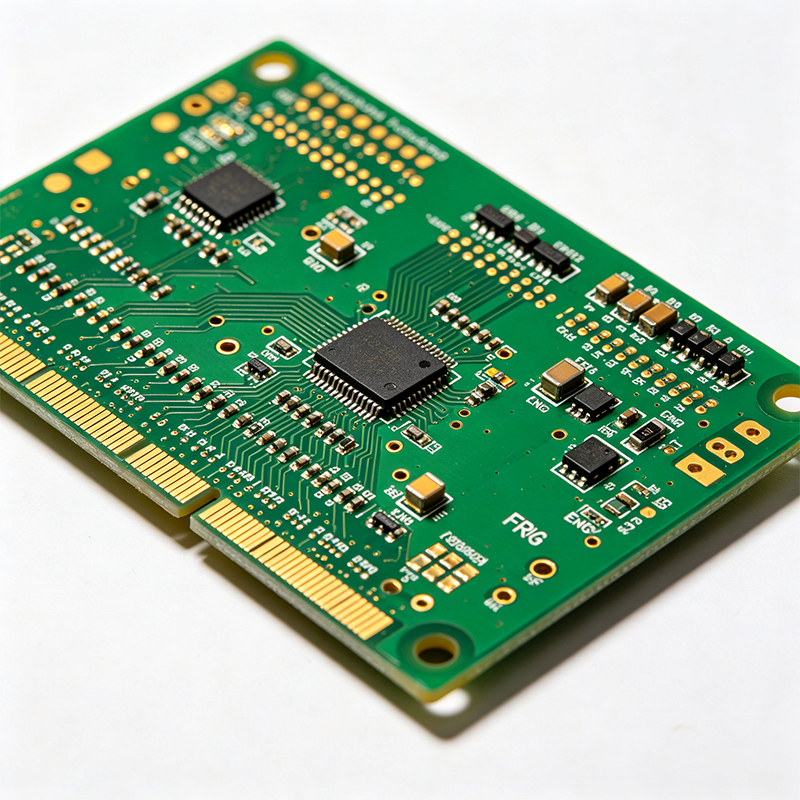
4. HDI High‑Frequency Prototype Boards
For products like 5G modules, radar sensors, or high‑speed digital designs, you need HDI (microvias, fine lines) and often low‑loss materials (Rogers, Isola, etc.). A prototype lets you validate signal integrity at GHz frequencies before committing to volume.
5. PCBA Prototype (Fully Assembled Boards)
A bare board is just half the story. Most prototypes need components soldered on. That’s called a PCBA prototype. We can source the parts, assemble a small batch, and test them – so you get a ready‑to‑use board, not just a bare piece of copper.
How Fast Can You Get a Prototype Board?
Speed is one of the main reasons people order prototypes. A typical rigid prototype can be delivered in 3–5 days for simple boards, or 7–10 days for more complex ones. Flexible and rigid‑flex prototypes take a bit longer – usually 10–15 days – because of the specialized materials and lamination steps.
If you need it even faster, some manufacturers offer “expedited” or “rush” service. You pay more, but you can get boards in 24–48 hours for very simple designs.
How Much Does a PCB Prototype Board Cost?
Cost depends on many factors: board size, layer count, material, surface finish, and quantity. But here’s a rough ballpark:
Simple 2‑layer rigid board – 100 for 5–10 pieces.
4‑layer rigid board – 300.
6‑layer or more – 800+.
Flexible prototype – 500 for small quantity.
Rigid‑flex prototype – 2,000, depending on complexity.
HDI / high‑frequency – 3,000+ (materials like Rogers are expensive).
These prices usually include the bare boards. If you need assembly (PCBA), add component costs and assembly fees.
Prototype vs. Production – What’s Different?
The main differences are quantity, lead time, and how the boards are processed.
| Aspect | Prototype | Production |
|---|---|---|
| Quantity | 1–100 pieces | 500–100,000+ pieces |
| Lead time | Days to 2 weeks | Weeks to months |
| Tooling cost | Lower (often shared panel) | Higher (dedicated panel, fixtures) |
| Unit price | Higher | Much lower |
| Process optimization | Minimal | Fully optimized for speed and yield |
Common Mistakes When Ordering Prototype Boards
Not checking the design rules – Each manufacturer has minimum trace width, via size, and spacing. If your design violates them, your prototype won’t work.
Forgetting about material availability – Some high‑frequency materials or special colors take longer to source. Ask before ordering.
Skipping electrical test – Many cheap prototype services skip testing. Then you get boards that look fine but have hidden shorts or opens.
Not considering assembly – A bare prototype board is useless if you can’t solder components onto it. Plan for PCBA early.
Ignoring flex and rigid‑flex constraints – Flex boards need bend radius limits, stiffener placement, and coverlay instead of solder mask. A design that works for rigid may fail for flex.
How to Order a PCB Prototype Board – Step by Step
Prepare your design files – You’ll need Gerber files (RS‑274X format) for the copper layers, solder mask, silkscreen, and drill file. For flex and rigid‑flex, also provide bend diagrams and stackup details.
Choose your specifications – Board thickness, copper weight, surface finish (ENIG, HASL, OSP), solder mask color, etc.
Select a manufacturer – Look for one that offers the technologies you need (rigid, flex, rigid‑flex, HDI, PCBA). Don’t just pick the cheapest.
Upload your files and get a quote – Most manufacturers have online quotation tools.
Review the DFM (Design for Manufacturing) report – They’ll tell you if anything in your design will cause problems. Fix it before production.
Approve and pay – Then wait for your boards to be made.
Test your prototypes – Power them up, run functional tests, check mechanical fit. If something’s wrong, revise the design and order another round.
What About Flexible and Rigid‑Flex Prototypes? Special Considerations
If you’re prototyping a flexible or rigid‑flex board, keep these in mind:
Bend radius – Don’t bend the flex tail too sharply. The manufacturer will specify a minimum bend radius (usually 5–10 times the thickness).
Stiffeners – Areas where components are placed (like the tail connector) need a polyimide or FR4 stiffener behind the flex. Without it, the flex material won’t hold the component firmly.
Coverlay vs. solder mask – Flexible circuits use a polyimide coverlay, not the hard solder mask used on rigid boards. It’s more flexible but has different design rules.
Anchoring traces – Traces that run across the flex‑to‑rigid transition need special teardrops or fillets to prevent cracking.
We handle all of that for you. Just send us your design, and we’ll recommend the right prototype approach.
Real‑World Example: A Drone Camera Gimbal
A startup was designing a drone with a 4K camera. The camera module needed to connect to the main processor via a flexible cable that twisted as the gimbal moved. They ordered a rigid‑flex prototype: a rigid board for the camera sensor, another rigid board for the processor, and a long flexible tail connecting them. The first prototype revealed that the flex tail was too short for the full gimbal rotation. They revised the tail length, ordered a second prototype, and it worked perfectly. Catching that error on a prototype saved them from a $50,000 production mistake.
What We Offer – Fast, Reliable PCB Prototype Boards
We’re a custom circuit board manufacturer specializing in exactly the technologies you need for prototypes:
Rigid PCB prototypes – 2 to 16 layers, standard FR4 or high‑Tg.
Flexible PCB prototypes – Single‑, double‑sided, multi‑layer polyimide.
Rigid‑flex prototypes – Rigid sections with integral flex tails, ideal for moving parts or tight spaces.
HDI high‑frequency prototypes – Microvias, fine lines, Rogers/Taconic/Isola materials.
PCBA prototypes – We’ll assemble your prototype boards with your components (or we can source them). 100% testing on every unit.
We don’t just make bare boards. We help you validate your design so you can move to production with confidence. Our DFM review catches issues early. Our lead times are fast – typically 5–10 days for rigid, 10–15 days for flex/rigid‑flex.
Ready to Order Your PCB Prototype Board?
Send us your Gerber files and specifications. We’ll give you a clear quote, a DFM report, and a delivery date. Whether you need 5 boards or 50, rigid or flex, simple or HDI – we’ve got you covered.

Kaboer manufacturing PCBs since 2009. Professional technology and high-precision Printed Circuit Boards involved in Medical, IOT, UAV, Aviation, Automotive, Aerospace, Industrial Control, Artificial Intelligence, Consumer Electronics etc..


 English



 Wechat
 +86 13670210335
 +86 13670210335
 E-mail