
Date: 2026-05-09
If you’ve ever looked at high-performance plastics, you’ve probably run into two names that sound almost the same: polyimide and polyamide. One letter difference. But in the world of materials, that one letter means a completely different set of properties.
Let’s clear up the confusion once and for all. No chemistry degree required. Just plain talk about what they are, how they behave, and where you’d actually use each one.
You already know polyamide by its common name: nylon. Yes, that nylon – the stuff in your clothes, toothbrush bristles, fishing lines, and carpet fibers.
Polyamide is a polymer with amide bonds (‑CO‑NH‑) in its backbone. It was first commercialized by DuPont in the 1930s. It’s tough, flexible, and absorbs moisture. Depending on the type (like PA6, PA66, PA12), it can be engineered for different uses – from a zipper to a car engine cover.
Key traits of polyamide:
Good mechanical strength – resists wear and abrasion
Absorbs water – which can change dimensions and properties
Melts before burning – typically around 220–260°C depending on type
Easy to injection mold or extrude – very common in mass production
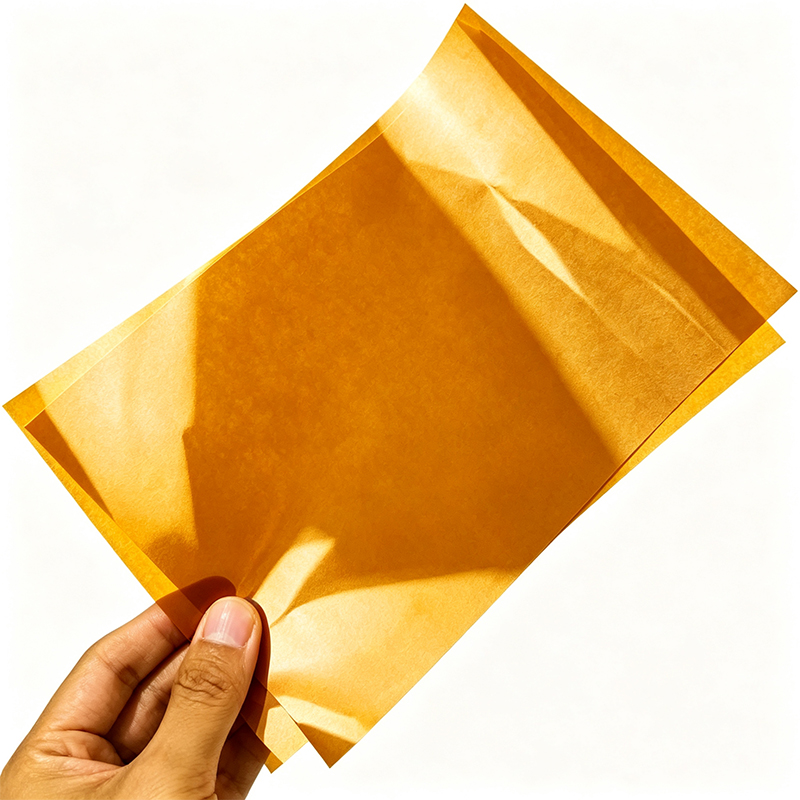
Polyimide sounds similar, but it’s a completely different animal. Instead of amide bonds, it has imide bonds (‑CO‑N‑CO‑). That small change makes a huge difference.
Polyimide doesn’t melt. It doesn’t burn easily. It stays stable at temperatures where most plastics would turn into a puddle. It was developed later (1960s) for aerospace and electronics – places that needed something that could survive extreme heat, cold, and radiation.
Key traits of polyimide:
Extremely heat resistant – continuous use up to 250–300°C, short peaks above 400°C
No melting point – it degrades before it melts
Very low moisture absorption – stays dimensionally stable
High chemical resistance – survives solvents, acids, and fuels
Often made as thin films (like Kapton) or machined parts
Let’s put them next to each other so you can see the gap.
| Property | Polyamide (Nylon) | Polyimide |
|---|---|---|
| Melting | Melts (220–260°C) | No melting point |
| Max continuous temp | ~80–150°C | ~250–300°C |
| Moisture absorption | High (1–10%) | Very low (<0.5%) |
| Flexibility | Flexible, tough | Stiff but can be film-flexible |
| Cost | Low to medium | High (often 5–10x more) |
| Common forms | Fibers, molded parts, films | Films, coatings, machined parts |
| Flammability | Burns (self-extinguishing with additives) | Self-extinguishing, low smoke |
Polyamide is everywhere. You just don’t notice it.
Clothing – stockings, sportswear, outdoor gear
Automotive – under-hood connectors, air intake manifolds, timing chain guides
Consumer goods – zippers, combs, power tool housings, gears
Fishing and sports – fishing line, racket strings, climbing ropes
If a part needs to be tough, cheap, and easy to mold, polyamide is often the answer. The only downside? It absorbs moisture, so in very humid environments or precision applications, it can swell or lose strength.
Polyimide is the heavy lifter. You find it where other plastics would give up.
Flexible printed circuits – the orange “Kapton” film inside your phone or laptop
Aerospace – wire insulation, thermal blankets, structural parts near engines
Semiconductor manufacturing – wafer handling tools, sockets, insulators
High-temperature sensors and heaters – thin film heaters, thermal print heads
Space applications – survives vacuum, radiation, and extreme temperature cycles
If you need something that won’t melt, won’t outgas, and won’t creep under heat, polyimide is the material of choice. It’s expensive, but for critical jobs, nothing else works.
Two reasons. First, the names look almost identical. Second, both can be made into thin films. Polyimide film (like Kapton) and polyamide film (like nylon film) look similar at first glance.
But touch a hot soldering iron to both. The polyamide film will shrink, melt, or burn. The polyimide film will just sit there and smile. That’s the real-world test.
It depends entirely on your application.
Need low cost, easy molding, everyday toughness? Choose polyamide (nylon).
Need extreme heat, chemical resistance, or a flexible circuit substrate? Choose polyimide.
Somewhere in between? There are modified versions of both, but the core difference stays.
And no, you can’t substitute one for the other. They’re not in the same league.
Polyamide (nylon) came first – 1930s, Wallace Carothers at DuPont. It changed fashion and industry forever. Polyimide came later – 1960s, also DuPont (Kapton). It was developed specifically for the Apollo space program and military electronics. So one is a classic workhorse, the other is a high-tech specialist.
Next time someone says “polyimide” – don’t think nylon. Think orange flexible circuit boards, spacecraft insulation, and soldering iron survival. When you hear “polyamide” – think toothbrush bristles, stockings, and car parts.
Two letters apart. Worlds apart in performance.

Kaboer manufacturing PCBs since 2009. Professional technology and high-precision Printed Circuit Boards involved in Medical, IOT, UAV, Aviation, Automotive, Aerospace, Industrial Control, Artificial Intelligence, Consumer Electronics etc..


 English



 Wechat
 +86 13670210335
 +86 13670210335
 E-mail