
Date: 2026-05-04
Let’s be honest: there is nothing quite as gut-wrenching as the smell of "magic smoke" coming from your favorite gadget. One minute you’re gaming or working, and the next—silence. Most people just throw the thing away, but if you’re reading this, you’re probably thinking: “Can I actually fix this?”
The answer is usually yes. Repairing circuit boards is part science, part art, and a little bit of detective work. Here is how you can start acting like an electronic surgeon.
Before you even touch a soldering iron, use your eyes. I’ve seen so many beginners spend hours testing components when the problem was literally staring them in the face.
Bulging Caps: Look at the electrolytic capacitors (the little tin cans). Are the tops flat? If they look like they’re pregnant or leaking brown goo, they’re toast.
The "Fried" Smell: Get close. Does it smell like a burnt match? That’s usually a scorched resistor or an IC that’s had a very bad day.
Broken Roads: Check the copper traces. If you see a scratch that cuts through the green coating and the copper underneath, that’s a broken connection.
You don't need a million-dollar lab. But you do need tools that don't suck.
A Decent Soldering Iron: If it doesn’t have temperature control, don't use it on a PCB. You’ll end up lifting pads and making a bigger mess.
The Multimeter: This is your best friend. You’ll use the "continuity mode" (the one that beeps) more than anything else to see if electricity can actually get from point A to point B.
Flux is Magic: If you’re struggling to get solder to stick, you probably aren't using enough flux. It cleans the metal and makes the solder flow like butter.
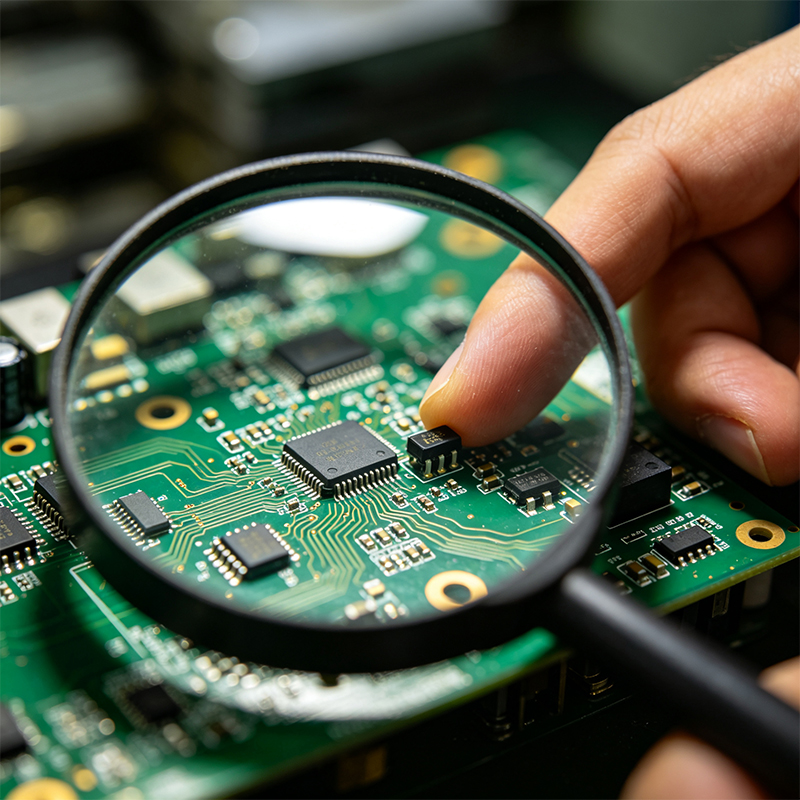
Once you’ve done the visual check, it’s time to get clinical. Grab your multimeter. One of the most common failures in repairing circuit boards is a "short to ground." This is when electricity takes a shortcut it wasn't supposed to take. Testing capacitors and diodes in-circuit can be tricky, so sometimes you have to desolder one leg to get an accurate reading.
Soldering is easy; desoldering is the hard part. To replace a component:
Heat it up: Apply fresh solder to the old joint first. It sounds counterintuitive, but it helps the old stuff melt.
Clean the holes: Use a solder sucker or a wick.
The New Part: Slide it in, snip the legs, and give it a nice "Hershey's Kiss" shaped solder joint.
The biggest reason people fail at PCB repair isn't a lack of skill—it's a lack of patience. They rush, they overheat the board, or they use too much force and rip off a pad. Treat the board like it’s made of thin glass.

Kaboer manufacturing PCBs since 2009. Professional technology and high-precision Printed Circuit Boards involved in Medical, IOT, UAV, Aviation, Automotive, Aerospace, Industrial Control, Artificial Intelligence, Consumer Electronics etc..


 English



 Wechat
 +86 13670210335
 +86 13670210335
 E-mail