
Date: 2026-05-12
If you’ve ever picked up a soldering iron and touched it to a coil of solder, you know it melts pretty quickly. But have you ever wondered: what’s the actual solder melting point? And why does it matter if you’re fixing a guitar cable or building a circuit board?
Let’s heat things up (literally) and talk about solder melting points – in plain English, with no confusing charts or chemistry that makes your head spin.
What Is Solder, Anyway?
Before we talk about melting, let’s cover what solder is. Solder is a metal alloy – a mixture of two or more metals – that melts at a relatively low temperature. You use it to join electronic components, wires, or metal parts together.
The two most common metals in solder are tin (Sn) and lead (Pb). But because lead is toxic, modern electronics often use lead-free solder made of tin, silver, and copper.
Different mixtures melt at different temperatures. That’s what this whole guide is about.
The Short Answer – Solder Melting Point Ranges
Here’s the quick version if you just need a number:
Traditional leaded solder (60/40 or 63/37) – melts between 183°C and 190°C (361°F – 374°F).
Lead-free solder (SAC305) – melts between 217°C and 227°C (423°F – 440°F).
Low-temperature solder (tin-bismuth) – melts around 138°C (280°F).
High-temperature solder (lead-rich) – melts around 250°C – 300°C (482°F – 572°F).
But that’s just the beginning. The exact melting point depends on the alloy. Let’s dig deeper.
Leaded Solder – The Old Standard
For decades, the go-to solder was a mix of tin and lead. The most common were:
63/37 (63% tin, 37% lead) – This is a eutectic alloy. Fancy word meaning it melts at a single, precise temperature: 183°C (361°F). No mushy stage – it goes straight from solid to liquid. That’s great for clean, shiny joints.
60/40 (60% tin, 40% lead) – This is the most common general-purpose solder. It melts over a small range: 183°C to 190°C (361°F – 374°F). It starts to melt at 183°C and becomes fully liquid at 190°C. You’ll find this at most hobby shops.
Leaded solder is easy to use, flows nicely, and has a low melting point. But lead is bad for the environment and your health, so it’s banned in many commercial products (though still fine for personal use).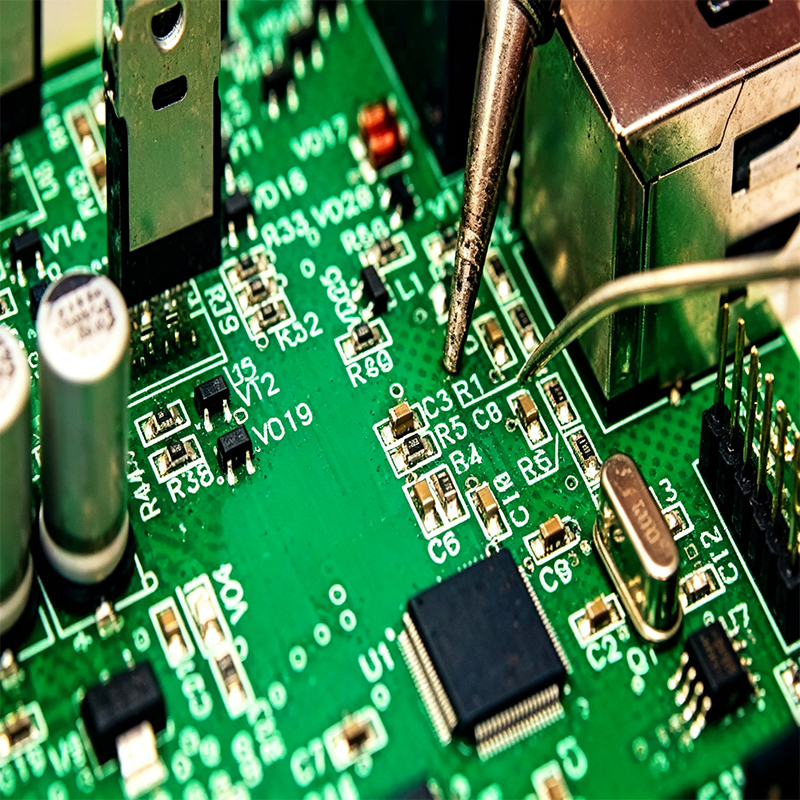
Lead-Free Solder – The Modern Standard
Because of the EU’s RoHS directive (Restriction of Hazardous Substances), most new electronics use lead-free solder. The most popular lead-free alloy is SAC305 – 96.5% tin, 3% silver, 0.5% copper.
Melting point: 217°C – 220°C (423°F – 428°F). Some SAC alloys melt up to 227°C.
Lead-free requires a hotter iron – usually around 370°C to 400°C. It doesn’t flow as smoothly as leaded solder, and it looks duller. But it’s much safer for the environment.
Other lead-free alloys include:
Sn99.3Cu0.7 (tin-copper) – melts at 227°C (441°F). Very common in plumbing.
Sn96.5Ag3.5 (tin-silver) – melts at 221°C (430°F). Used for high-reliability applications.
Low-Temperature Solder – When You Need Less Heat
Sometimes you can’t blast a board with high heat. Maybe you’re soldering near a heat-sensitive plastic connector, or you’re working on a flexible circuit that might warp. That’s where low-temperature solder shines.
The most common low-temp alloy is tin-bismuth – usually 42% tin, 58% bismuth (Sn42Bi58).
Melting point: 138°C (280°F) – almost 50°C lower than leaded solder.
You can use a much cooler iron (250–280°C) and not worry about damaging nearby components. The trade-off? Tin-bismuth is brittle. It doesn’t handle mechanical stress well, so don’t use it for wires that will be pulled or bent a lot.
Other low-temp alloys include tin-indium (melts around 120°C) but they’re expensive and rare.
High-Temperature Solder – For Tough Jobs
Some applications need solder that melts at a much higher temperature – for example, when you’re assembling something in stages. You use high-temp solder for the first stage, then lower-temp solder for the later stages so you don’t re-melt the earlier joints.
Common high-temp alloys are lead-rich (e.g., 95% lead, 5% tin). They melt around 250°C – 300°C (482°F – 572°F).
These are also used in automotive or aerospace environments where the solder might see sustained high temperatures.
Why Does Melting Point Matter?
The melting point matters for three big reasons:
Setting your soldering iron – If your iron is too cold, the solder won’t melt properly. You’ll get a “cold joint” – dull, lumpy, and unreliable. If it’s too hot, you’ll burn the flux, lift copper pads, or damage components. The rule of thumb: set your iron about 50°C above the melting point. So for leaded solder, 350°C works. For lead-free, 370–400°C.
Component damage – Some parts are heat-sensitive. LEDs, plastic connectors, or thin flexible circuits can be damaged if you use a solder that needs extreme heat. Low-temp solder is a lifesaver here.
Multi-stage assembly – If you need to solder on a board in steps (first some parts, then later other parts), you might use a high-temp solder for the first round, so the joints don’t re-melt when you do the second round with lower-temp solder.
How to Check the Melting Point of Your Solder
Every spool of solder has the alloy printed on the label. Look for something like:
“Sn63/Pb37” (63/37 leaded)
“Sn60/Pb40” (60/40 leaded)
“SAC305”
“Sn42/Bi58” (low-temp)
Type that alloy into a search engine plus “melting point”, and you’ll get the exact number. Or just save the reference table below.
Quick Reference Table – Common Solder Alloys and Melting Points
| Alloy | Composition | Melting Point (°C) | Melting Point (°F) |
|---|---|---|---|
| 63/37 (eutectic) | 63% Sn, 37% Pb | 183°C | 361°F |
| 60/40 (standard leaded) | 60% Sn, 40% Pb | 183–190°C | 361–374°F |
| SAC305 (common lead-free) | 96.5% Sn, 3% Ag, 0.5% Cu | 217–220°C | 423–428°F |
| Sn99.3Cu0.7 (tin-copper) | 99.3% Sn, 0.7% Cu | 227°C | 441°F |
| Sn96.5Ag3.5 (tin-silver) | 96.5% Sn, 3.5% Ag | 221°C | 430°F |
| Sn42/Bi58 (low-temp) | 42% Sn, 58% Bi | 138°C | 280°F |
| Sn63/Bi37 (another low-temp) | 63% Sn, 37% Bi | 138°C | 280°F |
| Lead-rich (high-temp) | 95% Pb, 5% Sn | 250–300°C | 482–572°F |
What About the “Plastic Range”?
Some solders – like 60/40 – don’t melt instantly at one temperature. They go through a “pasty” or “plastic” range. That means between the solidus (start melting) and liquidus (fully liquid) temperatures, the solder is like a slushy paste. You can still move it around, but it doesn’t flow like a liquid.
For 60/40, that range is 183°C to 190°C. That’s actually helpful when you’re desoldering or repositioning components because you don’t need to heat the joint as much to move it.
Real-Life Example – Wrong Solder, Broken Board
A friend was repairing a drone. He used regular leaded solder on a small flexible PCB that connected to the camera. The joint looked fine. But after a few flights, the connection failed. Why? The solder was too stiff for the flexing motion, and the high heat needed to melt it damaged the polyimide substrate slightly. He switched to low-temperature tin-bismuth solder (melts at 138°C), used a cooler iron, and the repair lasted for years.
What Temperature Should You Set Your Iron To?
That depends entirely on your solder. Here’s a simple setting guide:
| Solder Type | Iron Temperature (Celsius) | Iron Temperature (Fahrenheit) |
|---|---|---|
| Leaded (183–190°C melt) | 350°C | 662°F |
| Lead-free SAC305 (217–220°C melt) | 370–400°C | 698–752°F |
| Low-temp bismuth (138°C melt) | 250–280°C | 482–536°F |
Always start a little cooler and go up if needed. And test on a spare piece of board first.
Can You Use a Lighter or a Candle to Melt Solder?
Technically, yes. A lighter flame is around 800–1000°C, plenty hot to melt solder. But you have no temperature control – you’ll burn the flux, oxidize the metal, and likely damage whatever you’re soldering. Use a proper soldering iron with adjustable temperature. Your future self will thank you.
How Do You Know If Solder Is at the Right Temperature?
Watch it. When the solder melts, it should flow smoothly onto the metal surfaces you’re joining, like water on a clean surface. If it balls up (like water on a greasy pan), either the surface is dirty or the temperature is wrong. If it smokes excessively and turns black, you’re way too hot.
Does Solder Type Affect Melting Point for Desoldering?
No – to remove solder, you re-melt it at the same temperature it originally melted. But adding fresh solder often helps because fresh solder has flux that helps the old solder flow.
Final Answer – So, What Is the Solder Melting Point?
There’s no single answer. Solder melting point depends on the alloy:
Leaded – around 183–190°C
Lead-free – around 217–227°C
Low-temperature – around 138°C
High-temperature – around 250–300°C
Most people will use 60/40 leaded or SAC305 lead-free. So if you just need a number to remember: ~185°C for leaded, ~220°C for lead-free.
Now you know what’s going on when that shiny wire turns to liquid. Go melt some solder – the right way.

Kaboer manufacturing PCBs since 2009. Professional technology and high-precision Printed Circuit Boards involved in Medical, IOT, UAV, Aviation, Automotive, Aerospace, Industrial Control, Artificial Intelligence, Consumer Electronics etc..


 English



 Wechat
 +86 13670210335
 +86 13670210335
 E-mail