
Date: 2026-03-14
You're looking at a new PCB design, and the component list is staring back at you. Resistors in 0402 packages. A QFN microcontroller. Maybe a BGA or two. Getting the surface mount device selection right can feel like a puzzle—one where the wrong piece leads to assembly headaches, performance issues, or last-minute redesigns.
I've spent years helping manufacturers navigate these choices. The good news? Once you understand the basics of how surface mount devices work and what matters for your specific application, the path gets much clearer.
Here's what you need to know.
A surface mount device (SMD) is any electronic component designed to be mounted directly onto the surface of a printed circuit board . Unlike through-hole parts with long leads that poke through holes, SMDs sit flat against the board—soldered to pads on the same side.
The difference matters. Because there are no holes to drill, boards can be smaller and denser. Because leads are shorter or nonexistent, high-frequency performance improves. And because assembly is automated, costs drop significantly at scale .
SMT (Surface Mount Technology) is the process; SMDs are the actual components—the resistors, capacitors, ICs, and connectors that make your circuit work .
If you've specified components before, you've seen the package codes. Here's what they actually mean.
Passive SMDs use simple numeric size codes. A 0402 package measures 0.04 inches by 0.02 inches—roughly 1.0 mm × 0.5 mm . The table below shows common sizes:
| Package Code | Dimensions (mm) | Typical Use |
|---|---|---|
| 0201 | 0.6 × 0.3 | Ultra-compact, RF circuits |
| 0402 | 1.0 × 0.5 | High-density boards |
| 0603 | 1.6 × 0.8 | General-purpose |
| 0805 | 2.0 × 1.25 | Power and signal |
| 1206 | 3.2 × 1.6 | Higher power |
Smaller packages save space and improve high-frequency performance but require tighter process control during assembly. Larger packages handle more power and are easier to inspect .
ICs come in several common formats :
SOIC (Small Outline IC) – Gull-wing leads on two sides. Good balance of size and ease of assembly.
QFP (Quad Flat Package) – Leads on all four sides. Used for microcontrollers and processors with many pins.
QFN (Quad Flat No-lead) – Pads underneath the package. Excellent thermal performance, but requires X-ray for inspection.
BGA (Ball Grid Array) – Solder balls underneath. Highest pin density, used for advanced processors and FPGAs.
Transistors and diodes often come in SOT (Small Outline Transistor) or SOD (Small Outline Diode) packages—compact, designed for automated assembly, and widely available .
The best package depends on what you're building. Here's how to think through the decision.
If board space is tight—think wearables, mobile devices, or compact sensors—smaller packages (0402, 0201) are your friend. But there's a trade-off: they're harder to handle, require precision assembly, and may need advanced inspection methods .
For general-purpose designs where space isn't critical, 0603 or 0805 passives offer a good balance. They're large enough to handle with standard equipment but small enough to keep boards compact.
Larger packages dissipate heat better. If you're pushing significant current through a resistor or have a power IC that runs hot, don't automatically reach for the smallest package. A 1206 resistor can handle more power than an 0402. A QFN with a thermal pad will keep your regulator cooler than a SOIC .
Every package type has implications for assembly :
QFPs are relatively easy to inspect visually—you can see the leads.
QFNs and BGAs hide their connections underneath, requiring X-ray inspection to verify solder joint quality.
Fine-pitch components (0.5 mm or less) need precision placement and careful stencil design.
If your contract manufacturer doesn't have X-ray capability, designing with QFNs and BGAs adds risk. Know your partner's capabilities before finalizing the BOM.
Different boards play nicely with different components :
Rigid boards – Almost any package works. Focus on footprint compatibility.
Flexible circuits – Avoid large, rigid packages in areas that will bend repeatedly. Use smaller, low-profile components where possible.
Rigid-flex – Keep components away from flex-rigid boundaries. Add stiffeners under heavy parts if needed.
Understanding how your components will be assembled helps you design better from the start. The basic flow is consistent across most SMT lines :
Solder paste printing – A stencil deposits solder paste onto the PCB pads. Paste volume and alignment are critical—too little leads to weak joints, too much causes bridging.
Component placement – Pick-and-place machines position SMDs on the paste. High-speed chip shooters handle small passives; multi-function placers handle ICs and connectors .
Reflow soldering – The board passes through a temperature-controlled oven. The paste melts and forms permanent connections. Profile matters: ramp too fast and components may crack; peak too low and joints won't form.
Inspection – Automated optical inspection (AOI) checks for visible defects. X-ray looks at hidden joints under BGAs and QFNs. In-circuit test (ICT) verifies electrical performance.
Some surface mount devices are moisture-sensitive. Plastic packages absorb humidity from the air; during reflow, trapped moisture vaporizes and can crack the component—a phenomenon called "popcorning" .
If your components come in moisture-barrier bags, pay attention to the floor life. Once opened, you have a limited window before baking is required. MSL (Moisture Sensitivity Level) ratings tell you how long that window is .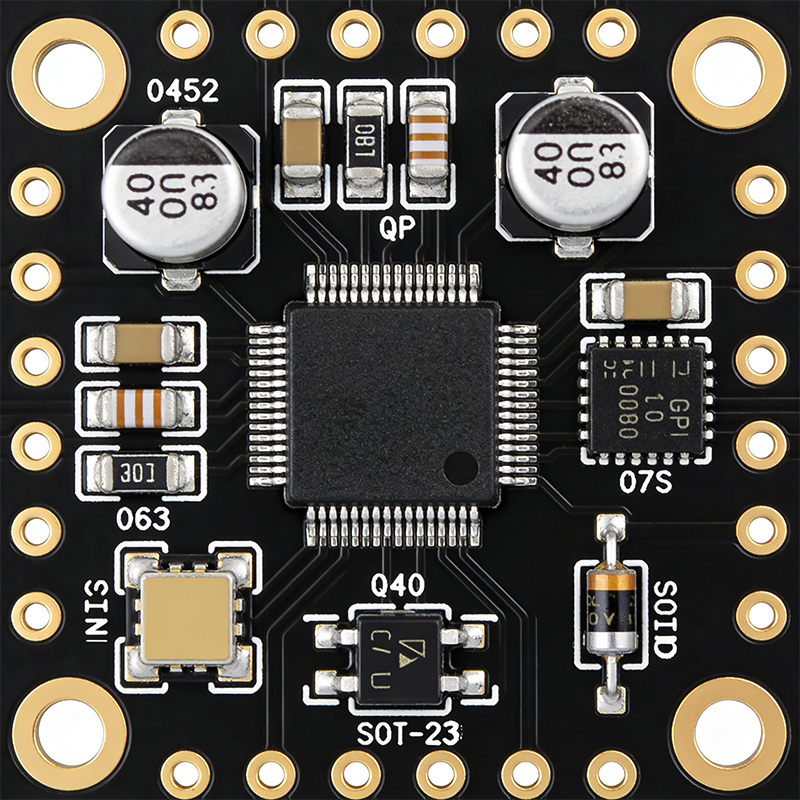
Over the years, I've seen the same problems crop up again and again. Here's what to watch for:
Small passive components sometimes stand up on end during reflow—one pad melts faster than the other, and surface tension pulls the part upright . Prevention: ensure symmetrical pad design, balanced trace widths, and proper thermal relief on large copper planes.
When pins are too close or paste volume too high, solder can short adjacent connections . Prevention: maintain adequate pad spacing, ensure proper solder mask dams, and control paste volume through good stencil design.
Weak joints happen when too little paste deposits . Prevention: check stencil alignment, aperture design (area ratio > 0.66), and printer parameters (pressure, speed, separation).
Components shifted from their pads cause opens or shorts . Prevention: ensure fiducial marks are present and properly designed, calibrate pick-and-place machines regularly, and verify component orientation in your CAD library.
BGA balls that touch the pad but don't fully merge—looks like a head resting on a pillow . Prevention: optimize reflow profile, use nitrogen atmosphere if available, and ensure proper flux activity.
At Kaboer, we've been assembling surface mount devices into custom PCBs since 2009. Based in Shenzhen, we work with manufacturers across automotive, medical, industrial, and consumer electronics—matching the right components to the right boards, every time.
We handle the full range of surface mount devices:
Passives from 0201 to 1206 and beyond
ICs in SOIC, QFP, QFN, BGA, and custom packages
Discrete semiconductors (SOT, SOD)
Connectors (board-to-board, wire-to-board, RF)
Specialty components for high-frequency, power, and flex applications
BOM review – We check component availability, lifecycle status, and footprint compatibility before production.
Precision assembly – Our SMT lines place fine-pitch components with accuracy, using AOI and X-ray for verification.
Strict process control – Solder paste printing, reflow profiles, and handling procedures follow industry best practices.
Traceability – Every component batch is tracked; if issues arise, we can trace back to source.
Need to validate your surface mount device selection quickly? We offer prototype assembly in 5–7 days, with components integrated exactly as specified. Test, iterate, refine—without delaying your timeline.
We're in Shenzhen, and we welcome overseas customers to visit our factory. Walk the floor, meet the team, see how we handle surface mount devices from incoming inspection to final assembly.
Choosing the right surface mount devices isn't just about reading datasheets—it's about understanding how components interact with your PCB, your assembly process, and your end product's environment.
If you need help selecting, sourcing, or integrating surface mount devices into your custom PCBs, send us your requirements. We'll provide a free quote and technical guidance within 2 hours.
Better yet—come visit our Shenzhen factory. See firsthand how we turn component selections into reliable, working boards.

Kaboer manufacturing PCBs since 2009. Professional technology and high-precision Printed Circuit Boards involved in Medical, IOT, UAV, Aviation, Automotive, Aerospace, Industrial Control, Artificial Intelligence, Consumer Electronics etc..


 English



 Wechat
 +86 13670210335
 +86 13670210335
 E-mail