
Date: 2026-07-25
You're designing a new electronic product. Maybe a smartwatch, an industrial sensor, or a tiny device that can wirelessly charge your phone. You've drawn the schematic, run countless simulations on your computer, and everything looks perfect. Now what? Do you spend thousands of dollars on a production run right away? Probably not.
You need a prototype board.
A prototype printed circuit board is simply a small batch of boards made for testing and validation before full production . It could be just a few boards, maybe a couple dozen. The goal is simple: to see if the design actually works.
Think of it as a model home. Before a developer builds an entire apartment building, they build one showroom to check the floor plan, test the lighting, and make sure everything works. A prototype PCB is that showroom — a small test run before you commit to mass production.
Many people think: "I've simulated it on my computer, so why not just go straight to production?" But here's the reality: simulation can never replace real-world testing.
First, to catch design errors.
Even the most careful circuit design can have hidden problems. Traces that are too thin, insufficient clearance, components placed too close together — these issues might look fine on a screen but fail as soon as the board is built. A prototype board catches these errors while they're still cheap to fix. A prototype might cost a few hundred dollars. If a mistake makes it to production, fixing it could cost thousands or even tens of thousands.
Second, to verify functionality.
No matter how good your schematic looks on paper, you don't really know if it works until you power it up. Is the voltage right? Do the signals go where they should? Can the chips talk to each other? Only a physical board can answer these questions.
Third, to test real-world conditions.
Computer simulations assume ideal conditions. But the real world is full of unpredictability — temperature changes, electromagnetic interference, mechanical vibration. A simulation can't tell you if your board will survive the heat of a car dashboard or the moisture of a humid factory floor. Only a physical prototype can.
Fourth, to enable firmware development.
Hardware is only half the story. Software engineers need a real board to start writing code, debugging drivers, and testing the full system. The sooner they get a prototype, the faster the entire project moves forward.
A prototype board typically goes through these steps:
Step 1: Schematic design.
The engineer uses EDA software (like KiCad or Altium Designer) to draw the circuit schematic — defining which components connect to which, how signals flow, and how power is distributed.
Step 2: PCB layout.
Turning the schematic into a physical board — placing components, routing traces, deciding how many layers, choosing trace widths. This step determines whether the board can be manufactured and how well it performs.
Step 3: Generate manufacturing files.
Exporting the design into formats that factories can read — Gerber files (defining copper layers, solder mask, and silkscreen) and drill files (defining hole positions and sizes).
Step 4: Send to a factory.
The files go to a PCB manufacturer to produce a few bare boards (the empty board without components). Many factories now offer rapid prototyping, with bare boards available in as little as 24 hours.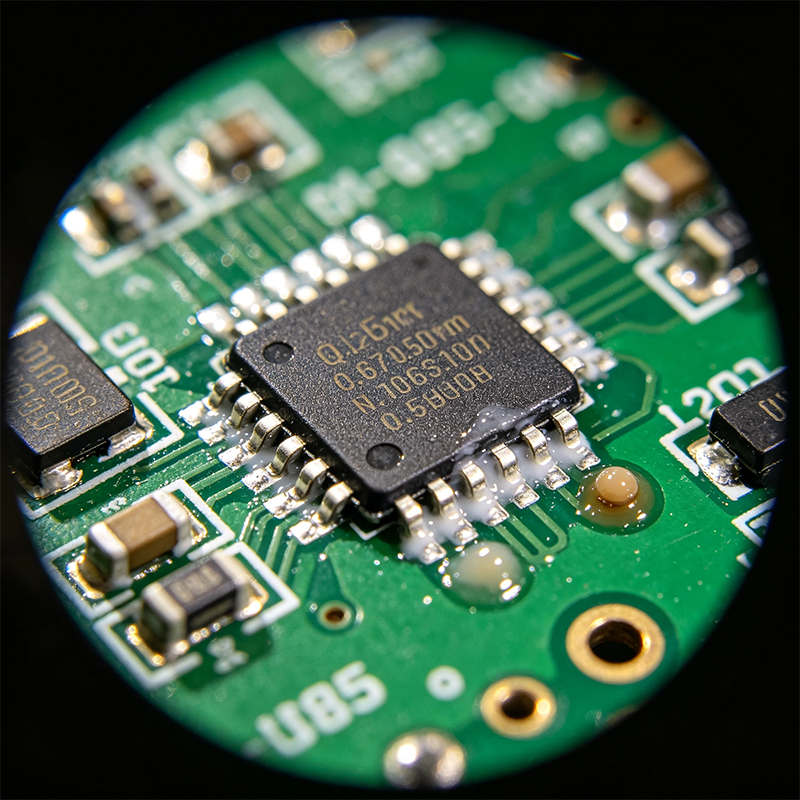
Step 5: Component assembly.
Once the bare boards arrive, components are soldered onto them. For small prototype runs, this is often done by hand or with small-batch pick-and-place machines. At this point, the prototype comes to life.
Step 6: Power-on testing.
The board is powered up and tested to see if it meets the design goals. If issues are found, go back to step one, revise the design, and build another prototype.
Not all prototypes are the same. Depending on your needs, there are different ways to "prototype":
1. Breadboard prototype
The fastest and simplest method. Components are plugged into a perforated plastic board and connected with jumper wires — no soldering required. The advantage is speed — you can build a circuit in minutes. The disadvantage is instability — wires come loose easily. Only suitable for very simple circuits.
2. Stripboard/Perfboard prototype
Components are soldered onto a copper-clad board and connected with wires. More stable than a breadboard, but slower to build. Good for small modifications or one-off experimental circuits.
3. Custom PCB prototype
This is the real thing. A board made by a factory to your exact design specifications. It's the closest to the final product, so the test results are most meaningful. The downside: it takes longer and costs more — but we're still talking about a few hundred dollars.
4. Quick-turn prototype
This is the mainstream trend in 2026. Factories offer 24-48 hour turnaround, letting you get boards in days, test them, revise, and iterate. Speed means faster iteration — while others wait a month per cycle, you can do three cycles in the same time.
The global rapid prototyping PCB assembly market is growing fast. It was valued at $2.4 billion in 2025** and is projected to reach **$3.8 billion by 2035. The broader PCB prototyping services market was valued at $6.8 billion in 2025** and is expected to reach **$13.4 billion by 2034, with a CAGR of 7.8%. These numbers tell a clear story: prototyping has shifted from "optional" to "essential".
A few key trends for 2026:
24-48 hour turnaround is becoming the standard. Engineers expect boards in days, not weeks. The faster you can get a prototype, the faster you can iterate and get to market.
AI and robotics are driving demand. Complex products like AI chips and robot controllers require much more prototyping than simple consumer electronics.
One-stop services are becoming mainstream. Component sourcing, PCB fabrication, assembly, and testing all handled by a single supplier. No more coordinating between a board house, a component supplier, and an assembly shop.
The cost of a prototype depends on layer count, board size, component count, and turnaround time.
A simple 2-layer prototype with assembly typically costs $100 to $300. If you only need bare boards (no components soldered), it's even cheaper — many factories offer 5 boards for under $50.
A few hundred dollars to validate a design — that's practically free compared to the cost of a production mistake.
A prototype printed circuit board is a small-batch board made for testing and validation before full production.
Its core value: catch design errors at the cheapest possible stage. A prototype might cost a few hundred dollars. But if a mistake slips into production, fixing it could cost a hundred times more.
The process is straightforward: schematic → layout → Gerber files → factory → assembly → testing. If issues are found, revise and build another prototype — until the design is solid, then go to production.
In 2026, the trend is clear: faster, cheaper, smarter. 24-48 hour turnaround is becoming the industry standard. The ability to iterate quickly is becoming a core competitive advantage for hardware teams.
If you're validating a circuit design, don't hesitate. Build a prototype first. A few hundred dollars is a lot cheaper than a few thousand dollars' worth of mistakes.

Kaboer manufacturing PCBs since 2009. Professional technology and high-precision Printed Circuit Boards involved in Medical, IOT, UAV, Aviation, Automotive, Aerospace, Industrial Control, Artificial Intelligence, Consumer Electronics etc..


 English



 Wechat
 +86 13670210335
 +86 13670210335
 E-mail