
Date: 2025-10-09
Let's face it - we've all experienced that moment of panic when a device slips from our hands. As an engineer who has tested and analyzed hundreds of electronic devices, I can provide some practical insights about what really happens to flexible PCBs during accidental drops.
Why Flexible PCBs Handle Impacts Better Than You Might Think
The unique construction of flexible PCBs gives them several advantages in surviving everyday accidents:
Natural Shock Absorption Capability
Unlike rigid boards that can fracture under stress, flexible PCBs are designed to bend and flex. I've reviewed test data showing that well-designed flex circuits can absorb significant impact energy by distributing forces across their surface area rather than concentrating stress at specific points.
Built-In Structural Protection
In most modern devices, flexible PCBs benefit from multiple layers of protection. They're typically mounted in ways that allow some movement and are often surrounded by shock-absorbing materials or strategically placed within the device's structure to minimize direct impact exposure.
No Vulnerable Corner Points
The continuous nature of flex circuits eliminates the corner stress points that often cause rigid boards to crack. This uniform stress distribution makes them inherently more resilient to the types of impacts commonly encountered in daily use.
When Impacts Cause Real Damage
Despite their flexibility, these circuits do have limitations. Through standardized drop testing and failure analysis, I've observed three primary failure scenarios:
Component Crushing Damage
The most common failure occurs when internal components shift during impact. In one tablet analysis, the battery displacement during a corner drop caused a flex circuit to tear under the concentrated pressure from the 300-gram battery mass.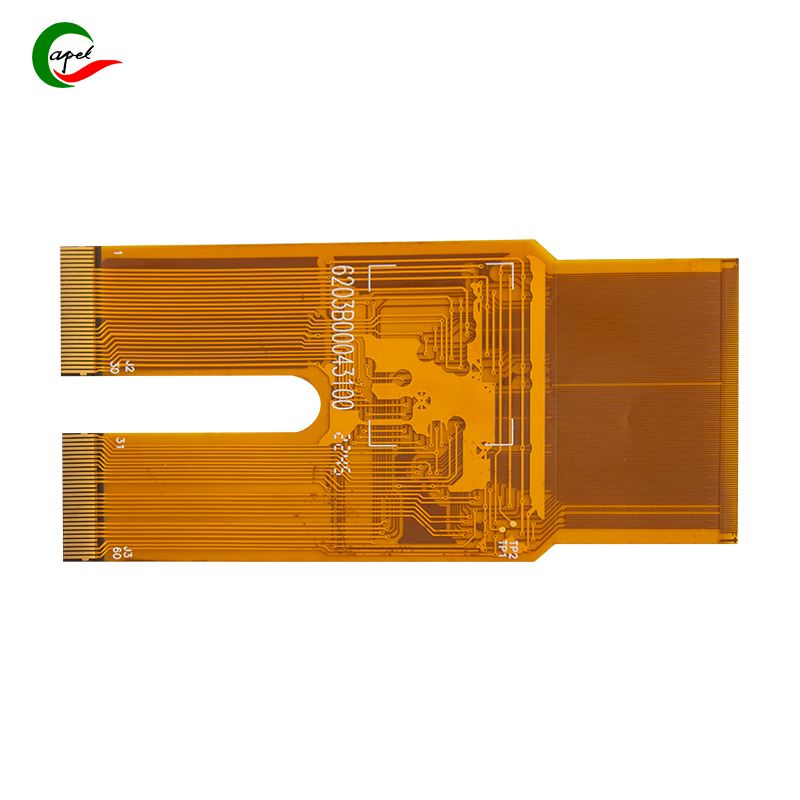
Beyond Design Limits
Every flex circuit has specific mechanical parameters, including minimum bend radius. I've documented cases where devices landed in ways that forced flex circuits to bend beyond their design specifications, resulting in fractured copper traces.
Point Impact Damage
Sharp, concentrated impacts represent the most severe threat. In laboratory testing, we've demonstrated how pointed objects can penetrate casing materials and damage underlying flex circuits through focused pressure application.
Practical Protection Approaches
Based on test data and real-world performance, these measures actually help:
Quality Enclosures Matter
Protective cases with proper energy management design significantly improve survival rates. The most effective combine hard outer layers for penetration resistance with energy-absorbing inner materials.
Environmental Awareness
Impact surface characteristics dramatically affect outcomes. Hard, uneven surfaces like concrete or tile transfer energy more efficiently than softer surfaces, increasing damage potential.
Informed Device Selection
Some manufacturers implement additional protection measures, such as reinforced flex circuit materials or strategic mounting systems. These design choices can substantially improve impact resistance.
Post-Impact Assessment
If your device experiences a significant impact:
Initial Evaluation
Start by checking basic functionality across all features. Isolated failures in specific components often indicate flex circuit damage rather than main board failure.
Professional Assessment
For potentially damaged devices, professional evaluation is recommended. Flex circuit repair requires specialized equipment and expertise, and improper handling can cause additional damage.
Realistic Expectations
Based on extensive testing and analysis:
Flexible PCBs represent a significant durability improvement over rigid alternatives for most common impact scenarios. They're engineered to withstand the reasonable shocks and drops encountered in normal usage environments.
However, they remain precision electronic components with defined physical limits. While they'll typically survive everyday accidents, extreme impacts or unusual force applications can still cause damage. Proper protection and reasonable care remain important for maximizing device longevity.
related link:

Kaboer manufacturing PCBs since 2009. Professional technology and high-precision Printed Circuit Boards involved in Medical, IOT, UAV, Aviation, Automotive, Aerospace, Industrial Control, Artificial Intelligence, Consumer Electronics etc..


 English



 Wechat
 +86 13670210335
 +86 13670210335
 E-mail