
Date: 2026-01-15
When you search for "electronic circuit boards for sale," you're probably thinking: "I need a reliable supplier, but how do I know who to trust?" "The price looks good, but can the quality really be trusted?" "Will communication be difficult?" We get it—finding the right circuit board supplier can feel like navigating a minefield.
Let's be honest. When you Google "electronic circuit boards for sale," you're likely seeking more than just a quotation:
A reliable partner: Someone who understands your needs and maintains consistent quality throughout your project lifecycle
Technical expertise: Help translating your design ideas into manufacturable, high-yield products
Transparent communication: No language barriers, no hidden fees, clear progress updates
Reasonable cost control: Products that meet your requirements within budget, not just the lowest possible price
If that sounds right, this practical guide is for you.
Before contacting any supplier, ask yourself:
What's the application? Consumer electronics, medical devices, or automotive? Reliability requirements vary dramatically
What's your volume? Prototype stage (5-10 pieces), small batch (100-500), or mass production (5000+)?
How complex is the technology? How many layers? Any special requirements like impedance control or blind/buried vias?
What's your budget and timeline? When do you absolutely need to receive the boards?
Having these details clear helps filter out unsuitable suppliers and saves everyone time.
Look for factory reality, not just pretty websites
Many suppliers have polished websites, but real capability shows on the production floor. Request video tours or at least:
Actual photos/videos of production areas
Brands and models of key equipment (What pick-and-place machines? Fuji, Yamaha, or domestic?)
Quality inspection equipment setup (AOI, X-ray, flying probe testers, etc.)
Ask specific questions to gauge expertise
"If our design has manufacturability issues, how would you alert us?"
"What's your process when a batch fails impedance control tests?"
"What's the complete lead time from receiving files to shipping?"
True experts give concrete, actionable answers, not vague promises.
Check case studies for relevance
Don't just ask "Have you done medical devices?" Try:
"Have you produced boards similar in size/layer count/technology to ours?"
"What are the most common production challenges your clients face? How did you solve them?"
"Can you share technical details of successful cases?" (Respecting NDAs, of course)
A detailed quotation tells you a lot:
Red flags:
Single lump-sum price without breakdown
Vague critical process parameters
Testing mentioned briefly or with unusually high extra charges
No material brands or specifications provided
Professional quotations typically include:
Material details (substrate brand/model, copper weight, solder mask type)
Process cost breakdown (drilling, plating, surface finish costs)
Testing plan and costs (100% testing or sampling? What equipment?)
Quality assurance terms (how are defects handled?)
Packaging and shipping details
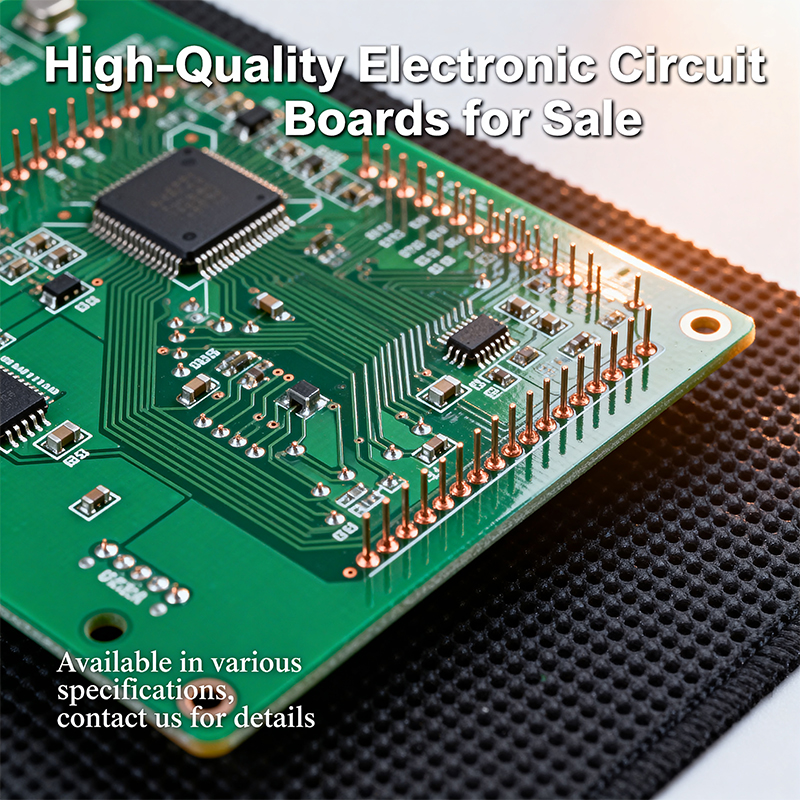
No matter how good the initial communication, samples are the real test:
What to check:
Visual quality: Clear silkscreen? Even solder mask? Flat solder pads?
Dimensional accuracy: Critical dimensions within tolerance? Hole alignment?
Electrical performance: Basic continuity testing with a multimeter; functional testing if possible
Documentation completeness: Test reports provided? Clear material traceability?
Practical advice:
Don't just make functional prototypes. If budget allows, do a small trial production run (50-100 pieces). This better reflects a supplier's quality control capabilities for mass production.
Unbelievably low prices often mean:
Inferior materials (non-standard substrates from unofficial channels)
Reduced or eliminated testing
Cutting corners on process parameters (like trace width/clearance)
No quality guarantee
How to avoid: Request detailed itemized quotes. Compare prices for key processes. Ask about defective product handling policies.
Suppliers claiming they "can do everything" may not excel at anything. Professional suppliers usually specialize in certain areas (high-frequency boards, heavy copper, flex circuits, etc.).
How to avoid: Ask specifically about their experience and case studies in your most needed technical areas.
Some suppliers respond quickly before receiving your order but become hard to reach afterward, with progress updates only when you chase them.
How to avoid:
Agree on communication channels and frequency (how many updates weekly? By what method?)
Request access to their project management system
Confirm emergency contact protocols
Running our own PCBA factory in Shenzhen for years, we've seen various sourcing challenges. Some observations that might help:
Time budget often matters more than money budget
Often, project delays cost far more than the circuit boards themselves. When evaluating suppliers, consider delivery reliability alongside price.
Design-phase investment yields the highest returns
Many quality issues originate in the design itself. We recommend a design-for-manufacturability review before finalizing designs. This usually takes 1-2 days but can prevent 80% of production issues.
Testing isn't a cost—it's insurance
Complete testing adds some cost but prevents defective boards from entering your production line. We've seen many clients "save" on testing fees only to spend multiples more on rework or recalls.
Supply chain transparency is increasingly critical
Especially for regulated industries like medical or automotive, material traceability is no longer "nice to have" but "must have." Ensure your supplier can provide complete material chain information.
An effective initial inquiry should include:
Basic information: Company profile and product application area
Technical requirements: Gerber files (or design files), BOM, process requirements
Commercial needs: Target price, estimated annual volume, desired lead time
Your most important questions: e.g., "We're particularly concerned about impedance control accuracy—what are your capabilities here?"
Such inquiries get you more meaningful responses faster and demonstrate your professionalism.
This simple decision matrix might help:
| Evaluation Criteria | Weight | Supplier A | Supplier B | Supplier C |
|---|---|---|---|---|
| Technical capability match | 30% | |||
| Price competitiveness | 25% | |||
| Communication quality | 20% | |||
| Case study relevance | 15% | |||
| Location/logistics | 10% |
Score each supplier (say, 1-5 points), multiply by weight, and get a total score. This simple tool helps you make more objective decisions.
Finding a circuit board supplier isn't a one-time transaction—it's the first step in building a long-term partnership. A good supplier doesn't just manufacture boards; they become part of your product's success—their manufacturing expertise can often help you optimize designs, reduce costs, and improve reliability.
If you're evaluating suppliers or have technical questions, we're always happy to share our experience. In this industry, good information sharing helps everyone move forward together.

Kaboer manufacturing PCBs since 2009. Professional technology and high-precision Printed Circuit Boards involved in Medical, IOT, UAV, Aviation, Automotive, Aerospace, Industrial Control, Artificial Intelligence, Consumer Electronics etc..


 English



 Wechat
 +86 13670210335
 +86 13670210335
 E-mail