
Date: 2026-03-03
Ever wondered what holds your smartphone, laptop, or electric vehicle together? Hidden inside every electronic device is a quiet hero—the PCB board. It's the foundation that makes modern technology possible, the reason your devices can be so powerful yet so compact.
In 2026, PCB technology is more advanced than ever. With AI infrastructure driving explosive growth in the industry, global AI server PCB market is projected to grow over 100% this year alone. Whether you're designing consumer gadgets, automotive systems, or medical devices, understanding PCB boards is essential to bringing your products to life.
This guide covers everything you need to know—from what PCB boards are and how they're made, to the different types available and how to choose the right manufacturing partner.
A PCB board—short for Printed Circuit Board—is the physical platform that mechanically supports and electrically connects electronic components . Think of it as the central nervous system of any electronic device. It's where all the components live and communicate.
Here's the simple way to picture it: a PCB board is like a multilayer sandwich :
The bread is copper foil—this becomes the electrical pathways that carry signals and power
The filling is insulating material (usually fiberglass with epoxy resin)—this provides mechanical strength and prevents unwanted connections
The copper is etched into precise patterns called "traces," which act like wires connecting different components. Holes called "vias" allow signals to travel between layers . It's a brilliantly simple concept that makes incredibly complex electronics possible.
PCB stands for Printed Circuit Board. The name comes from how they're made—the circuit pattern is literally "printed" onto the board using photographic and chemical processes . In some regions, you might also hear them called "printed wiring boards" or simply "circuit boards."
Every PCB board is built from a few fundamental elements:
The Substrate (Base Material): This is the board's foundation. Most PCBs use FR-4, a flame-retardant composite of fiberglass and epoxy resin . It's strong, reliable, and cost-effective. For special applications, you might use aluminum (for better heat dissipation) or flexible polyimide .
Copper Layers: Thin sheets of copper laminated onto the substrate. The copper is etched away to leave behind the traces that connect components. The thickness of copper is measured in ounces per square foot—1 oz copper is about 35 micrometers thick .
Solder Mask: That familiar green (or red, blue, black) coating you see on circuit boards. It protects the copper traces from oxidation and prevents accidental shorts during soldering .
Silkscreen: The white lettering and symbols on the board. It shows component outlines, reference designators (R1, C5), logos, and test points—essentially a map for assembly and troubleshooting .
Vias: Tiny holes drilled through the board and plated with copper. They allow signals to travel from one layer to another .
Not all PCB boards are created equal. Different applications demand different board types. Here's a breakdown of the most common categories:
| Type | Description | Typical Applications |
|---|---|---|
| Single-sided | One copper layer only | Simple electronics: calculators, power supplies, LED products |
| Double-sided | Copper on both sides, connected by vias | Audio equipment, industrial controls, automotive dashboards |
| Multilayer | 3+ copper layers stacked together | Smartphones, computers, medical devices, networking gear |
| Type | Description | Typical Applications |
|---|---|---|
| Rigid | Standard solid boards (FR-4) | Most general electronics—computers, TVs, industrial equipment |
| Flexible (FPC) | Bendable plastic substrate | Wearables, foldable phones, medical implants, automotive interiors |
| Rigid-Flex | Combined rigid and flexible sections | Camera modules, military gear, compact consumer products |
| Type | Description | Typical Applications |
|---|---|---|
| HDI (High-Density Interconnect) | Microvias, fine lines, high component density | Smartphones, tablets, advanced computing, 5G devices |
| High-Frequency | Low-loss materials (Rogers, PTFE) | 5G base stations, radar systems, RF communication |
| Metal-Core (MCPCB) | Aluminum or copper base for heat dissipation | LED lighting, power converters, motor drives |
| Thick-Copper | Heavy copper layers (3-20 oz) | High-current applications: EV chargers, power supplies |
| Ceramic | Ceramic substrate for extreme conditions | Aerospace, high-power LEDs, oil drilling equipment |
The manufacturing of PCB boards is a fascinating process combining chemistry, optics, and precision engineering. Here's a simplified look at how it happens:
Everything starts with a design created in specialized software like Altium, Eagle, or KiCad. The designer creates a schematic (the logical connections) and then a layout (the physical arrangement). The final output is a set of Gerber files—the blueprint the factory uses to make the board .
The process begins with copper-clad laminate—sheets of insulating material (usually FR-4) with copper foil bonded to one or both sides . These sheets are cut to working size and thoroughly cleaned.
For multilayer boards, the inner layers come first. A light-sensitive film called photoresist is applied to the copper. Using Laser Direct Imaging (LDI) technology, the circuit pattern is transferred onto the board . High-precision lasers expose the areas that will become copper traces.
The board goes into a chemical bath that removes the unexposed copper, leaving only the desired circuit traces . What remains is the copper pathways that will carry signals and power.
For multilayer boards, individual inner layers are stacked with sheets of prepreg (partially cured resin-impregnated fiberglass) between them . This stack is placed in a hydraulic press under high temperature and pressure, bonding everything into a solid panel.
Holes are drilled to connect different layers. Computer-controlled drilling machines create thousands of holes per board with micron-level accuracy. For advanced HDI boards, lasers drill the smallest holes (microvias) .
The drilled holes are non-conductive, so they're plated with copper to create electrical connections between layers. This process deposits copper on all surfaces, including inside every hole .
The outer layers are processed similarly to the inner layers, creating the final copper patterns on the board's surface.
The protective solder mask is applied over the entire board, leaving openings only where components will be soldered . Then the silkscreen labels are printed on.
Bare copper pads need protection to remain solderable. Common finishes include HASL (hot air solder leveling), ENIG (electroless nickel immersion gold), and OSP (organic solderability preservative) .
Every board is tested for shorts and opens. Flying probe testers use moving probes to check every connection, while Automated Optical Inspection (AOI) looks for visual defects .
Individual boards are cut from the manufacturing panel, cleaned, and packaged for shipment.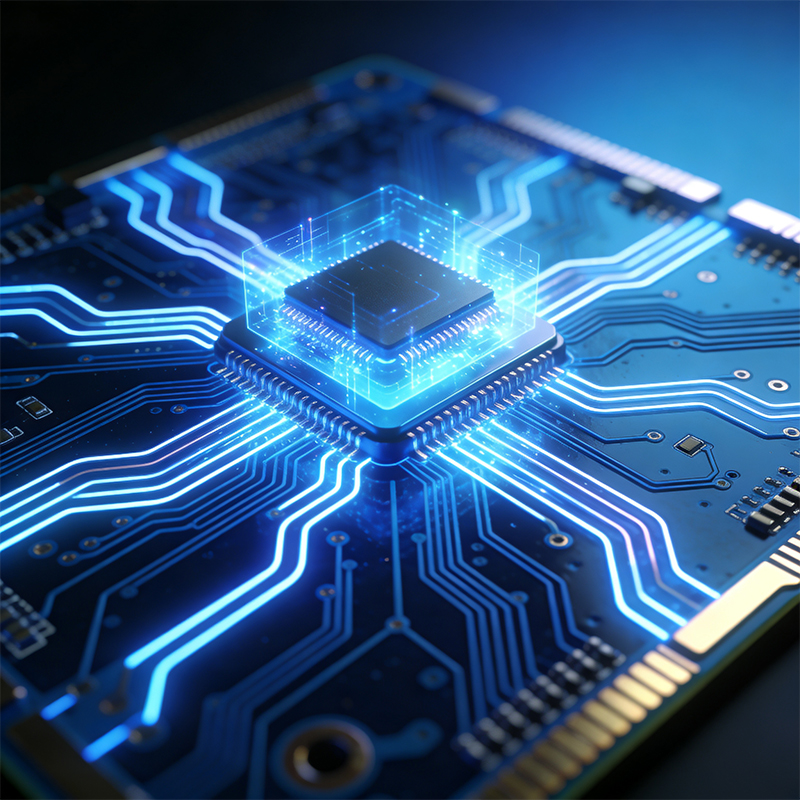
When ordering PCB boards, quality matters—especially for mission-critical applications. The electronics industry uses IPC standards to define quality levels :
IPC Class 2 (Dedicated Service Electronics) : For products where extended performance and reliability are desired, but not critical. Typical uses include computers, telecom equipment, and industrial controls. Minor cosmetic imperfections are acceptable .
IPC Class 3 (High-Performance Electronics) : For products where high levels of reliability are required, and failure is not an option. Typical uses include aerospace, medical life support, and military equipment. Zero-defect objectives and stringent requirements apply .
UL 94V-0: The highest flame retardancy rating—boards self-extinguish within 10 seconds in vertical burn tests
IPC-4101: Specifications for base materials like FR-4
RoHS 3: Restriction of hazardous substances directive for environmental compliance
ISO 9001: Quality management system certification
The PCB industry is evolving rapidly, driven by several major trends:
The explosion of artificial intelligence is creating massive demand for advanced PCBs. AI servers require higher speeds (800G/1.6T connections), larger boards, more layers, and advanced materials like HVLP5 copper foil . This "super cycle" is transforming the industry.
High-Density Interconnect boards are no longer just for smartphones. They're now essential for 5G infrastructure, IoT devices, ADAS systems, and medical equipment . Microvias and fine-line technology enable incredible density in compact designs.
As speeds increase, materials must keep up. The industry is moving toward lower-loss laminates for high-frequency signals, higher glass transition temperatures for thermal stability, and halogen-free options for environmental compliance .
Manufacturers are adopting greener practices: halogen-free laminates, copper recovery from etching processes, closed-loop water systems, and energy-efficient equipment .
Selecting a PCB manufacturing partner is one of the most critical decisions you'll make. Here's what to look for:
Can they handle your specific requirements? Look for:
Layer count capability: Do they support the number of layers you need?
Fine-line capability: Minimum trace width and spacing (2-3 mil is common for advanced boards)
Specialty processes: HDI, rigid-flex, metal-core, high-frequency materials
Surface finishes: ENIG, HASL, OSP, immersion silver
Reputable manufacturers hold industry-recognized certifications:
ISO 9001: Basic quality management
IATF 16949: Automotive industry standard
ISO 14001: Environmental management
UL recognition: Safety certification
IPC membership: Following industry standards
Ask about their inspection procedures:
AOI (Automated Optical Inspection) : For detecting visual defects
X-ray inspection: For checking hidden joints like BGAs
Flying probe testing: For electrical verification
Microsection analysis: For checking internal layer quality
The best partnerships are built on clear communication. Look for:
English-speaking technical support
Quick response times
Willingness to explain technical details
Design for Manufacturing (DFM) feedback
Nothing builds trust like seeing the operation firsthand. A manufacturer who welcomes visitors demonstrates transparency and confidence in their processes .
At Kaboer, we've specialized in PCB manufacturing since 2009. Based in Shenzhen, China—the heart of global electronics manufacturing—we've spent over 16 years perfecting the processes that turn circuit board designs into reliable, high-performance reality.
We manufacture the full spectrum of circuit boards:
Flexible PCBs (FPC) : 1-20 layers, thickness from 0.075mm to 0.4mm—ideal for wearables and compact designs
Rigid-Flex Boards: 2-30 layers, combining rigid stability with flexible interconnects
Rigid PCBs: 1-30 layers, from standard FR-4 to high-performance materials
HDI High-Density Boards: Microvias, fine lines, advanced stackups—supporting the latest BGA and high-speed designs
High-Frequency Backplanes: Low-loss materials for 5G, radar, and RF systems
Metal-Core Boards: Aluminum or copper base for excellent heat dissipation in LED and power applications
We don't just make bare boards—we populate them. Our in-house PCBA facility means you get fully assembled, tested modules ready for integration. One vendor, one quality standard, one point of accountability.
We're certified to international standards:
ISO 9001:2015 (Quality Management)
IATF 16949:2016 (Automotive)
ISO 14001:2015 (Environmental Management)
UL and RoHS compliance
Our boards meet IPC Class 2 and Class 3 requirements for applications that demand the highest reliability.
With monthly capacity exceeding 15,000 square meters for flexible and rigid-flex boards, plus 8,000 square meters for rigid PCBs, we handle everything from quick-turn prototypes to high-volume production.
We believe the best partnerships are built on trust. That's why we welcome our global clients to visit our factory in Shenzhen. Walk our production floors. Meet our engineering team. See firsthand how your PCB boards will be made.
From smartphones and wearables to automotive battery management and medical devices, we've helped companies around the world solve their toughest circuit board challenges. We'd love to help you with yours.
PCB boards are the invisible foundation of every electronic device. Understanding how they're made, what types exist, and what quality standards matter helps you make better decisions for your products.
Whether you're designing a simple control board or a complex AI server motherboard, working with the right manufacturing partner makes all the difference. Look for experience, process control, quality certifications, and transparent communication.
Ready to bring your PCB board design to life? Contact Kaboer today. Better yet—come visit us in Shenzhen and see for yourself how we turn designs into reality.

Kaboer manufacturing PCBs since 2009. Professional technology and high-precision Printed Circuit Boards involved in Medical, IOT, UAV, Aviation, Automotive, Aerospace, Industrial Control, Artificial Intelligence, Consumer Electronics etc..


 English



 Wechat
 +86 13670210335
 +86 13670210335
 E-mail