
Date: 2026-03-03
So you've designed a circuit board. Now you need someone to build it. Finding the right PCB factory is a bit like finding the right contractor for a home renovation. Get it right, and everything goes smoothly. Get it wrong, and you're dealing with delays, quality issues, and headaches you didn't bargain for.
This guide isn't about how circuit boards are made—you can find that elsewhere. Instead, it's about what actually matters when you're choosing a factory to build yours. The questions to ask. The red flags to watch for. The difference between a vendor and a true partner.
A good PCB factory isn't just one with fancy machines. It's one that consistently delivers what they promise, communicates clearly when things go sideways, and helps you avoid problems before they happen.
Here's the reality: almost any factory can make a simple board work. The difference shows up when your design gets complex, when you need tight tolerances, when something goes wrong, or when you're scaling from prototype to production.
The best factories don't just take your files and hit "go." They review your design, spot potential issues, and suggest improvements. They're honest about what they can and can't do. And when problems come up—because they always do—they work with you to solve them, not against you.
The first question is simple: can they actually build what you need? But dig deeper than the marketing claims.
Ask about specific capabilities relevant to your designs. If you're doing high-layer-count boards, ask how many layers they regularly produce—not just the maximum they claim. If you need fine-pitch BGA designs, ask about their via-in-pad capability and registration accuracy.
A factory that's great at 4-layer FR-4 boards might struggle with 20-layer rigid-flex. There's no shame in that—specialization exists for a reason. What matters is honesty about what they're actually good at.
Certifications like ISO 9001 tell you a factory has basic quality systems in place. That's the entry ticket, not the differentiator.
What you really want to know is how they actually control quality day to day. Ask about their inspection points throughout the process. How do they handle non-conforming material? What's their first-pass yield on boards like yours? Do they use AOI on inner layers, or only on finished boards?
The factories that care about quality will have detailed answers. The ones treating it as a checkbox will give you generic responses.
This matters more than most people realize. A factory that's technically excellent but impossible to communicate with will drive you crazy.
Pay attention to how they respond during the inquiry phase. Are they prompt? Do they answer your actual questions, or send form responses? Can they explain technical tradeoffs in plain language?
English proficiency varies widely. The key isn't perfect English—it's clarity and responsiveness. Someone who takes time to understand what you're asking and gives straight answers is worth more than a native speaker who's just going through motions.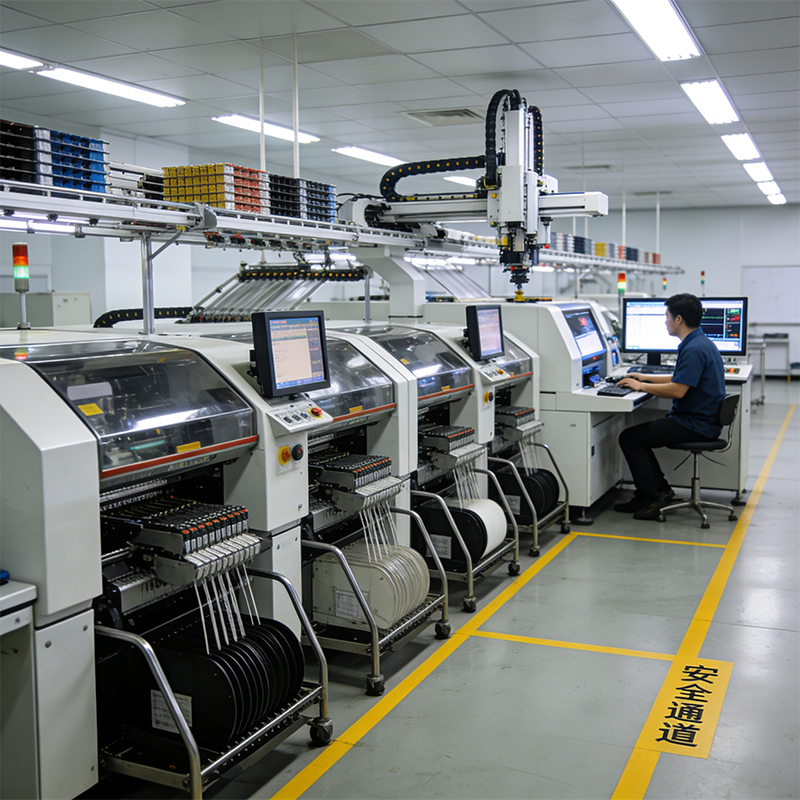
When you send your files for review, what comes back? A good factory will give you meaningful Design for Manufacturability feedback. They'll flag things that might cause problems, suggest alternatives, and explain why.
This is your best chance to evaluate their engineering depth. Generic comments about "checking your design" tell you nothing. Specific observations about stackup, impedance control, or panel utilization show they actually looked at your work.
If you're looking for a long-term partner, find a factory that's comfortable with prototypes and low-volume runs—not just one chasing million-board orders.
The best relationships often start with small jobs. You learn each other's working styles, build trust, and scale up together. A factory that dismisses your prototype because it's "too small" isn't thinking long-term.
Every factory has limits. The good ones tell you what they are upfront. The problematic ones promise everything and deliver something else.
Ask direct questions about things that matter for your designs: minimum trace and space, registration accuracy, aspect ratios for plating. If they claim capabilities that seem too good to be true, ask follow-ups about yields and process controls.
This is the ultimate test. A factory that welcomes visitors has nothing to hide. You'll see their equipment, their cleanliness, their workflow, their people. You'll leave with confidence—or you'll know to keep looking.
Virtual tours can work, but there's no substitute for walking the floor, seeing how they handle materials, and meeting the team who'll actually build your boards.
Vague answers. When you ask about capabilities and get marketing fluff instead of specifics, that's a warning sign.
No design feedback. If they accept your files without any questions or suggestions, they're probably not reviewing them properly.
Unrealistic promises. Lead times that seem too good to be true usually are. Quality takes time.
Hidden costs. A quote that's significantly lower than others might mean they're cutting corners—or that extras will appear later.
Poor responsiveness. If they're hard to reach before you're a customer, it won't get better after you pay them.
No quality data. When you ask about yields or test results and get nothing, they're either not tracking or not sharing—both bad.
Here's a practical checklist to work through with potential partners:
About your designs:
What similar boards have you built?
What issues do you see in my files?
How would you improve this for manufacturability?
About their process:
What's your standard lead time for prototypes? For production?
How do you handle engineering changes?
What's your process if something goes wrong?
About quality:
What inspections do you perform at each stage?
What's your typical first-pass yield on boards like mine?
Can you share test data from recent orders?
About communication:
Who's my primary contact?
How do you handle time zone differences?
What's your typical response time for technical questions?
About partnership:
What do you need from me to set us up for success?
How do you handle scaling from prototype to production?
What's your approach to long-term customer relationships?
At Kaboer, we've been building circuit boards since 2009. In that time, we've learned that technical capability matters—but it's only half the equation. The other half is how we work with people.
We don't just take orders. We review your design, ask questions, and flag potential issues before they become expensive problems. We're honest about what we can do and what we can't. And when things get complicated—because they sometimes do—we figure it out together.
Our Shenzhen factory is open to clients who want to see how their boards are made. Walk the floor, meet the team, ask whatever you want. We believe transparency builds trust, and trust builds partnerships that last.
We handle the full spectrum of circuit boards—from simple prototypes to complex 30-layer rigid-flex, from standard FR-4 to high-frequency materials. And with in-house PCBA, we can take your boards from bare fabrication to fully assembled modules.
But more important than any capability is how we use it: to help you succeed.
Choosing a PCB factory isn't just about finding someone to build boards. It's about finding someone who'll build them well, communicate honestly, and help you navigate the inevitable challenges.
Look beyond the equipment list and certification plaques. Pay attention to how they respond, what they ask, and whether they seem genuinely interested in your success. The right partner will feel different from the start.
Ready to talk about your project? Contact Kaboer. Better yet, come see our factory in Shenzhen and decide for yourself.

Kaboer manufacturing PCBs since 2009. Professional technology and high-precision Printed Circuit Boards involved in Medical, IOT, UAV, Aviation, Automotive, Aerospace, Industrial Control, Artificial Intelligence, Consumer Electronics etc..


 English



 Wechat
 +86 13670210335
 +86 13670210335
 E-mail