
Date: 2025-12-16
When you think of cutting-edge electronics, multi-layer boards with complex HDIs might come to mind first. But there's a fundamental, incredibly versatile, and cost-effective foundation that still powers a massive portion of the world's electronic devices: the Single Sided PCB.
For product manufacturers, choosing the right board for the job is critical. Understanding where and why the single sided PCB excels can lead to more efficient designs and significant cost savings without compromising reliability. Let's break down what it is, why it remains indispensable, and when it's the smartest choice for your project.
As the name clearly states, a Single Sided PCB (Single-Sided Printed Circuit Board) has conductive copper traces on only one side of the insulating substrate (typically FR-4 fiberglass or a phenolic material). All the electronic components are mounted on the opposite side, and their leads are soldered directly to the copper pads and traces.
Think of it like a one-way street system for electricity: All the "traffic" (electrical current) must flow and interconnect across the same single plane. This is achieved through careful layout design, as traces cannot cross over each other on the same layer without creating a short circuit. Jumpers (small wires) are sometimes used to bridge over traces when absolutely necessary.
Its simplicity is its defining characteristic, leading to a straightforward manufacturing process: copper lamination, imaging and etching to create the circuit pattern, drilling holes for component leads, and applying solder mask and silkscreen.
In an era of miniaturization, the single sided PCB thrives because it solves specific problems perfectly. Its core advantages are compelling for a wide range of applications:
1. Unbeatable Cost-Effectiveness
This is the primary driver. With only one copper layer, fewer manufacturing steps, and simpler materials, single sided PCBs are the most economical PCB type available. This translates directly to lower unit costs, which is crucial for high-volume, price-sensitive consumer products.
2. Simplified Design and Faster Prototyping
The design rules are less complex. There's no need to manage vias, layer alignment, or complex routing through multiple layers. This simplifies the design process, reduces engineering time, and allows for quicker design iteration and prototyping.
3. High Reliability and Ease of Repair
Fewer layers and a simple structure mean fewer potential points of failure (like via defects or inner layer delamination). The layout is also completely visible, making visual inspection, debugging, and manual rework or repair significantly easier for technicians.
4. Ideal for Simple, Low-Density Circuits
For applications that require basic functionality—such as power supplies, LED lighting boards, simple sensor interfaces, relays, calculators, toys, and many automotive auxiliary modules—a single sided PCB is more than sufficient. Using a more complex board would be an unnecessary expense.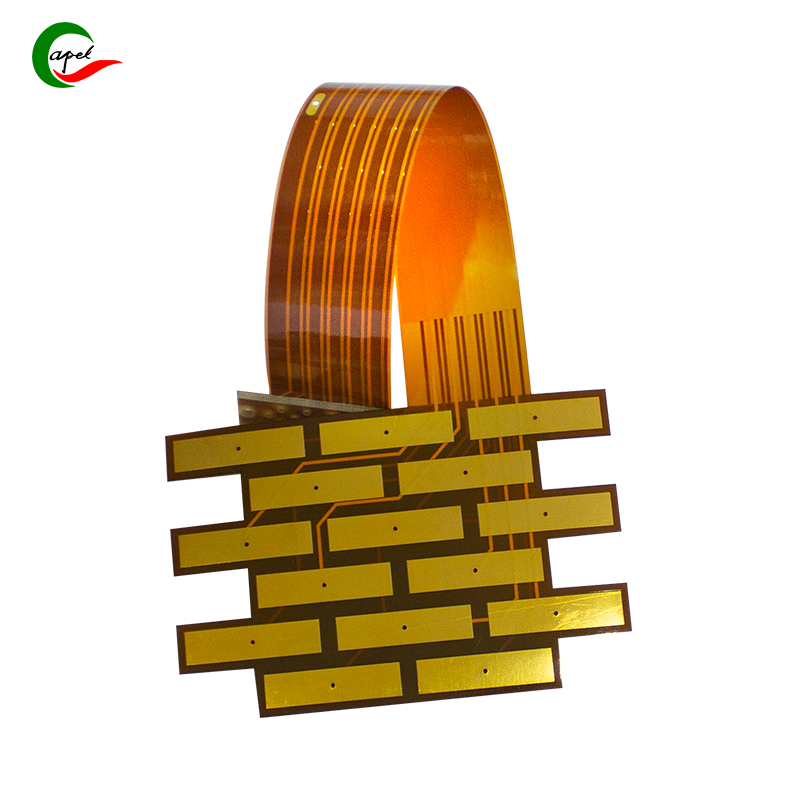
Single sided PCBs are everywhere, often hidden in plain sight within devices we use daily:
Consumer Electronics: Coffee makers, microwave ovens, remote controls, power adapters, chargers.
Industrial Controls: Relay boards, motor controllers, simple sensor panels.
Automotive Electronics: Dashboard lighting, fuse boxes, basic switch modules.
LED Lighting: The backbone of most simple LED strips and lighting fixtures.
Educational Kits: Perfect for teaching electronics fundamentals due to their simplicity and visibility.
While versatile, they have clear limitations. Avoid them when your design requires:
High Component Density: Not enough space to route all traces on one layer.
Complex Circuitry: Signals that need to cross over each other frequently.
High-Frequency or High-Speed Signals: Which benefit from controlled impedance and ground planes (found in multi-layer boards).
Significant Noise Reduction: Requires dedicated power and ground layers for shielding.
At Kaboer, based in Shenzhen, China, we believe that the right tool for the job isn't always the most complex one. We excel at manufacturing high-quality, reliable single sided PCBs at a volume and pace that leverages their cost benefits fully.
Our in-house factory is optimized for efficiency across the entire spectrum—from simple single-layer boards to advanced multi-layer assemblies. For projects where a single sided PCB is the optimal choice, we ensure perfect solder mask alignment, clean etching, and robust hole plating to deliver a board that is both affordable and utterly dependable. We understand that for many products, this simplicity is the key to commercial success.
Choosing the simplest, most reliable, and most cost-effective solution is often the mark of smart engineering. For your next project that demands straightforward functionality and value, consider the proven single sided PCB.

Kaboer manufacturing PCBs since 2009. Professional technology and high-precision Printed Circuit Boards involved in Medical, IOT, UAV, Aviation, Automotive, Aerospace, Industrial Control, Artificial Intelligence, Consumer Electronics etc..


 English



 Wechat
 +86 13670210335
 +86 13670210335
 E-mail