
Date: 2026-07-31
You’ve definitely seen a circuit diagram before — lines connecting symbols of components. You’ve also used the internet — a network that connects computers around the world. But you might not have realized that in electronics, these two “networks” share the same core idea: connecting things together.
In the electronic world, the word “network” has at least three completely different meanings. In this guide, I’ll explain electronic networks, electrical networks, and netlists — three easily confused concepts — in plain English.
In the broadest sense, an electronic network is simply a system of interconnected electronic components or circuits.
Think of it this way: any time you connect a bunch of electronic components with wires to form a working whole, you’ve got an electronic network. The circuit board inside your phone is an electronic network. Your home WiFi router is an electronic network. The entire internet is also an electronic network.
The Cambridge Dictionary defines an “electronic network” as “a large system consisting of many similar parts that are connected together to allow movement or communication between or along the parts”. This definition applies equally to the traces on a circuit board and the data flowing across the internet.
If you open up an electronic device and look at the circuit board inside — that board itself is an electrical network.
An electrical network is a technical term in electronics. Its definition is: a structure formed by interconnected electrical components for transmitting, transforming, processing, and storing electrical energy or signals.
Network components are idealized models of real components like resistors, capacitors, inductors, transformers, transistors, operational amplifiers, and power supplies. Every copper trace and every component on a circuit board is part of this network.
Electrical networks can be classified in several ways:
Active vs. Passive: Active networks contain transistors, op-amps, and other amplifying components; passive networks contain only resistors, capacitors, inductors, and other passive components.
Linear vs. Nonlinear: Linear networks follow the “input and output are proportional” rule; nonlinear networks don’t.
Time-varying vs. Time-invariant: Whether component parameters change over time.
Lumped vs. Distributed: Whether component size is negligible compared to signal wavelength.
Simply put: the circuit board you see when you open an electronic product is, in an engineer’s eyes, an “electrical network.”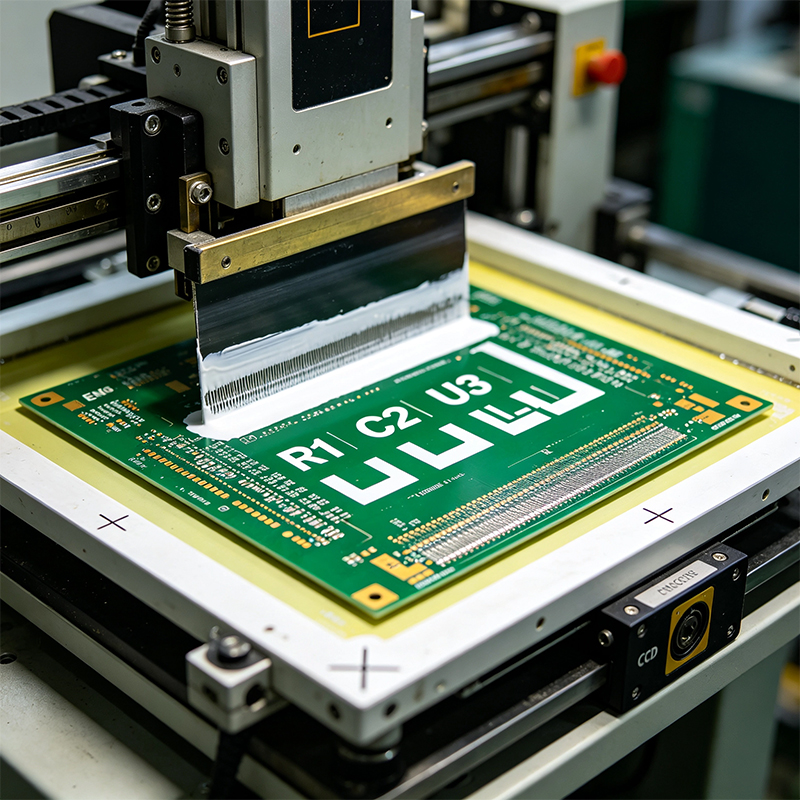
We’ve talked about electrical networks as physical circuit boards. But how do engineers describe this network inside a computer? That’s where the netlist comes in.
A netlist is one of the most fundamental pieces of data in electronic design automation (EDA). It’s a text-based description of the connections between components in an electronic circuit.
Think of a schematic as a city map — it shows you how to navigate using graphics. A netlist is the “address list” for that map — it tells you in text which component connects to which.
For example, a netlist might say:
“Net GND connects U1-pin8, C1-pin2, R3-pin1, J1-pin3.”
This means all the listed pins must be electrically connected on the final circuit board.
Netlists come in many formats — different design software uses different formats — but the core content is always the same: a net name, plus all the component pins that belong to that net.
From a finished schematic to a completed PCB layout, the netlist is what carries the “who connects to whom” information. Without a netlist, the design software wouldn’t know which pads need to be connected.
“Net electronic” can also refer to electronic devices that connect to a network.
In the information appliance space, NetDevice refers specifically to small devices that can connect to the internet, excluding desktop and laptop computers. They take commonly used functions from traditional PCs and mobile devices and combine them with digital and network technology, blending features of computers, telecommunications, and consumer electronics.
Typical NetDevices include PDAs, set-top boxes, smartphones, and automotive PCs. Their core is embedded software, and they’re often operated with a “couch + remote control” model — no complex computer operation required.
Simply put: your smart speaker, smart TV box, and smart home gateway are all “network electronic devices.”
In the electronic world, “network” has at least three meanings:
Electronic Network: Any system formed by interconnected electronic components — from a single circuit board to the entire internet.
Electrical Network: The component interconnection structure on a circuit board — resistors, capacitors, and transistors connected by wires form an electrical network.
Netlist: A text file describing circuit connections — the “translator” between schematics and PCBs.

Kaboer manufacturing PCBs since 2009. Professional technology and high-precision Printed Circuit Boards involved in Medical, IOT, UAV, Aviation, Automotive, Aerospace, Industrial Control, Artificial Intelligence, Consumer Electronics etc..


 English



 Wechat
 +86 13670210335
 +86 13670210335
 E-mail