
Date: 2026-07-14
You're a hardware engineer or a product manager. You've finished the schematic, selected the components, and generated the Gerber files. Now what? Your options are: find a PCB fab to make the bare boards, source components from multiple distributors, and coordinate with an assembly house for SMT placement—then hope all three deliver on time without any issues.
Is there a way to just submit your design files and let someone else handle everything from bare boards to finished assemblies?
That's full turnkey PCB assembly. In plain terms: you provide the files, the supplier handles everything else. In this guide, I'll explain what full turnkey PCB assembly is, how it differs from traditional models, what the process looks like, and why it might be the right choice for your project. Plain English, no fluff.
First, let's clarify the term. "Turnkey" comes from the idea that the customer receives a finished product they can simply "turn the key" and use immediately—no additional assembly or procurement required.
Turnkey PCB assembly is a complete electronics manufacturing service where a single supplier manages the entire PCB production process, including parts sourcing, PCB fabrication, SMT assembly, through-hole assembly, testing, and final delivery. You only need to provide your design files (Gerber, BOM, and placement data), and the supplier handles the rest.
Full turnkey PCB assembly is the most comprehensive turnkey model—the provider manages every stage from initial design review to final product delivery.
Full turnkey = You submit files → Supplier handles everything → You receive finished boards.
Many people confuse these three models. Here's the simple breakdown:
Full Turnkey: The supplier handles everything—sourcing all components, fabricating bare boards, SMT placement, through-hole assembly, testing, and shipping. You only provide Gerber files, a complete BOM, and a Component Placement List (CPL). You do nothing—just wait for the finished boards.
Partial Turnkey: The supplier handles some things. You supply certain components (like long-lead-time parts or proprietary ICs you already have), and the supplier handles the rest of the components, PCB fabrication, and assembly.
Consignment: You supply all components, and the supplier only does the assembly. You ship all your parts to the factory, and they solder them onto the boards.
| Feature | Full Turnkey | Partial Turnkey | Consignment |
|---|---|---|---|
| Components | Supplier sources all | Customer provides some | Customer provides all |
| PCB fabrication | Supplier handles | Supplier handles | Supplier handles |
| Assembly | Supplier handles | Supplier handles | Supplier handles |
| Your involvement | Minimal | Moderate | Maximum |
Full turnkey sounds simple—submit files, receive boards—but behind it is a complete, precision manufacturing workflow.
Step 1: Submit Design Files
You provide three things: Gerber files (board layers), BOM (component list), and CPL/Pick & Place file (component coordinates and orientation).
Step 2: DFM (Design for Manufacturing) Review
Engineers analyze your design to catch potential issues before production—component spacing errors, footprint mismatches, solder mask conflicts. This catches problems before they become expensive physical defects.
Step 3: Component Sourcing
The supplier sources all components from your BOM through authorized distributors. Reputable suppliers only buy from authorized channels to avoid counterfeit parts. Bulk purchasing often secures better prices than you could negotiate individually.
Step 4: PCB Fabrication
The supplier manufactures the bare boards to your specifications.
Step 5: SMT Placement and Reflow
Automated pick-and-place machines mount components onto the boards.
Step 6: Through-Hole Assembly (DIP)
If your design has through-hole components (large capacitors, connectors), they're wave-soldered or hand-soldered.
Step 7: Inspection and Testing
AOI (Automated Optical Inspection), X-Ray (for BGA inspection), ICT (In-Circuit Test), and FCT (Functional Test). Every board goes through multiple quality checks before shipping.
Step 8: Packaging and Shipping
Passing boards are packaged and shipped to you.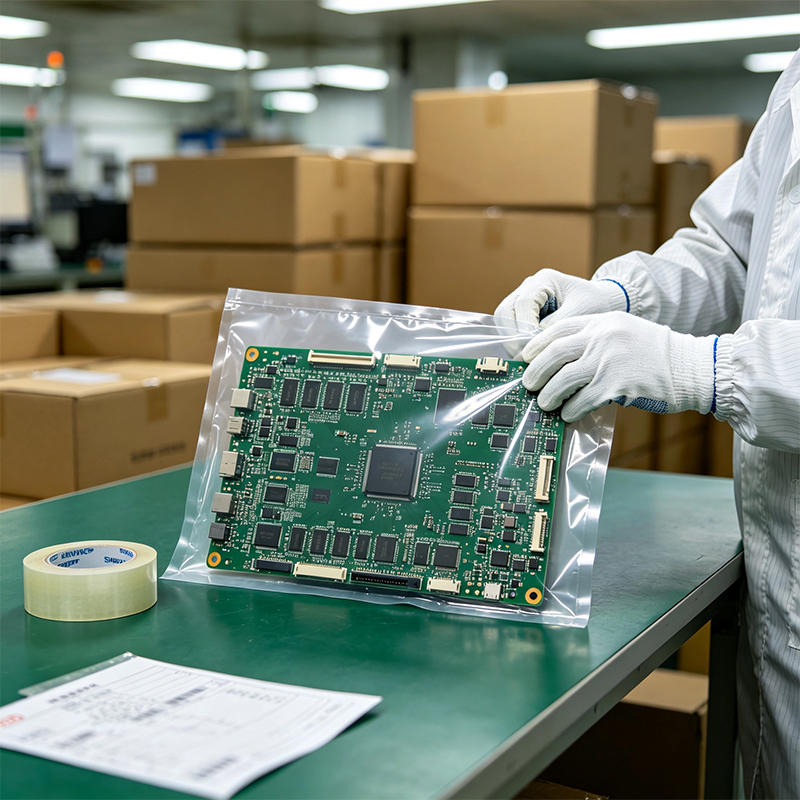
Full turnkey isn't just about "convenience." It delivers real, measurable advantages:
1. Single Point of Accountability
Traditionally, you coordinate with at least three vendors—PCB fab, component distributors, and assembly house. When problems arise, they point fingers at each other. Full turnkey gives you one supplier, one contract, one accountability chain. One person to hold responsible.
2. Faster Time to Market
Handling sourcing yourself means multiple RFQs, purchase orders, and shipment tracking. Turnkey suppliers maintain in-house component inventory—no waiting weeks for parts from distributors.
3. Lower Total Cost
Many assume turnkey costs more than sourcing yourself. The opposite is often true. Suppliers buy components at wholesale prices. You avoid multiple shipping costs (parts to your lab, then to the assembly house). And your engineering team's time isn't wasted on logistics—that time is far more valuable than any price difference.
4. Early Problem Detection
DFM review catches design defects before production. Finding a problem after boards are made costs thousands of dollars and weeks of delay.
5. Peace of Mind
You don't need to understand procurement, manage supply chains, or coordinate multiple vendors. You focus on what you do best—designing and innovating.
Choose full turnkey when:
You're a small team or startup without a dedicated procurement/supply chain function
Your product needs to get to market as fast as possible
You don't want to manage multiple vendors
Your BOM has many components—sourcing them one by one is a headache
Consider partial turnkey or consignment when:
You've already purchased certain components (custom parts, long-lead-time ICs)
Your company has an established supply chain
You have specific requirements for component sourcing
In short: Full turnkey = less hassle, faster, and often cheaper. Partial turnkey = when you have special requirements.
Full turnkey PCB assembly means you submit your design files to one supplier, and they handle everything from component sourcing to shipping finished boards.
You provide just three things: Gerber files, BOM, and Pick & Place file. The supplier handles DFM review, component sourcing, PCB fabrication, SMT placement, through-hole assembly, inspection and testing, and packaging and shipping. It eliminates the headache of managing multiple vendors, shortens project timelines, and often lowers total cost.
If you're designing a new product and don't want to waste time on procurement and supply chain management, full turnkey PCB assembly might be exactly what you've been looking for.

Kaboer manufacturing PCBs since 2009. Professional technology and high-precision Printed Circuit Boards involved in Medical, IOT, UAV, Aviation, Automotive, Aerospace, Industrial Control, Artificial Intelligence, Consumer Electronics etc..


 English



 Wechat
 +86 13670210335
 +86 13670210335
 E-mail