
Date: 2026-01-26
Imagine a finished circuit board assembly rolling off the production line. It looks perfect to the human eye. But hidden from view, a single tiny resistor could be missing, a microchip slightly misaligned, or two microscopic solder pads accidentally bridged by a hair-thin strand of solder. Any one of these defects could cause the entire device to fail, either immediately or—even worse—months later in a customer’s hands.
This is where AOI Inspection comes in. AOI stands for Automated Optical Inspection. Think of it as an unblinking, hyper-vigilant quality guard stationed right on your assembly line. Its job is to catch these tiny, costly defects with superhuman speed and consistency, long before a faulty board gets boxed and shipped.
In simple terms, an AOI system is a sophisticated machine that uses high-resolution cameras and powerful lighting to “look at” a newly assembled circuit board. But it doesn’t just take a picture; it compares what it sees to a perfect digital model of what the board should look like.
You can think of it this way:
A human inspector is like a proofreader glancing over a page of text, looking for obvious typos. They get tired, their attention wanders, and they might miss a tiny “teh” instead of “the.”
An AOI system is like a spell-check software that scans every single word, letter, and punctuation mark against a perfect dictionary in milliseconds. It never gets tired and never assumes anything is correct.
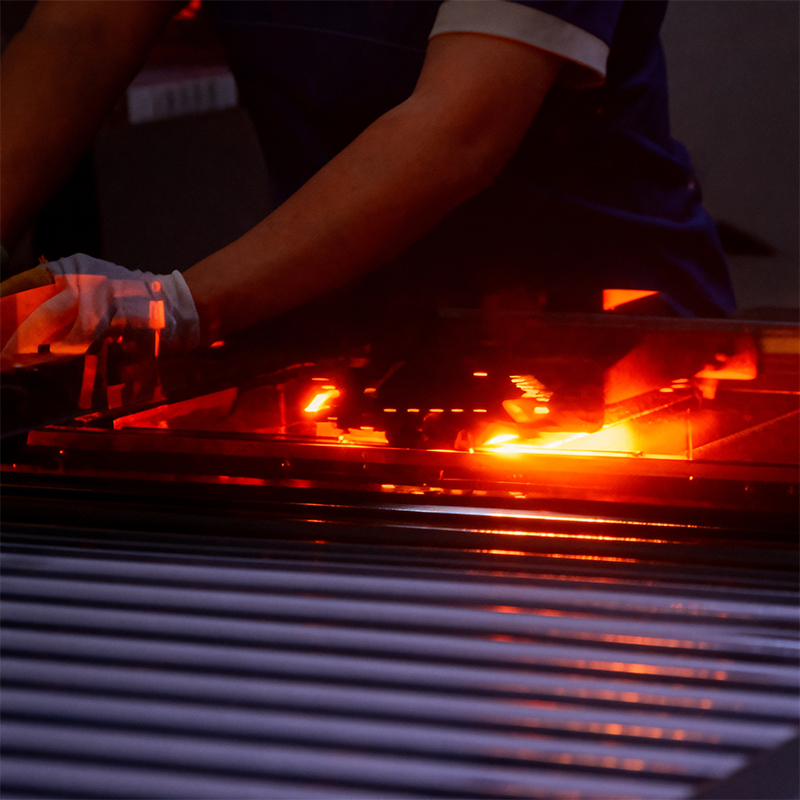
The magic of AOI happens in a fast, repeatable cycle:
Step 1: The High-Speed Scan
The board moves into the inspection station. High-intensity lights (from different angles) illuminate the board to highlight contours, solder joints, and components. Multiple cameras then capture detailed images of the entire board surface from various perspectives.
Step 2: The Digital Brain Analysis
This is where the real work happens. The system’s software analyzes every captured pixel. It doesn’t “see” a resistor; it sees a specific shape, color, and set of dimensions in a specific location. It compares these findings to the “golden rule” or perfect reference it was taught—usually generated from your design files or a meticulously approved sample board.
Step 3: The Detailed Check & Call-Out
The software checks for a predefined list of potential faults:
Component Presence/Absence: Is every part there?
Component Placement: Is each part in the exact right spot and aligned correctly?
Polarity: Are diodes and capacitors oriented the right way?
Solder Joint Quality: Are solder connections the right shape, size, and shine? Does it detect insufficient solder, too much solder, or dreaded “bridges” between pins?
Legibility: Can it read the printed codes on components?
If anything deviates beyond the allowed tolerance, the system instantly flags the board and alerts the operator, often showing an on-screen image with the defect circled.
For any serious electronics manufacturer, AOI isn’t a luxury; it’s a critical tool for three core reasons:
It Catches What Humans Can’t (and Saves Money Doing It)
The density of modern components is simply beyond human scale. A human cannot reliably inspect thousands of tiny 01005 resistors (smaller than a grain of sand) or hundreds of solder joints under a BGA chip. AOI can. Catching a defect here on the line costs pennies in rework. Letting it escape to a customer can cost hundreds in returns, warranty claims, and reputational damage.
It Provides Objective, Data-Driven Quality Control
Human inspection is subjective. What looks “okay” to one inspector might be flagged by another. AOI removes this variation. Its pass/fail criteria are based on precise measurements, ensuring every single board is judged by the same unwavering standard. This creates consistent, predictable, and high-quality output.
It’s a Process Improvement Engine, Not Just a Screener
Advanced AOI systems don’t just reject bad boards. They collect data. They can generate reports showing that a particular component on a particular feeder is frequently misaligned, or that solder paste on a specific pad is often insufficient. This gives production engineers vital clues to go back and fix the root cause of the problem at an earlier stage in the process (like the solder paste printer or pick-and-place machine), preventing defects from happening in the first place.
AOI is typically placed at two critical points:
After Reflow Soldering: This is the most common and crucial location. It inspects the final result of the SMT process, checking all placements and solder joints after the board comes out of the oven.
Before Reflow (Post-Paste Inspection): Some lines use a specialized AOI to inspect the solder paste after it’s printed but before components are placed. This catches printing defects early, which is one of the best ways to prevent downstream problems.
AOI Inspection is the technological backbone of reliable, high-yield electronics manufacturing. It is the essential bridge between the high-speed automation that builds boards and the absolute quality required by the market. It ensures that the incredible complexity packed into modern devices is not just assembled, but assembled correctly. For any brand that values its reputation, investing in a robust AOI process is investing in customer trust.

Kaboer manufacturing PCBs since 2009. Professional technology and high-precision Printed Circuit Boards involved in Medical, IOT, UAV, Aviation, Automotive, Aerospace, Industrial Control, Artificial Intelligence, Consumer Electronics etc..


 English



 Wechat
 +86 13670210335
 +86 13670210335
 E-mail