
Date: 2026-01-26
If you're in the electronics manufacturing industry, you've certainly heard the term "PCB assembly" countless times. But what exactly does it involve? Let's break it down in plain language.
PCB Basics: The Foundation
First, a PCB (Printed Circuit Board) is that green (or sometimes blue, red, or black) board you see inside virtually every electronic device. It's the platform that connects all the electronic components – think of it as the nervous system of your device.
The Assembly Process: Bringing Circuits to Life
PCB assembly is the process of attaching electronic components to that bare board. It's where that empty board transforms into a functional circuit that can power everything from smartphones to industrial machinery.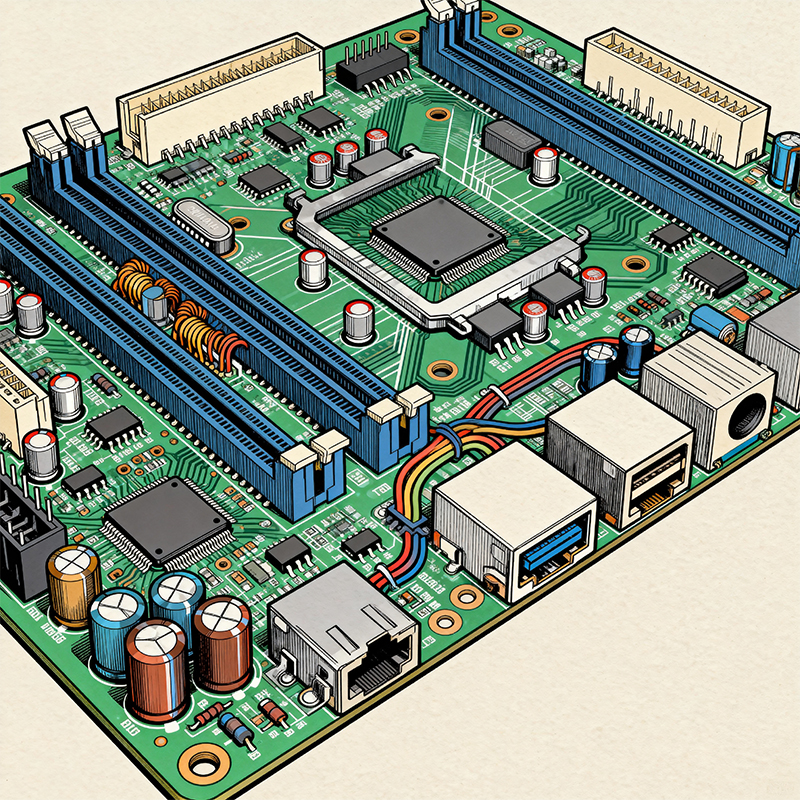
Here's how it typically works:
Solder Paste Application
Imagine spreading a thin layer of special "electronic glue" on the board. This solder paste (a mixture of tiny metal balls and flux) gets applied precisely where components will sit.
Component Placement
Next, pick-and-place machines (or sometimes skilled technicians) position resistors, capacitors, chips, and other components onto the prepared board. It's like a high-tech, ultra-precise version of setting up pieces on a game board.
The Soldering Process
The board then goes through a reflow oven – essentially a carefully controlled heating tunnel. The heat melts the solder paste, creating permanent electrical connections as it cools. For through-hole components, wave soldering or hand soldering might be used instead.
Inspection and Testing
After soldering, boards get checked. Automated optical inspection looks for alignment issues, while X-rays can check connections under chips. Functional testing ensures everything works as intended.
Final Cleaning and Protection
Boards are cleaned to remove any residue. Sometimes a protective coating is applied, especially for devices that might face moisture, dust, or extreme temperatures.
Why PCB Assembly Matters
For electronics manufacturers, understanding PCB assembly helps with:
Better design decisions
More reliable product planning
Informed supply chain choices
Effective quality control
Common Assembly Types
Surface Mount Technology (SMT): Components sit directly on the board surface – most modern electronics use this.
Through-Hole Technology (THT): Components have wires that go through holes in the board – often used for larger or more robust parts.
Mixed Technology: Many boards use both SMT and THT components.
Everyday Applications
From the phone in your pocket to the car in your driveway, from medical equipment to smart home devices – nearly every electronic product relies on professionally assembled PCBs.
The next time you use any electronic device, remember there's a carefully assembled PCB inside, making it all possible through this precise, fascinating manufacturing process.

Kaboer manufacturing PCBs since 2009. Professional technology and high-precision Printed Circuit Boards involved in Medical, IOT, UAV, Aviation, Automotive, Aerospace, Industrial Control, Artificial Intelligence, Consumer Electronics etc..


 English


 Wechat
 +86 13670210335
 +86 13670210335
 E-mail