When you search for "blank pcb," you're likely at the starting point of a project. You have a circuit design ready and need to find the right circuit board as your foundation. Or perhaps you're looking for a more reliable bare board supplier for an existing product, only to find the market overwhelming—huge price variations, inconsistent quality, and communication challenges that vary wildly.
Let's get one thing straight: finding the right blank PCB supplier isn't about simple price comparison. It's about establishing a partnership. This guide will help you avoid common pitfalls and find truly reliable partners.
What Exactly is a "Blank PCB"?
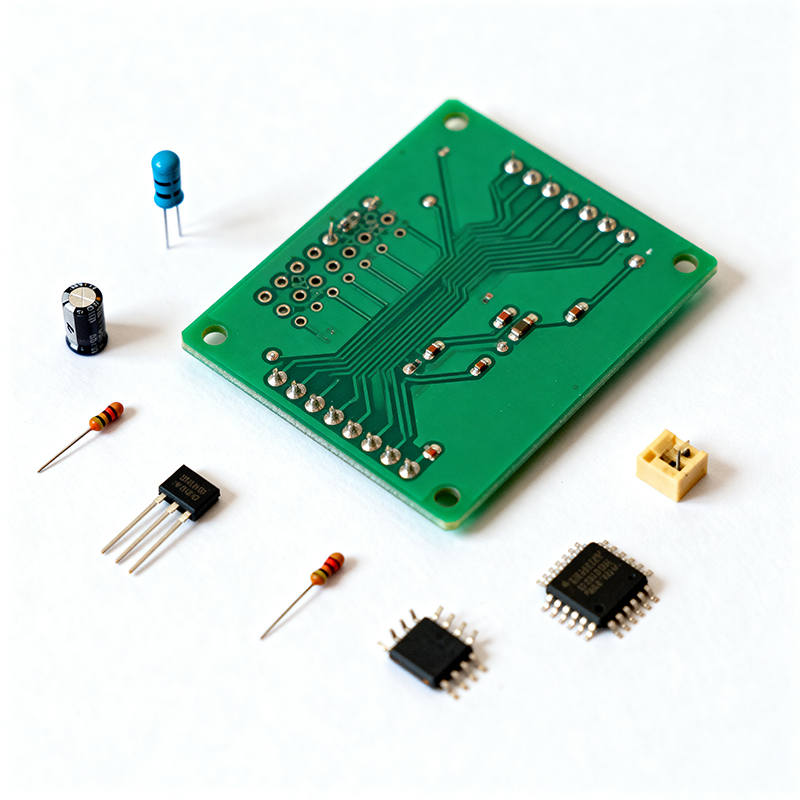
Simply put, a blank PCB is a circuit board that has completed all manufacturing processes but hasn't had any components installed yet. Think of it like a wall before painting—all the electrical conduits are in place, but switches, outlets, and lights haven't been installed yet.
In the industry, terms like "blank PCB," "bare board," and "printed circuit board" are often used interchangeably, but they all refer to the same thing: a substrate with etched circuit patterns, drilled holes, surface finish applied, ready for the assembly stage.
From Design Files to Physical Board: The Core PCB Manufacturing Steps
What happens after you send your Gerber files to a manufacturer?
Step 1: Pre-Production Engineering Review (This Separates Pros from Amateurs)
Good manufacturers carefully review your design files, not just produce them blindly. They check:
-
Whether trace widths and spacings match their process capabilities
-
If pad designs are suitable for soldering (especially fine-pitch components)
-
If layer alignment marks are sufficiently precise
-
Any design details that might cause production issues
A real case: We once found a client's design had several vias too close to the board edge, which could cause hole wall damage during subsequent cutting. Informing the client to adjust the design early prevented an entire batch from being scrapped.
Step 2: Material Preparation—Where Quality Begins to Diverge
Different material choices directly affect final performance and cost:
-
Substrate: Standard FR-4 vs high-frequency materials vs high-Tg materials
-
Copper foil: 1oz (35μm) vs 2oz (70μm) vs thicker copper layers
-
Solder mask: Color, thickness, heat resistance differences
-
Surface finish: HASL, ENIG, immersion silver, OSP—each has pros and cons
Step 3: Pattern Transfer—How Circuit Patterns Get "Printed"
Two main methods:
-
Traditional dry film process: Suitable for most conventional designs
-
Direct laser imaging: Higher precision, better for fine traces, but more expensive
Selection advice: If your minimum trace width is >0.15mm, both processes work; if <0.1mm, confirm if the supplier has laser imaging capability.
Step 4: Drilling and Hole Metallization
These tiny holes (some finer than a human hair) need precise machining, with sufficient copper deposited on the hole walls to ensure reliable electrical connections. The quality of this step often determines multilayer board long-term reliability.
Step 5: Surface Finish Selection
Different applications need different surface finishes:
Step 6: Testing and Inspection
Professional manufacturers don't skip this step:
-
Electrical testing: Ensures no opens or shorts
-
Optical inspection: Checks for visual defects
-
Dimensional measurement: Confirms compliance with design specs
-
Reliability sampling: Like thermal stress testing
How to Judge Blank PCB Quality?
Visual Inspection (You Can Do This Yourself)
When you receive samples, check with the naked eye and magnifier:
-
Solder mask: Even, no bubbles, no peeling
-
Silkscreen markings: Clear, no misalignment
-
Pads: Flat, no oxidation
-
Board edges: Smooth, no burrs
-
Hole walls: Clean, no residue
Dimensional Accuracy Check
Use calipers to measure:
-
Whether board thickness meets requirements
-
If outline dimensions are accurate
-
If hole positions match the design
Basic Electrical Testing
Simple multimeter tests can check:
-
If adjacent pads are shorted
-
If lines that should connect are continuous
-
If insulation resistance is sufficient
Where Do Price Differences Actually Come From?
When different suppliers give quotes varying by 30% or more for the same design, differences typically come from:
Material Costs (About 40-60%)
-
Substrate brand and quality grade
-
Copper foil thickness and type
-
Ink and chemical quality
-
Surface finish material costs
Process Complexity
-
Trace width/clearance requirements (0.2mm vs 0.1mm)
-
Minimum hole size (0.3mm vs 0.1mm)
-
Number of layers (4-layer vs 12-layer)
-
Special process needs (impedance control, blind/buried vias, etc.)
Quality Control Standards
-
Test coverage (sampling vs 100% testing)
-
IPC standard class followed (Class 1, 2, or 3)
-
Whether complete test reports are provided
Supplier Operational Factors
Common Purchasing Misconceptions
Misconception 1: "The cheapest option is the best choice"
Actually, abnormally low prices often mean:
-
Using substandard or recycled materials
-
Reducing necessary testing steps
-
Non-compliant process parameters
-
No quality guarantee
Misconception 2: "All FR-4 materials are the same"
Different manufacturers' FR-4 grades can have significant performance differences:
-
Different dielectric constant stability
-
Different thermal expansion coefficients
-
Different moisture absorption rates
-
Different long-term reliability
Misconception 3: "I can change suppliers later"
Changing PCB suppliers often requires revalidation, potentially involving:
-
New process parameter adjustments
-
Different material characteristics
-
Re-doing reliability testing
Practical Purchasing Advice
How to Prepare RFQ Documents?
To get accurate quotes from suppliers, provide:
-
Complete design files: Gerber files, drill files, stack-up structure
-
Clear specification requirements: Materials, board thickness, copper weight, surface finish, special processes
-
Quantity and timing requirements: Estimated annual usage, desired lead time
-
Your biggest concerns: Like "We're particularly concerned about impedance control accuracy"
How to Evaluate Suppliers?
Technical capability:
-
"Our design has 0.1mm trace width—what's your actual yield?"
-
"How do you ensure layer-to-layer alignment accuracy for multilayer boards?"
-
"Do you provide free DFM analysis?"
Quality control:
-
"Do you provide first-article reports and test reports for every batch?"
-
"What's your handling process when quality issues are found?"
-
"Is client visitation to the production floor possible?"
Communication and service:
-
"What's the standard lead time from file confirmation to shipment?"
-
"How do you communicate with us if issues are found during design review?"
-
"Do you have dedicated technical support teams?"
Our Experience Sharing
Running a PCBA factory in Shenzhen over the years, we've seen various blank PCB application scenarios:
Practical experience with material selection:
Even "standard FR-4" has different choices. For industrial equipment working in harsh environments, we recommend mid-Tg or high-Tg materials. Though costs increase 10-15%, reliability improves significantly. One client reduced product failure rates in high-temperature environments by 70% after switching to high-Tg material.
Design optimization suggestions:
Often, small design adjustments can significantly reduce costs. We helped a client adjust non-critical signal trace widths from 0.15mm to 0.2mm. Though only a few parameters changed, yield improved from 85% to 97%, and overall costs actually decreased.
Thoughts on testing strategy:
For critical applications, 100% electrical testing is a worthwhile investment. A medical device client initially chose sampling inspection to "save costs," only to have defective boards reach assembly, where rework costs were 8 times the testing expense. They eventually switched to 100% testing, and total costs actually decreased.
Observations on supplier cooperation:
The most successful long-term collaborations are often with clients willing to communicate early. They seek our manufacturing advice during the design phase, avoiding subsequent redesigns and delays. This cooperation model typically brings better overall benefits than constantly searching for the "lowest quote."
When Hesitating Between Multiple Quotes...
Try this simple evaluation table:
Score each supplier (e.g., 1-5 points), multiply by weight. The highest total score usually indicates the most balanced choice.
Recommended Checklist When Starting a New Project
-
Clarify priorities: Cost, quality, lead time—which matters most to you?
-
Involve suppliers early: Consult on manufacturability during design phase
-
Start with small batches: Place small orders first to verify quality and stability
-
Establish clear standards: Define your quality requirements and acceptance criteria
-
Consider backup suppliers: Mitigate supply chain risks
Final Thoughts
Choosing a blank PCB supplier isn't a one-time transaction—it's the beginning of a long-term partnership. A good supplier doesn't just manufacture circuit boards; they become part of your product's success—their professional advice can help you optimize designs, improve yields, and reduce costs.
Whether you're purchasing for the first time or are an experienced buyer, remember three things: clear communication, reasonable expectations, and mutual understanding. These bring more lasting success than simply pursuing the lowest price.
If you're evaluating suppliers or have specific technical questions, we're always willing to share our experience. After all, in this industry, good information sharing helps everyone move further together.


 English



 Wechat
 +86 13670210335
 +86 13670210335
 E-mail