
Date: 2026-04-24
If you’ve ever cracked open a broken remote or looked inside your PC, you’ve seen that green-colored board. While we call it a PCB, the "flesh and bones" of that board is almost certainly FR4. In 2026, despite all the talk about exotic new materials for 6G and AI, FR4 remains the undisputed king of the electronics world. But why?
Let’s get the technical jargon out of the way first. "FR" stands for Flame Retardant. The "4" is just a grade—it tells you that this material meets the UL94V-0 safety standard. In plain English? If your device short-circuits, the board won't turn into a torch. It’s designed to stop burning almost as soon as the fire starts. That safety feature is why insurance companies and regulators love it.
Think of FR4 like a high-tech "peanut brittle." It’s a composite material made of:
The Reinforcement: Woven fiberglass cloth. This gives the board its "spine" so it doesn't snap like a cracker.
The Glue: Epoxy resin. This fills the gaps in the cloth and hardens into a rock-solid, insulating plastic.
It’s the perfect balance. It’s strong enough to hold heavy components but easy enough for factory drills to punch thousands of tiny holes through it every minute.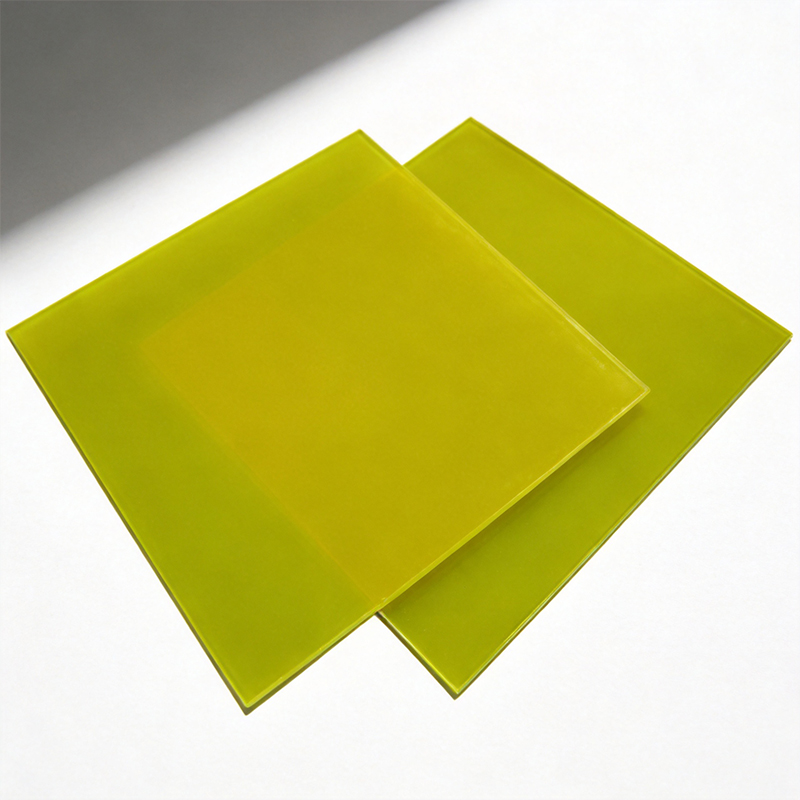
In the lab, we talk about TG (Glass Transition Temperature) a lot. This is the temperature where the board stops being a stiff "glass-like" material and starts getting "rubbery."
Standard TG (TG130): Great for your basic alarm clock.
Medium/High TG (TG150/TG170): Essential for modern smartphones or car electronics that get hot.
If you’re designing something that sits near a car engine or runs high-speed AI processors, you’ll want a higher TG. If the board gets too soft, those microscopic copper traces can crack, and your device becomes an expensive brick.
Why hasn't something better replaced it? It comes down to the "Three C's": Cost, Consistency, and Capability. It’s cheap to mass-produce. It’s predictable—engineers know exactly how it will behave under stress. And for 90% of the world's electronics, it’s "good enough." Even in 2026, most of our IoT gadgets don't need fancy space-age polymers; they just need a reliable, flame-proof house for their chips.
FR4 isn't perfect. As we push into ultra-high frequencies (like satellite internet or advanced radar), FR4 starts to "absorb" the signal. It’s like trying to run through water—it slows the signal down and creates heat. In those cases, we switch to materials like Rogers or PTFE. But for your everyday laptop, smartphone, or smart fridge, FR4 is still the boss.
Choosing FR4 isn't just a default setting; it’s a strategic choice. It’s reliable, safe, and cost-effective. As long as you understand your project’s heat requirements (that TG value we talked about!), FR4 will likely be your best friend in hardware development for years to come.

Kaboer manufacturing PCBs since 2009. Professional technology and high-precision Printed Circuit Boards involved in Medical, IOT, UAV, Aviation, Automotive, Aerospace, Industrial Control, Artificial Intelligence, Consumer Electronics etc..


 English


 Wechat
 +86 13670210335
 +86 13670210335
 E-mail