
Date: 2026-01-30
You’ve finalized your circuit design. Now, the crucial question is: how do you get a prototype manufactured to prove it works? Turning digital files into a tangible, functional board can feel daunting. This guide breaks down the journey into five clear, actionable steps used by successful hardware teams, helping you navigate from your desk to a working prototype with confidence.
Before contacting any manufacturer, assemble a complete and clean file package. This is your product’s instruction manual and the most critical step to avoid delays.
The Must-Haves:
Gerber Files: These are the universal language for PCB fabrication. Ensure you’ve generated files for all layers (copper, solder mask, silkscreen) and the board outline (*.GKO).
Bill of Materials: A precise spreadsheet listing every single component. Include exact manufacturer part numbers, descriptions, quantities, and the footprint/package. Ambiguity here leads to wrong parts.
Pick-and-Place File: This tells the assembly machine where to put each surface-mount component (X/Y coordinates, rotation). Your PCB design software can generate it.
Pro Tip: Do a final “sanity check” on your design. Are component footprints correct? Are there any last-minute schematic changes? Fixing errors now is free; fixing them after manufacturing is costly.
Don’t just shop for the lowest price. You’re choosing a partner for a critical phase.
Submit for Quote: Upload your complete file package to a manufacturer’s portal.
The Crucial DFM Check: A good partner will perform a Design for Manufacturability (DFM) analysis within 24-48 hours. They’ll flag potential issues like traces too thin for current, components that are obsolete, or soldering pads that are too small. This feedback is free expert advice—review it carefully!
Clarify & Confirm: Work with their engineers to resolve any DFM issues. Once clear, you’ll receive a final quote detailing costs for PCBs, components, assembly, and testing.
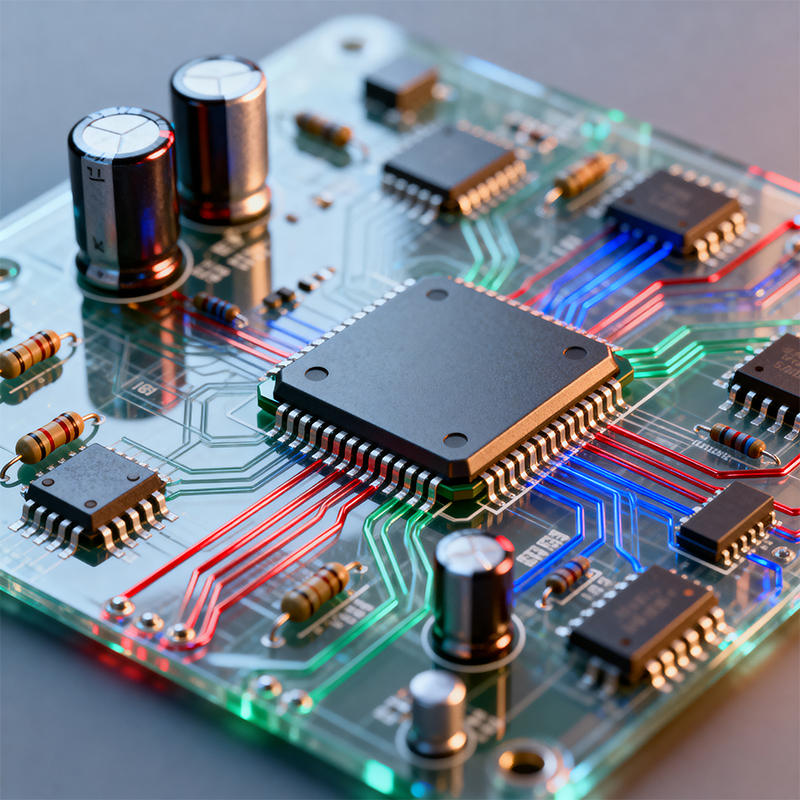
After order confirmation, two processes run in parallel:
PCB Fabrication: The factory makes the bare boards: etching copper layers, laminating (for multi-layer), drilling holes, plating, and applying the solder mask and silkscreen.
Component Procurement: The manufacturer sources all parts from distributors. This is often the longest part of the timeline, especially if some parts have extended lead times. A good partner will communicate proactively about any sourcing challenges.
When boards and parts arrive at the assembly line:
Solder Paste & SMT Placement: A stencil applies solder paste, then high-speed machines place all surface-mount components.
Reflow Soldering: The board passes through an oven, melting the paste to form permanent solder joints.
Through-Hole Assembly: Any remaining connectors or large components are inserted and soldered, often by skilled technicians for prototypes.
Optional Coating: A protective conformal coating may be applied if specified.
A reliable manufacturer doesn’t ship untested boards. Expect:
Automated Optical Inspection: Cameras scan the board for any assembly defects.
Basic Power-Up Test: A simple check for shorts or major failures.
Your First Build: Prototypes arrive! Now begins your own testing, debugging, and validation. It’s rare for a first prototype to be perfect. Document every finding—they are the blueprint for your next, improved revision (Rev B).
The Bottom Line
Getting a prototype built is a collaborative, detail-oriented process. Success hinges on your preparation (Step 1) and partnering with a communicative manufacturer who provides expert DFM guidance (Step 2). By understanding and following these five steps, you transform from a passive designer into an informed project leader, dramatically increasing your odds of a successful first build.

Kaboer manufacturing PCBs since 2009. Professional technology and high-precision Printed Circuit Boards involved in Medical, IOT, UAV, Aviation, Automotive, Aerospace, Industrial Control, Artificial Intelligence, Consumer Electronics etc..


 English



 Wechat
 +86 13670210335
 +86 13670210335
 E-mail