
Date: 2026-03-06
You know that green coating on circuit boards? The stuff that makes them look, well, like circuit boards? That's solder resist. Or solder mask. Or solder stop. Three names for the same thing—that thin protective layer that keeps solder exactly where it's supposed to be and nowhere else .
Here's the thing: most people don't think about solder resist until something goes wrong. A batch of boards comes back with bridges between fine-pitch pins. Or pads that won't wet properly. Or intermittent shorts that show up months later in the field. And suddenly that "just paint" becomes very important.
Let's talk about what solder resist actually is, why it matters for your products, and how to choose the right one without overcomplicating things.
In plain English: solder resist is a protective polymer coating applied over the copper traces on a PCB, leaving only the pads and vias exposed where solder actually needs to go . Think of it like masking tape when you're painting a room—it keeps the paint where you want it and off everything else.
During assembly, molten solder wants to stick to exposed copper. If copper traces between pads are left bare, solder can bridge across them, shorting out your carefully designed circuit. Solder resist creates a barrier that stops that from happening .
It also does a few other useful things:
Protects copper from oxidizing and corroding over time
Provides electrical insulation between closely spaced conductors
Keeps dust, moisture, and handling damage away from the circuitry
Gives you a clean surface for printing component labels
Solder resist isn't just "green paint." It's a carefully engineered mixture of several components :
Resin systems form the backbone—usually epoxy, because it sticks well, handles heat, and resists chemicals. Acrylic resins show up in photoimageable masks. For special cases like flexible circuits, you might use polyimide or silicone instead.
Pigments give it color. Titanium dioxide makes white masks. Phthalocyanine compounds create that classic PCB green. And yes, you can get red, blue, black, yellow—pretty much any color you want.
Photoinitiators are what make modern solder resists work. These compounds react to UV light, triggering the curing process that hardens the mask where you want it.
Solvents keep everything liquid during application, then evaporate off during pre-bake.
Additives tweak the properties—fillers for thermal performance, flow agents for smooth application, adhesion promoters to keep everything stuck down.
Not all solder resists are created equal. The type you choose affects everything from resolution to durability to cost.
This is the industry workhorse. Applied as a liquid—usually by screen printing or curtain coating—then dried, exposed through a photomask, developed, and finally cured .
Why it dominates:
High resolution (down to 50-75 microns)
Excellent adhesion to copper and substrate
Good thermal and chemical resistance
Relatively low cost
Trade-offs: Needs tight process control. Registration matters. But for most commercial PCBs, it's the right choice.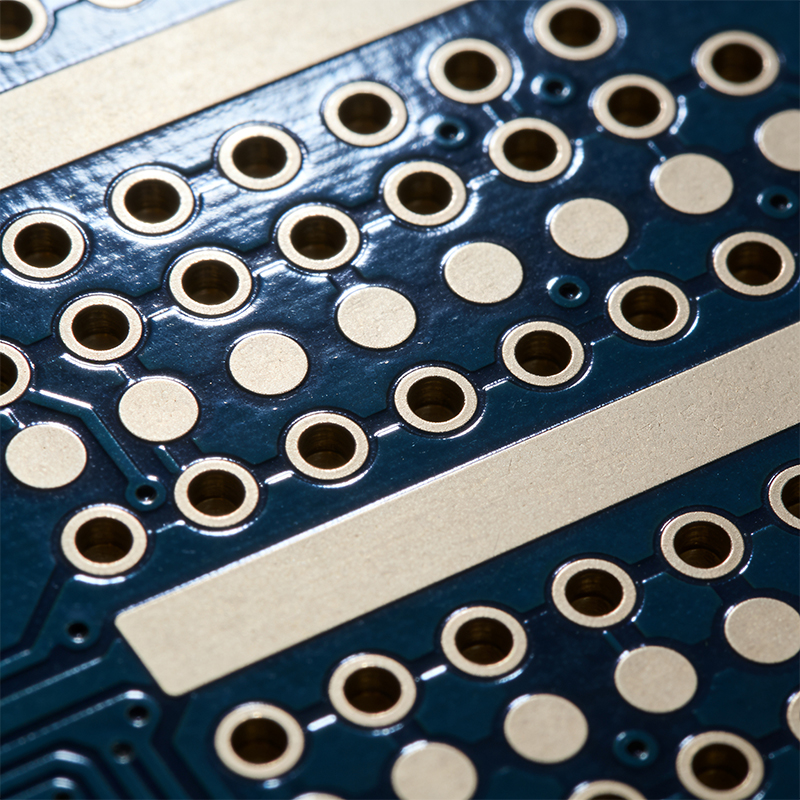
Comes as pre-formed sheets laminated onto the board under heat and pressure. Less common than liquid, but useful when you need very uniform thickness .
Strengths:
Superior thickness uniformity
Covers uneven surfaces well
No solvent evaporation concerns
Weaknesses:
Lower resolution than liquid masks
Higher material cost
Can struggle with fine-pitch features
The old-school approach. Cures entirely through heat, no photoimaging involved. Screen printed, then baked .
Best for:
Low-cost, high-volume simple boards
Applications where fine features aren't needed
Shops without UV exposure equipment
Resolution is limited. Not suitable for modern fine-pitch SMT.
Cures rapidly under UV light—great for quick-turn prototypes or repairs. But depth of cure can be an issue with thicker coatings, and long-term thermal stability isn't always as good as thermally cured masks .
Flexible solder masks for flex and rigid-flex boards—use elastomeric resins that bend without cracking
High-temperature masks for lead-free soldering cycles
Low-Dk masks for high-frequency applications where dielectric constant matters
Tenting masks extra thick for covering and protecting vias
The process matters as much as the material. Here's what happens in a typical LPI flow :
1. Surface preparation. Clean the bare PCB. Remove oxidation, dust, fingerprints—anything that could mess with adhesion. Sometimes a micro-etch creates a slightly rougher surface for mechanical bonding.
2. Coating. Liquid mask gets applied by screen printing, curtain coating, or spraying. For dry film, it's laminated on.
3. Pre-bake (tack dry). Solvents evaporate. The mask becomes tack-free but not fully cured.
4. UV exposure. A phototool (or laser direct imaging) defines where the mask stays. UV light hardens the exposed areas. Unexposed areas remain soluble .
5. Development. Developer solution washes away the unexposed mask, revealing pads and vias. What's left is exactly where solder can go.
6. Final cure. Baking at 140-160°C fully polymerizes the mask. Now it's hard, durable, and ready for assembly .
Solder resist defects aren't just cosmetic. They cause real problems .
Poor adhesion. Mask lifts during HASL, ENIG, or rework. Exposed copper corrodes. Pads lift.
Insufficient overlap. Traces partially exposed. Solder bridges between them. Short circuits happen.
Misregistration. Mask openings don't line up with pads. Pads get partially covered—poor wetting, tombstoning risk. Or copper gets exposed beside pads—bridging risk .
Thickness issues. Too thin and insulation suffers, durability drops. Too thick and you get poor definition around pads, maybe even solder mask "slivers" that break off .
Blistering after reflow. The mask couldn't handle the heat. Lead-free soldering peaks around 260°C—if the mask isn't rated for it, you'll see bubbles and delamination.
Typical solder resist thickness ranges from 16 to 30 micrometers over flat copper . Over trace edges, it's thinner—sometimes as little as 0.3 mils—because the liquid flows off during coating .
Too thin and it peels. Too thick and you create a gap between pad and component, requiring extra solder paste and risking assembly errors .
IPC-2221 gives some guidance: epoxy and acrylic masks typically run 0.03-0.13 mm, silicone a bit thicker at 0.05-0.21 mm .
Yes, but not just for looks .
Green dominates because it offers excellent contrast under UV light during imaging and for visual inspection. Inspectors can see defects clearly. It's also the most widely available, which keeps costs down .
Blue sometimes gives better UV reflectivity, which can improve imaging accuracy for high-resolution work .
White reflects light—useful for LED applications. But it shows dirt and contamination more easily, and some white formulations yellow with heat.
Black looks sleek and professional. But it absorbs UV instead of reflecting it, so exposure times need adjustment. Also shows every scratch and speck of dust .
Red, yellow, other colors exist—usually for branding or specific visual contrast needs. They may have different electrical or processing characteristics, so check with your fabricator first .
IPC-SM-840 is the go-to specification for solder mask qualification and performance . It defines two classes of requirements—T and H—based on end-use expectations.
It covers:
Adhesion tests
Solvent resistance
Electrical requirements
Thermal cycling
Flammability
When you're evaluating a supplier, ask which mask systems they run and whether they're qualified to IPC-SM-840. For critical applications—medical, automotive, aerospace—this matters .
Here's a practical checklist :
Resolution needs. Fine-pitch SMT? You need LPI or dry film with tight registration. Thermal-cure masks won't cut it.
Thermal requirements. Lead-free assembly requires masks rated for 260°C+ reflow peaks. High-temperature materials exist for a reason.
Flexibility. If your board bends—flex or rigid-flex—you need a flexible solder mask chemistry. Standard epoxies crack.
Chemical exposure. Harsh environments or aggressive cleaning processes need masks with proven chemical resistance.
Color. Green for lowest cost and best inspectability. Others if you have specific aesthetic or functional needs.
Regulatory compliance. RoHS, REACH, UL recognition—check what your market requires .
IPC-SM-840 class. Match to your product's reliability requirements.

Kaboer manufacturing PCBs since 2009. Professional technology and high-precision Printed Circuit Boards involved in Medical, IOT, UAV, Aviation, Automotive, Aerospace, Industrial Control, Artificial Intelligence, Consumer Electronics etc..


 English



 Wechat
 +86 13670210335
 +86 13670210335
 E-mail