
Date: 2026-07-17
You've definitely seen solder before — that silver wire on a spool. But you might not have noticed: most solder today isn't the traditional tin-lead alloy anymore. It's silver-containing solder. The circuit boards in your phone, computer, and wearables — almost all of them are soldered with silver-containing lead-free solder.
Silver solder in electronics is completely different from the silver solder used in jewelry. Jewelry uses high-temperature silver brazing alloys (melting above 600°C). Electronics uses silver-containing tin-based alloys — mostly tin, with a small amount of silver (typically 3-4%) — melting at just 217-221°C.
In this guide, I'll explain what silver solder is in electronics manufacturing, how it differs from leaded solder, why it's becoming the standard, and how to choose the right silver content. Plain English, no fluff.
In electronics manufacturing, "silver solder" refers to tin-based lead-free solder alloys that contain silver (Ag). The most common example is SAC305 — 96.5% tin + 3% silver + 0.5% copper.
Silver solder emerged to replace traditional leaded solder (63% tin + 37% lead). After the EU RoHS directive took effect in 2006, lead was banned in consumer electronics. The industry needed a lead-free alternative that performed close to leaded solder.
Silver solves several key problems: improves wetting (solder spreads better), improves fatigue resistance (joints last longer under thermal cycling), and lowers the melting point (lower than pure tin). Copper is added for mechanical strength and stability.
The world's most widely used electronics solder is SAC305 — the industry standard for lead-free soldering.
This is the most fundamental comparison in electronics manufacturing:
| Feature | Silver Lead-Free (SAC305) | Leaded Solder (63/37) |
|---|---|---|
| Composition | 96.5% Sn + 3% Ag + 0.5% Cu | 63% Sn + 37% Pb |
| Melting point | 217-221°C | 183°C |
| Soldering temperature | 360-380°C | 320-350°C |
| Wetting | Moderate, needs more flux | Excellent |
| Joint appearance | Dull, matte | Shiny, smooth |
| Mechanical strength | Higher but more brittle | Ductile |
| Thermal fatigue resistance | Excellent | Moderate |
| Tin whisker resistance | Poor (whisker risk) | Good (lead suppresses whiskers) |
| Environmental | RoHS-compliant | Contains lead — RoHS-restricted |
| Cost | High (silver is a precious metal) | Low |
Leaded solder (63/37) melts at 183°C, wets beautifully, and produces shiny joints — but it's not environmentally friendly. Silver lead-free solder (SAC305) melts at 217-221°C, is RoHS-compliant, and produces stronger joints — but it's harder to work with and more expensive.
Silver isn't added randomly. It plays three critical roles:
1. Lowers melting point and improves wetting
Pure tin melts at 232°C. Adding silver and copper lowers the melting point to 217-221°C — still higher than leaded solder's 183°C, but much better than pure tin. Silver also improves wetting — helping solder spread across pads.
2. Improves thermal fatigue resistance
Electronic devices heat up and cool down during use. Solder joints expand and contract with thermal cycling. Silver improves fatigue resistance, making joints less likely to crack under temperature changes. SAC305 is 30-40% more fatigue-resistant than leaded solder.
3. Increases mechanical strength
Silver-containing solder forms harder, stronger joints than leaded solder. For products that face vibration and shock (automotive, drones, wearables), silver solder is the better choice.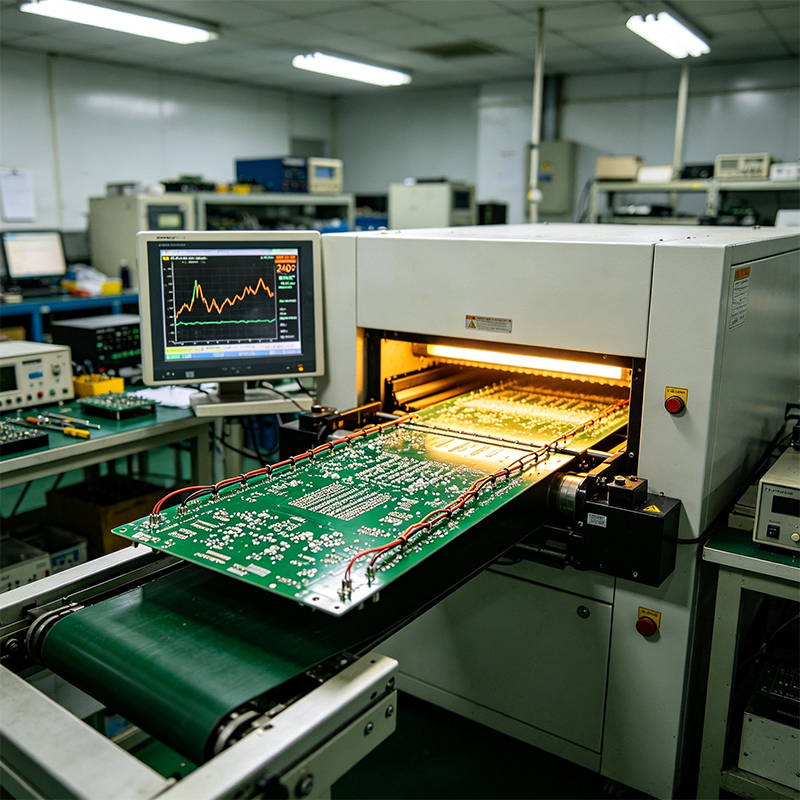
Beyond SAC305, there are several common silver-containing alloys:
| Alloy | Composition | Melting Point | Characteristics |
|---|---|---|---|
| SAC305 | Sn96.5Ag3.0Cu0.5 | 217-221°C | Industry standard — best value |
| SAC405 | Sn95.5Ag4.0Cu0.5 | 217-221°C | Higher silver, slightly better, more expensive |
| SnAg | Sn96.5Ag3.5 | 221°C | No copper, slightly lower mechanical strength |
| Low-Ag SnAgCu | Sn99Ag0.3Cu0.7 | 227°C | Lower silver, lower cost, higher melting point |
| SnPbAg | Sn62Pb36Ag2 | 179°C | Leaded (exempt) — for aerospace/military |
SAC305 is the most dominant lead-free solder — over 90% of lead-free soldering uses it.
Lead-free solder behaves very differently from leaded solder:
Higher temperature: Iron temperature goes from 320-350°C up to 360-380°C
Poorer wetting: Needs more flux
Duller joints: Lead-free joints are matte by nature
Shorter tip life: Higher heat oxidizes tips faster
Higher voiding: Especially in BGA soldering
These challenges can be managed with optimized reflow profiles, proper flux selection, and tighter process control — but it requires experience and proper equipment.
Many assume "more silver = better" — but that's not always true.
High silver (4% Ag, like SAC405): Better fatigue resistance, more reliable joints — but more expensive, higher soldering temperature, and a higher risk of "silver phase segregation" (uneven silver distribution that can actually reduce reliability).
Medium silver (3% Ag, SAC305): The sweet spot — performance and cost balanced. The default choice for most lead-free projects.
Low silver (0.3% Ag): Lower cost — but poorer wetting and weaker fatigue resistance.
Since 2025, global silver prices have surged significantly, driving a low-silver trend — using less silver while aiming for performance close to SAC305. For high-reliability products (automotive, medical, aerospace), SAC305 remains the standard.
In electronics assembly, solder use and quality are governed by IPC J-STD-001. It specifies which solder alloys are approved, how the soldering process should be controlled, and what acceptable solder joints look like.
SAC305 is explicitly listed as an "approved solder alloy" in IPC J-STD-001.
Silver solder in electronics is a tin-based lead-free alloy containing silver and copper — most notably SAC305 (96.5% tin + 3% silver + 0.5% copper), with a melting point of 217-221°C.
Silver's role in solder: lowers the melting point, improves wetting, and increases fatigue resistance. Silver solder runs hotter, wets less readily, and costs more than leaded solder — but it's environmentally compliant, mechanically stronger, and more fatigue-resistant.
SAC305 is already the default choice for over 90% of lead-free soldering worldwide.

Kaboer manufacturing PCBs since 2009. Professional technology and high-precision Printed Circuit Boards involved in Medical, IOT, UAV, Aviation, Automotive, Aerospace, Industrial Control, Artificial Intelligence, Consumer Electronics etc..


 English



 Wechat
 +86 13670210335
 +86 13670210335
 E-mail