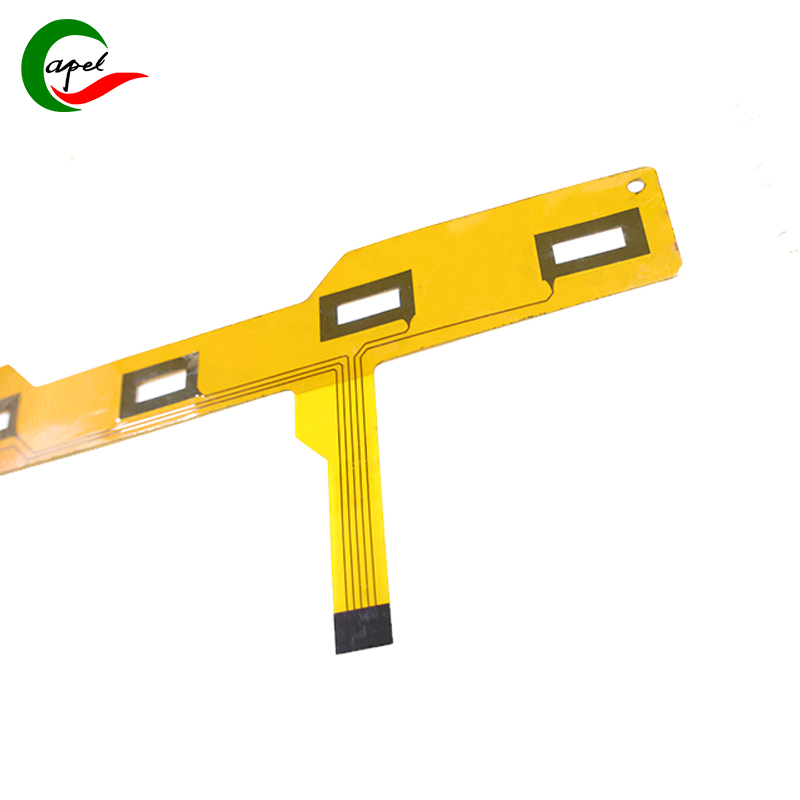
Kaboer’s Single-Sided Flexible PCB for Automotive Navigation is tailor-made for core navigation components such as in-vehicle navigation host signal transmission units, GPS/BDS positioning module interfaces, navigation display panel connectors, and touch key control boards. It precisely addresses the core demands of automotive navigation scenarios—stable multi-signal transmission, resistance to harsh automotive environments, narrow-long space adaptation, and cost-effectiveness—with a highly adaptive configuration of "1mil immersion gold finish + refined single-sided wiring". As a reliable and cost-competitive preferred solution in the automotive navigation electronics field, it empowers automakers and supporting manufacturers to develop high-end in-vehicle navigation systems with smooth signals, strong adaptability, and long-term durability!
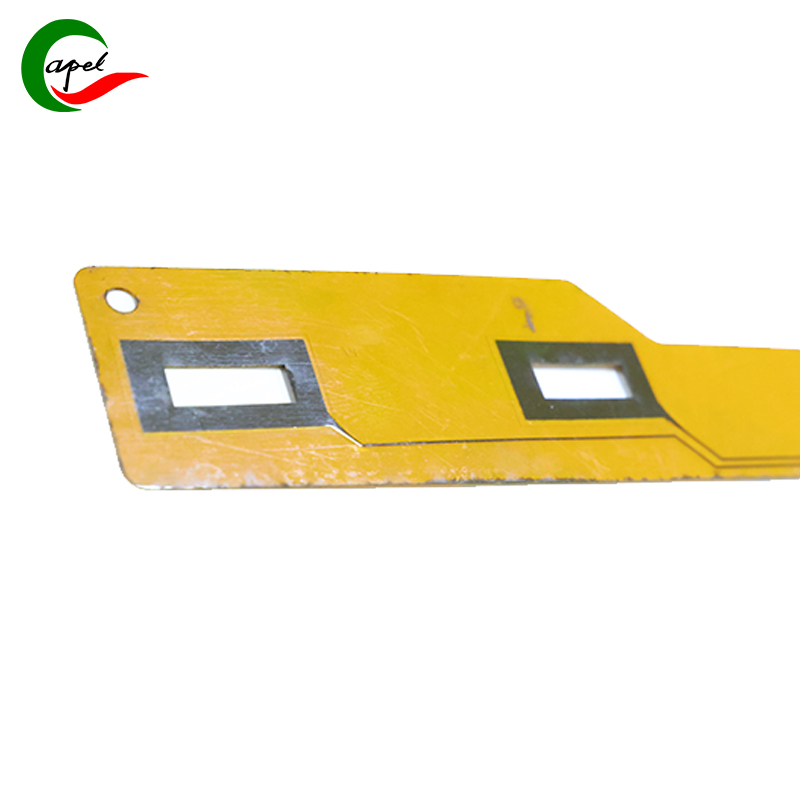
Featuring a single-sided flexible core structure, it perfectly balances the space adaptability and operational stability of navigation devices: with an overall thickness of only 0.13mm, it is extremely slim and boasts excellent bending resilience, seamlessly fitting the narrow-long cavities, curved mounting positions, and component joints of navigation hosts (e.g., between navigation screens and motherboards, positioning modules and control units). It easily avoids wiring interference, adapting to the "long-strip layout and modular integration" design needs of in-vehicle navigation, and completely solving the pain point of traditional rigid PCBs being limited in wiring and poor in adaptability in narrow-long spaces; with precise dimensions of 62.7*164mm, the optimized slim layout supports integration of multiple navigation components (e.g., simultaneous layout of multiple signal interfaces, touch contacts, and driver chips) without occupying redundant space, leaving ample installation room for key components such as antennas and power modules inside navigation devices; the 0.3/0.25mm refined line width/spacing balances signal transmission stability and wiring density, adapting to the parallel transmission needs of multiple signals in navigation devices (e.g., GPS/BDS positioning signals, high-definition display data, touch control commands), ensuring consistent circuit conduction and signal integrity, and avoiding navigation lag and positioning deviation caused by multi-signal crosstalk.
Key advantages directly tackle pain points in automotive navigation scenarios, demonstrating automotive-grade practical performance: ① Equipped with 1mil immersion gold finish, it offers excellent oxidation resistance, wear resistance, and low contact resistance. It can withstand the wide temperature range of -40℃ to 85℃ in vehicles (low-temperature startup in winter, high temperature from summer exposure) as well as complex working conditions such as high humidity and dust, avoiding issues like positioning signal loss, display glitches, and touch failure caused by oxidation or poor contact. Meanwhile, the immersion gold surface enhances terminal plug-in durability and soldering reliability, adapting to the long-term high-frequency use of automotive navigation; ② The single-sided wiring design balances cost-effectiveness and maintenance convenience, meeting the core signal transmission needs of navigation devices while effectively controlling procurement and production costs. With clear wiring logic, it enables more efficient later fault diagnosis, adapting to the mass production and after-sales maintenance rhythm of automotive electronics; ③ The flexible substrate features excellent vibration resistance and fatigue resistance, withstanding bumps, vibrations, road impacts during vehicle driving, and slight bending during long-term use. It reduces circuit failures caused by automotive environmental factors, aligning with the core demand of "long service life and low failure rate" for automotive electronics.
Backed by Kaboer’s years of technical expertise in flexible PCBs and strict quality control systems, this single-sided flexible PCB for automotive navigation can be customized for circuit layout, contour, and mounting holes based on the functional needs of navigation devices (e.g., interface type, signal transmission protocol, installation method). Paired with full-chain services including "1-30 layer FPC customization, rapid prototyping, and efficient SMT assembly", it helps customers shorten R&D cycles and accelerate product mass production. Whether for precise positioning signal transmission of in-vehicle navigation, high-definition display data connection, or sensitive command transmission of touch keys, it serves as a "reliable signal link" for automotive navigation devices with core advantages of "high adaptability, high stability, and high cost-effectiveness", helping enterprises reduce costs, enhance product competitiveness, and gain an edge in the automotive navigation electronics niche market!




 English
 Automotive Navigation Single-Sided Flexible PCB
 Single-Sided Flexible PCB for Automotive Applications
 Medical Device Single-Sided Flexible PCB
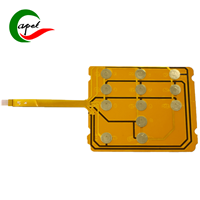 Single-Sided Keypad Flexible PCB
 Single-Sided Flexible PCB for Communication Equipment
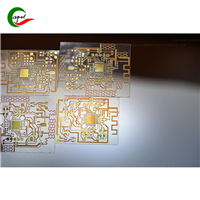 Transparent Single-Sided Flexible PCB



 Wechat
 +86 13670210335
 +86 13670210335
 E-mail